
Clean, Restore, and Protect the Natural Warmth of Travertine
Professional travertine cleaning, honing, polishing, filling, and sealing for floors, countertops, showers, and other suitable surfaces throughout Gainesville and North Central Florida.
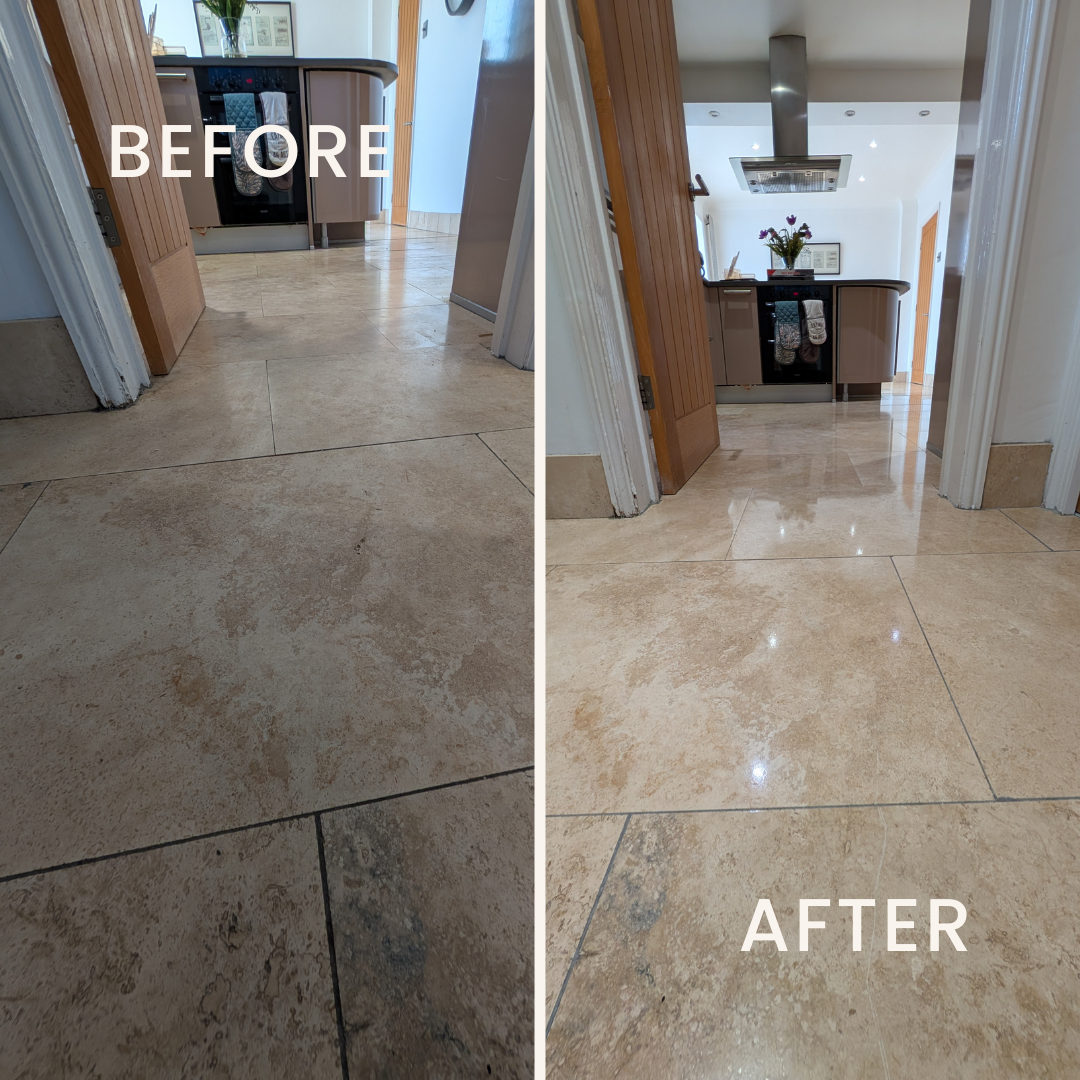
Travertine Needs More Than an Ordinary Floor Cleaner
Travertine is a porous, calcium-based stone with natural voids, subtle movement, and warm tonal variation. Dirt can collect in pores and grout lines, while acids, grit, traffic, harsh cleaners, and failed fillers can leave etching, dull paths, scratches, stains, and open holes.
Natural Surface Restoration evaluates the stone, finish, porosity, fillers, grout, existing sealer, damage, and result you want. The right service may involve deep cleaning, honing, polishing, filling, localized treatment, or sealing—and may produce a natural honed appearance or a more reflective polished finish.
- Travertine floors
- Countertops and vanities
- Showers and bathroom stone
- Honed or polished finishes
Care Matched to the Stone’s Condition
Cleaning removes soil; honing and polishing change the finish; repairs address eligible damage; sealing helps manage absorption. Each serves a different purpose.
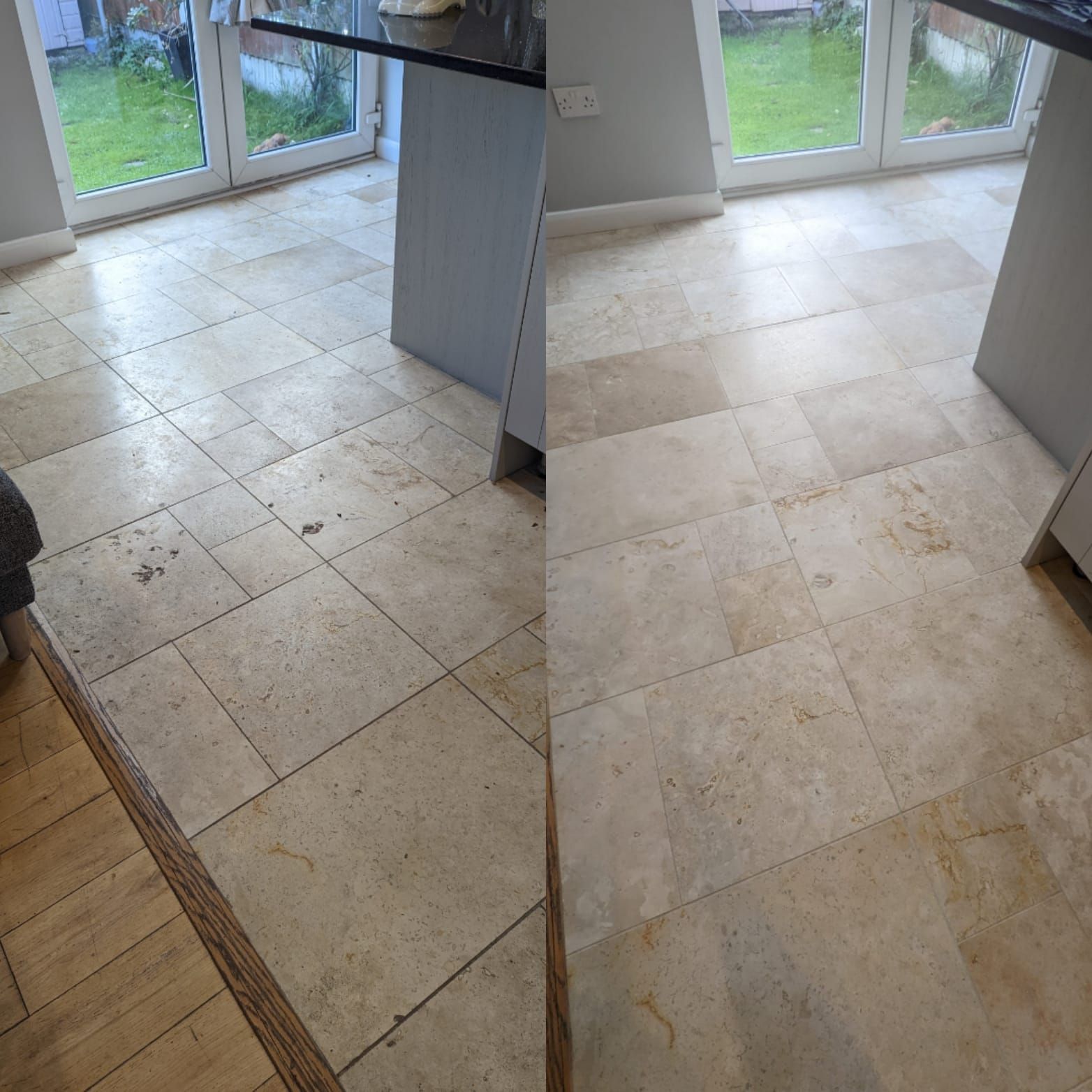
Travertine Deep Cleaning
Stone-compatible solutions, controlled agitation, and extraction can remove embedded soil and residue from the surface, pores, and adjoining grout.
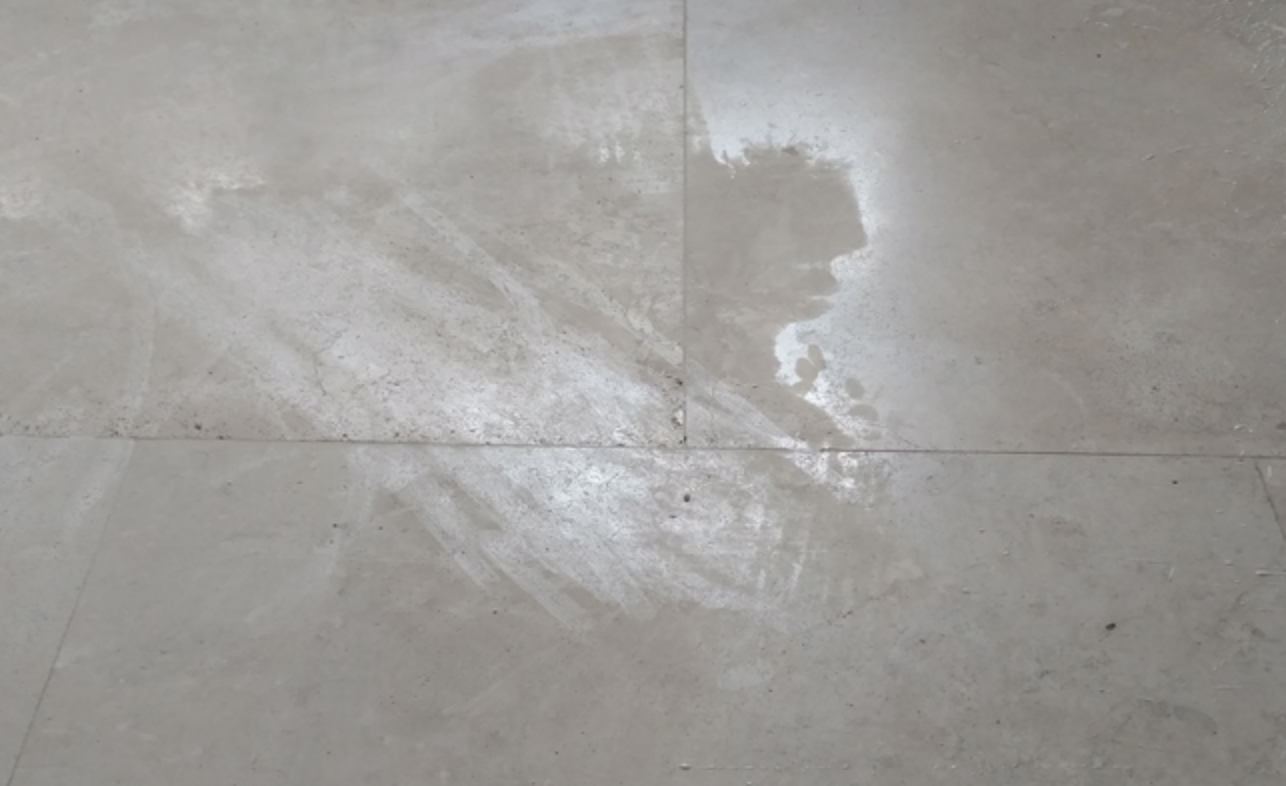
Honing, Polishing & Scratches
Progressive refinement can improve eligible scratches, etching, and dullness, but deep damage may remain when complete removal would require excessive material loss.
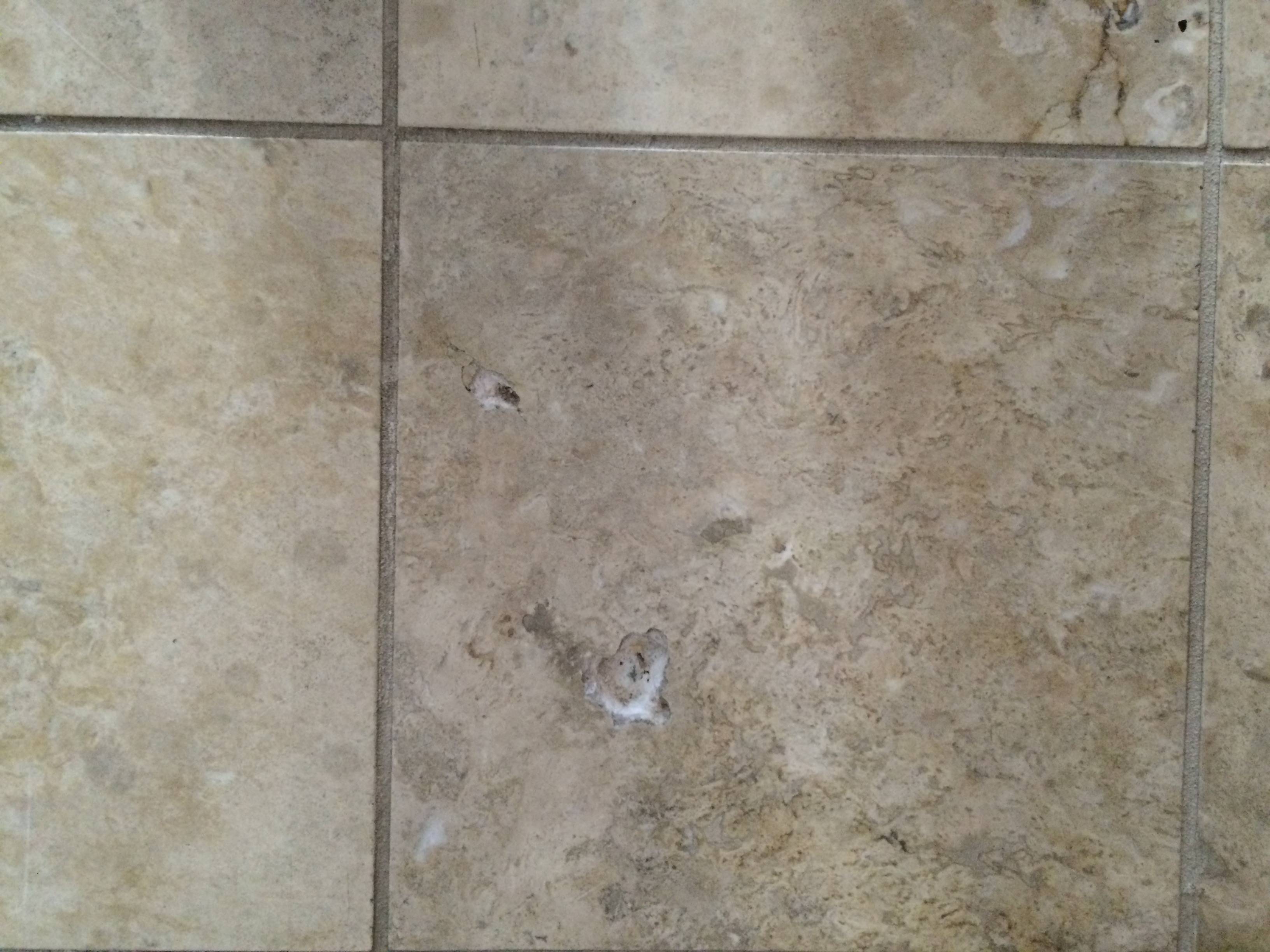
Open Holes, Pits & Voids
Loose or failed filler and natural voids are evaluated for an appropriate repair. Color, texture, age, and surrounding wear can affect how closely repairs blend.
From Evaluation to the Final Finish
The equipment, cleaner, abrasive sequence, repair material, and protective treatment are chosen for the individual surface.
Inspect and Identify
Evaluate finish, wear, scratches, etching, stains, pores, fillers, grout, lippage, coatings, and moisture exposure.
Test and Prepare
Choose compatible methods, protect adjoining materials, and explain realistic expectations for cleaning and restoration.
Clean, Fill and Refine
Remove embedded soil, complete appropriate repairs, and hone or polish through the selected stages when needed.
Finish and Protect
Detail the surface and apply a compatible penetrating sealer when the travertine’s absorption and location call for it.
Useful Protection—Without False Promises
A penetrating sealer may reduce liquid absorption and provide more time to blot certain spills. It does not make travertine waterproof, stain-proof, scratch-proof, or resistant to acid etching.
- Use pH-neutral cleaners formulated for natural stone.
- Blot citrus, vinegar, wine, and other acidic spills promptly.
- Keep grit under control with mats and frequent dust mopping.
- Avoid abrasive pads, harsh powders, and acidic bathroom cleaners.
- Follow the specific sealer manufacturer’s dry and cure times.
- Evaluate resealing by condition and absorption—not a fixed schedule.
Travertine Cleaning and Polishing FAQs
Helpful answers about cleaning, refinishing, scratches, sealing, maintenance, timing, and project estimates.
What is the safest way to clean and seal travertine?
Use stone-compatible, generally pH-neutral cleaning products and non-abrasive tools. After the surface is thoroughly clean and dry, an appropriate penetrating sealer may be applied when testing shows it is suitable.
How often should travertine be professionally polished?
There is no universal one- or two-year schedule. Finish, traffic, grit, spills, cleaning products, maintenance, and depth of wear determine when honing or polishing is appropriate.
Can deep scratches be completely removed from travertine?
Many scratches can be improved through progressive honing, but complete removal may not be appropriate. Correcting a deep scratch requires lowering the surrounding stone, so inspection is necessary before promising a result.
Will sealing prevent stains, scratches, or etching?
No. Sealer can reduce absorption and help limit certain stains, but it does not prevent physical wear or acids from etching calcium-based travertine.
Can holes and pits in travertine be filled?
Many open voids and failed filler areas can be repaired with compatible material. Exact blending is not always possible because color, texture, pore structure, age, and surrounding wear vary.
How long does travertine sealing take to dry or cure?
Application and cure time depend on surface size, porosity, temperature, humidity, ventilation, product chemistry, number of applications, and manufacturer directions. You will receive use and cure guidance for the specific treatment selected.
Ready to Renew Your Travertine Surfaces?
Contact Natural Surface Restoration to discuss embedded soil, dullness, scratches, etching, stains, open holes, failed filler, polishing, or sealing.