
Restore the Elegance and Natural Luster of Your Marble
Professional marble polishing, honing, cleaning, and restoration for dull, etched, scratched, or worn marble floors, countertops, vanities, and other suitable surfaces.
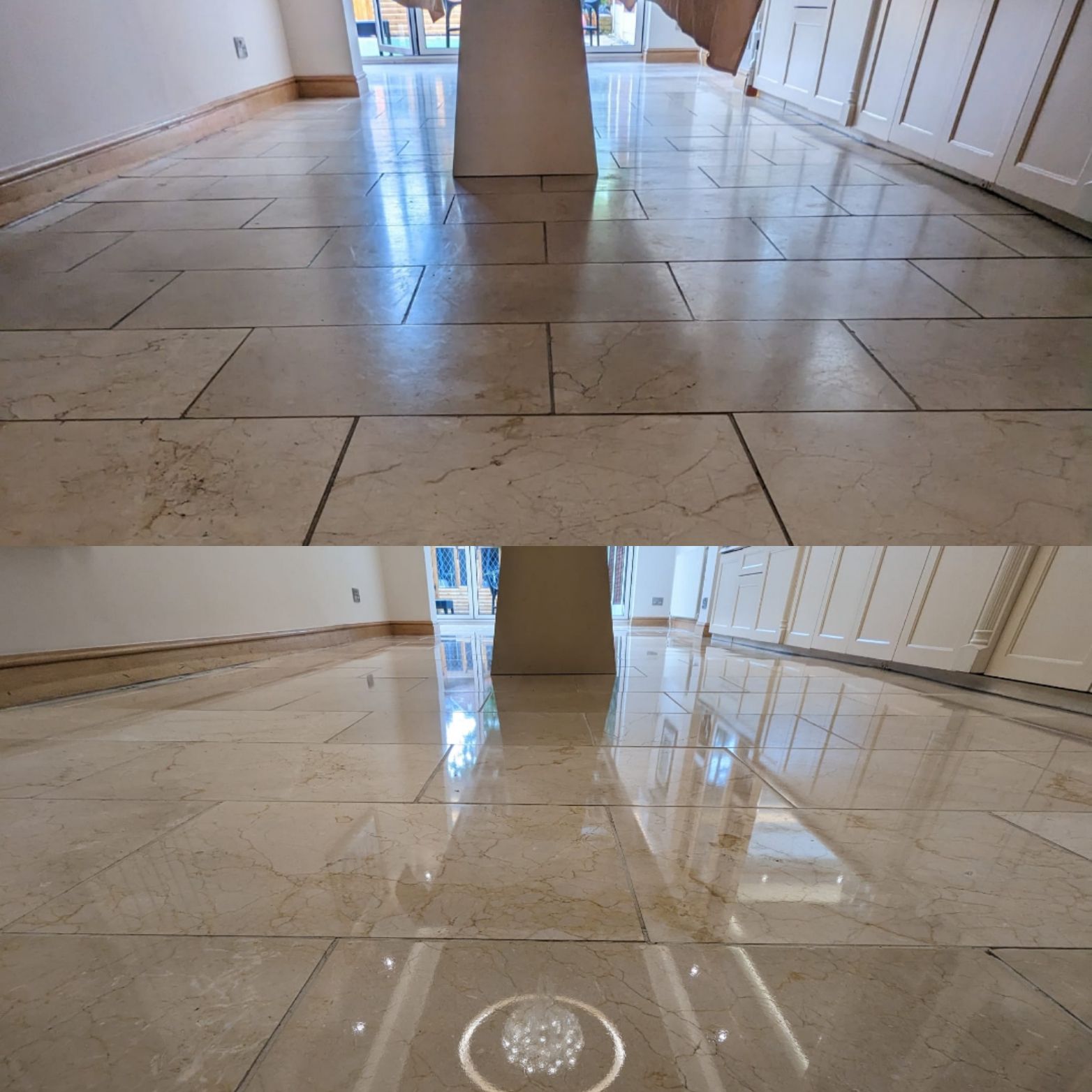
A Finish Selected for Your Stone and Your Space
Marble is beautiful, but its calcium-based composition makes it sensitive to acids, abrasion, grit, and improper cleaning products. Over time, traffic and everyday use can create dull paths, etch marks, scratches, stains, and uneven reflectivity.
Natural Surface Restoration begins by identifying the marble, existing finish, wear pattern, and desired appearance. The right solution may involve deep cleaning, honing, polishing, localized treatment, or a broader restoration process. The goal may be a luminous polished finish or a softer, natural honed appearance.
- Marble floors and entryways
- Countertops and vanities
- Polished or honed finishes
- Residential marble surfaces
From Lost Luster to Complete Surface Renewal
The scope of work is based on the depth of damage, finish type, stone condition, and result you want.
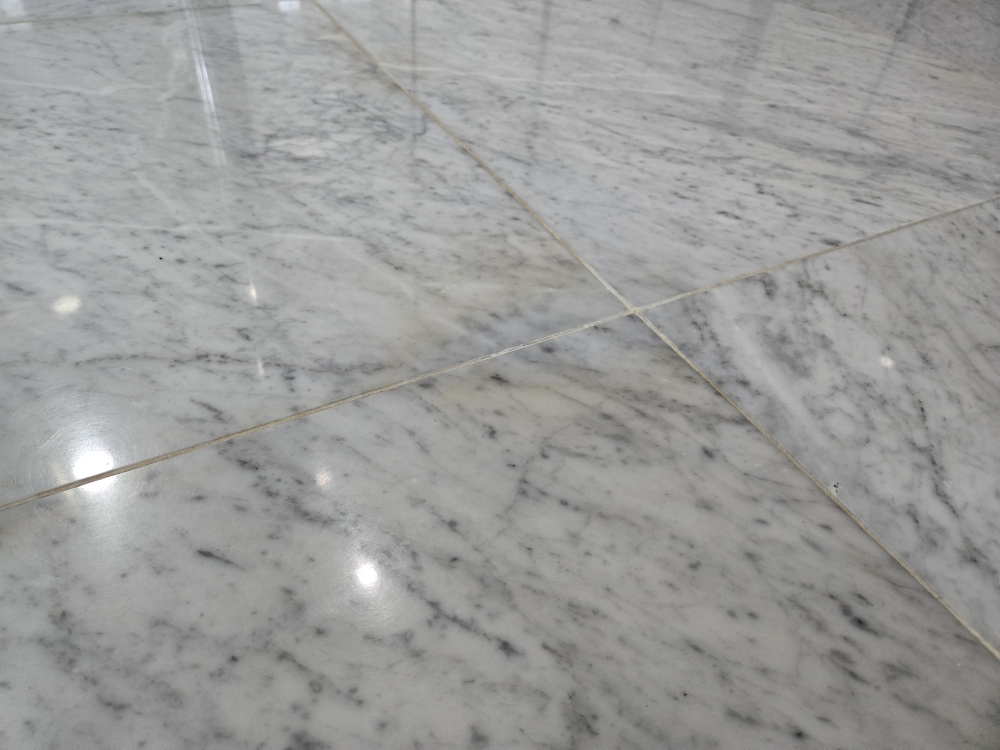
Marble Polishing
Controlled refinement can restore clarity and reflectivity to eligible dull marble while highlighting its natural color and veining.
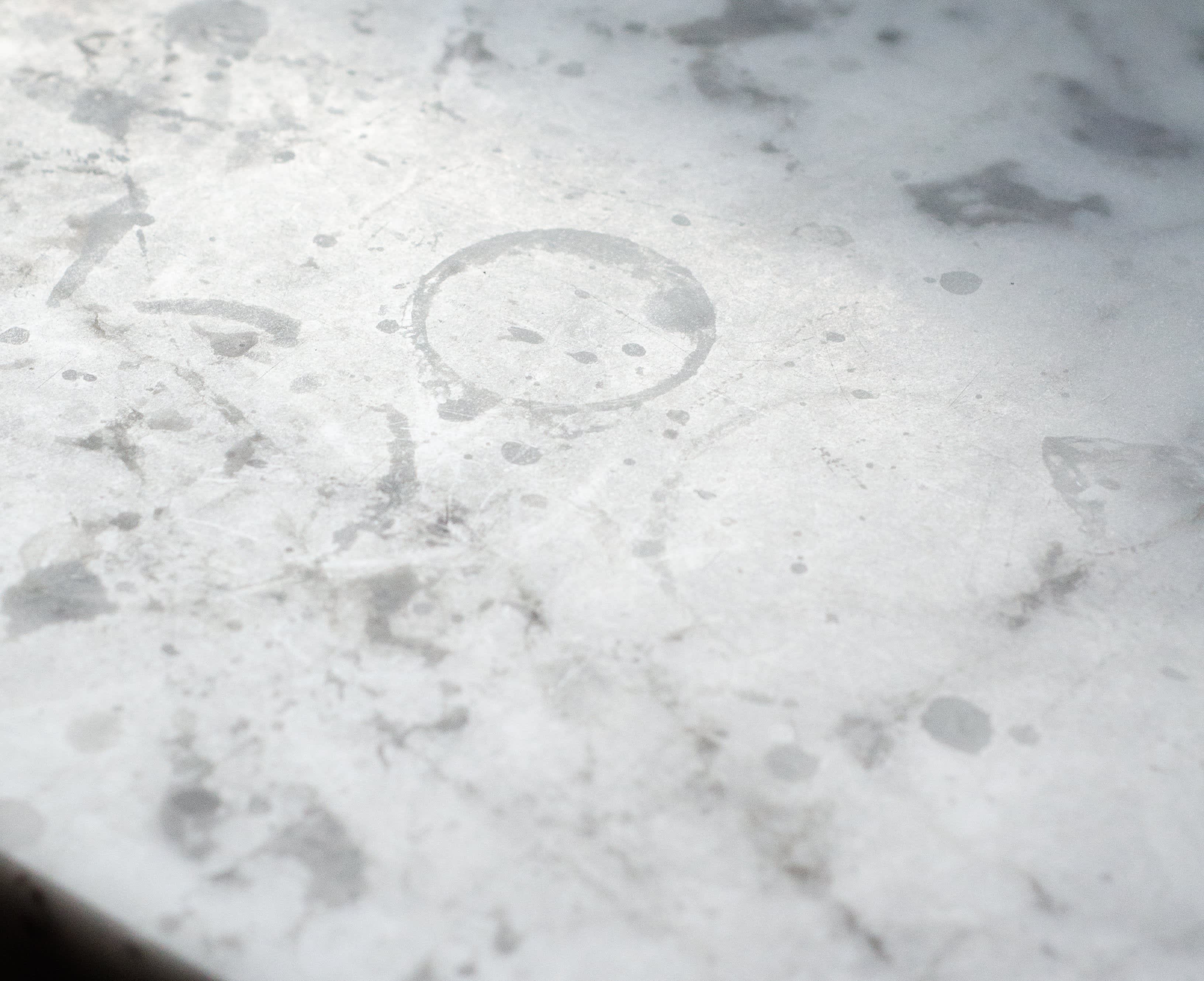
Honing and Etch Correction
Honing uses controlled abrasion to address eligible etches, scratches, dull areas, and uneven sheen before the finish is refined.

Marble Surface Restoration
Damage, stains, cracks, chips, and previous repairs are evaluated to determine which improvements are appropriate and realistic.
Careful Refinement, One Stage at a Time
The exact abrasives, polishing compounds, and protective treatments are chosen for the stone and finish.
Inspect
Identify the marble, finish, etching, scratches, stains, cracks, lippage, and repair history.
Test and Plan
Select the process and establish realistic expectations for damage correction and final sheen.
Hone and Refine
Use controlled abrasion when needed to smooth eligible imperfections and create a consistent surface.
Finish and Protect
Polish or hone to the selected appearance and apply a compatible sealer when absorption protection is appropriate.
Daily Care Makes a Lasting Difference
Marble remains vulnerable to acidic spills even when sealed. Good maintenance helps preserve the finish between professional services.
- Blot spills promptly—especially citrus, vinegar, wine, and tomato products.
- Use a pH-neutral cleaner formulated for natural stone.
- Avoid abrasive pads, harsh powders, and acidic bathroom cleaners.
- Use mats at entrances to reduce tracked-in grit on marble floors.
- Remember that sealer can reduce absorption but cannot prevent etching.
Marble Polishing and Restoration FAQs
Helpful answers about polishing, honing, etching, scratches, sealing, and project timing.
What is the difference between marble polishing and marble restoration?
Polishing refines the surface to increase clarity and sheen and may address light dullness. Restoration is broader and may include cleaning, honing, polishing, lippage correction, stain treatment, or eligible repairs based on the marble’s condition.
How often should marble be professionally restored?
There is no fixed schedule. Traffic, finish type, cleaning products, grit, spills, and maintenance habits determine when service is needed. Professional care is appropriate when dull traffic lanes, etching, scratches, staining, or uneven sheen become noticeable.
Can deep scratches be removed from marble?
Many scratches can be improved through honing, but depth matters. Removing a deep scratch requires lowering the surrounding surface, so complete removal may not always be appropriate. An inspection is needed before promising a result.
What marble surfaces can be polished or restored?
Suitable floors, countertops, vanities, walls, shower components, thresholds, and other marble installations may be candidates. Access, thickness, previous coatings, damage, and installation condition affect the available options.
How long does marble polishing take?
Timing depends on square footage, finish, depth of wear, repairs, lippage, stain treatment, access, and the number of refinement steps. A small countertop may take several hours, while a large or heavily worn floor can require multiple days.
Will sealing prevent marble from etching?
No. Penetrating sealer can help reduce absorption and staining, but it does not stop acids from reacting with marble. Prompt spill cleanup and stone-safe products remain essential.
Ready to Bring Your Marble Back to Life?
Contact Natural Surface Restoration to discuss dullness, etching, scratches, staining, honing, polishing, or complete marble restoration.