
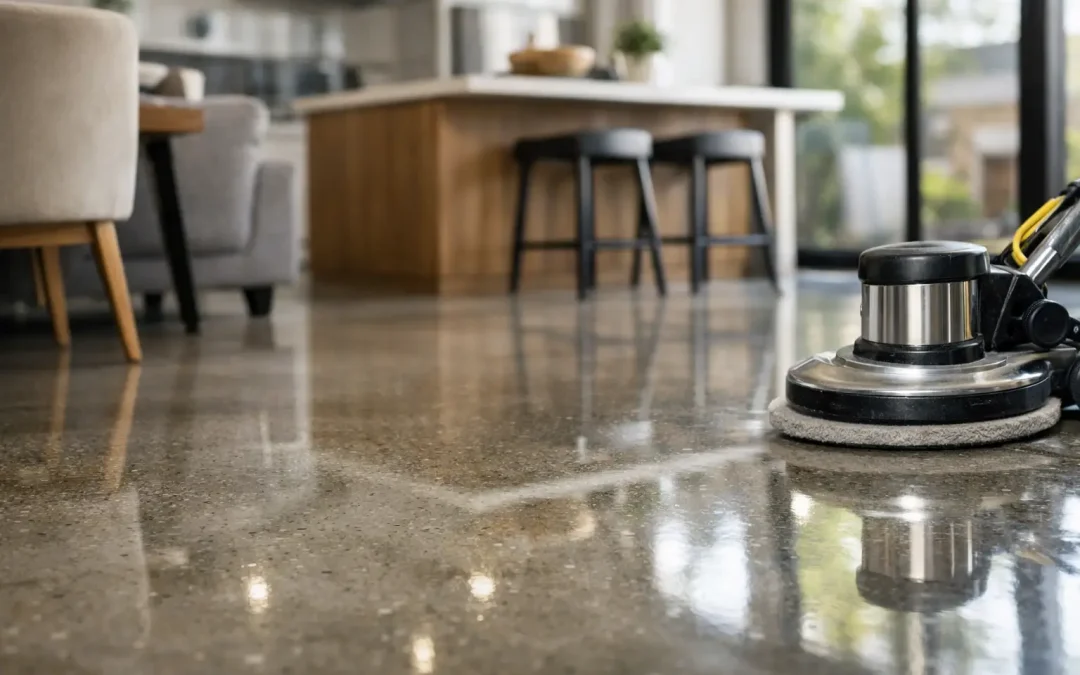
A garage floor with old paint marks, a dull slab in a Florida room, or a stained interior concrete surface can make the whole space feel unfinished. Concrete polishing for homes gives that same surface a cleaner, brighter, more intentional look without tearing it out and starting over.
For many homeowners in Gainesville and surrounding areas, polished concrete is appealing for a simple reason – it solves two problems at once. It improves appearance, and it creates a harder-wearing surface that is easier to maintain than many other flooring options. That said, the results depend heavily on the condition of the slab and the way the polishing process is handled.
What concrete polishing for homes actually involves
Polished concrete is not the same as a basic seal coat or a painted floor. True polishing is a mechanical process that uses professional grinding and refining equipment to smooth the concrete surface and develop the desired level of sheen.
The work usually starts with evaluating the slab. Some concrete has old coatings, adhesive residue, deep staining, surface damage, or uneven texture that has to be addressed first. From there, the surface is ground in stages with progressively finer abrasives. Depending on the floor and the finish the homeowner wants, the process may also include crack repair, joint treatment, stain application, and a densifier that helps harden the surface.
That distinction matters. A polished floor is built through surface preparation and refinement, not just covered up. When done correctly, it can bring out the natural character of the concrete while improving durability.
Why homeowners choose polished concrete
Some homeowners want a modern, minimalist look. Others are simply tired of dealing with flooring that traps dirt, shows wear quickly, or needs frequent replacement. Polished concrete works well because it offers practical advantages without looking purely industrial.
One of the biggest benefits is maintenance. Unlike carpet, there are no fibers to hold dust and allergens. Unlike some softer floor materials, polished concrete stands up well to foot traffic, pet activity, and everyday use. Routine care is usually straightforward – dry dust removal and damp mopping with the right cleaner are often enough to keep the floor looking good.
It also reflects light better than a dull, unfinished slab. In some homes, that can help rooms feel brighter and cleaner, especially in spaces with limited natural light. The finished look can range from a soft satin appearance to a higher-gloss shine, so it does not have to feel cold or overly commercial.
Where polished concrete works best in a home
Polished concrete is often a strong fit for ground-level living areas, basements where applicable, converted garages, patios that transition indoors, and utility spaces. In Florida homes, it can be especially attractive in rooms where moisture resistance and easy cleanup matter.
Open-plan homes can benefit from it because the surface creates visual continuity from one area to another. It also pairs well with a range of design styles, from contemporary interiors to more relaxed, coastal-inspired homes. The floor itself stays fairly neutral, which makes it easier to update furnishings and decor later.
Still, every room is different. Bedrooms and upstairs living spaces are not always the most natural fit, especially if a homeowner wants a warmer, softer underfoot feel. Area rugs can help, but polished concrete is usually best chosen for the places in a home where performance matters as much as appearance.
The trade-offs homeowners should know
A good floor choice is rarely about hype. It is about matching the material to the space and the way the home is used.
Polished concrete is durable, but it is still concrete. It can feel hard underfoot compared with wood or luxury vinyl, and that may matter in kitchens or areas where someone stands for long periods. It can also be slippery when wet, depending on the finish level and the conditions in the room. That does not mean it is a bad choice – only that sheen, placement, and household habits should be discussed before the work begins.
Existing slab condition is another major factor. If the concrete has extensive cracking, significant moisture issues, major pitting, or contamination from old adhesives and coatings, more preparation may be needed to produce a clean, attractive result. Some character marks in the slab can add visual interest. Others may limit the final appearance.
This is why an estimate and surface inspection matter. Homeowners deserve a realistic explanation of what their concrete can become, not a one-size-fits-all promise.
What affects the final look
No two concrete slabs polish exactly the same. The age of the slab, the aggregate inside the mix, previous coatings, past repairs, and even old stains can all influence the finished appearance.
Some homeowners want a cream finish with minimal aggregate exposure. Others like a more decorative look that reveals more stone within the concrete. There is also the question of gloss level. A higher sheen can create a more dramatic, refined appearance, while a lower sheen can feel softer and more understated.
Color can be part of the process too, but it depends on the slab and the desired result. In some cases, stain can warm up the look or help coordinate the floor with the rest of the home. In others, the natural gray tone of concrete is exactly the point.
The right finish is usually the one that fits the home rather than the one that looks most dramatic in a photo.
Why professional polishing makes the difference
Concrete polishing is one of those services where preparation, equipment, and experience show up clearly in the result. A floor can look smooth from across the room and still have swirl marks, inconsistent sheen, edge issues, or unresolved damage if the work is rushed.
Professional polishing is about more than making concrete shiny. It is about reading the slab correctly, choosing the proper grinding sequence, handling repairs in a way that blends as well as possible, and finishing the floor so it performs over time. That takes specialized equipment and a careful process.
For homeowners, the practical value is peace of mind. You want to know whether your floor is a good candidate, what level of finish is realistic, and how the surface should be maintained afterward. A dependable contractor should be able to answer those questions clearly and back up the work with visible results.
Concrete polishing for homes in Gainesville
In Gainesville and across North Central Florida, flooring choices have to hold up to real household use, humidity, tracked-in dirt, and changing design needs over time. Concrete polishing for homes can be a smart option when homeowners want a floor that is clean-looking, durable, and easier to care for than many replacement materials.
It is especially useful when the existing slab has good bones and the goal is restoration rather than demolition. Instead of covering the concrete with another material, polishing improves what is already there. That often aligns with the priorities many local homeowners have – preserve the home, improve the finish, and avoid replacing a surface prematurely if it can be restored properly.
At Natural Surface Restoration, that restoration-first mindset is central to the work. Homeowners are not just looking for a new appearance. They want a surface that feels finished, performs well, and adds value to the home for years to come.
Is polished concrete the right choice for your home?
If you like the look of clean, simple flooring and want something that can handle daily life with less upkeep, polished concrete may be worth serious consideration. If your priority is softness, warmth underfoot, or a more traditional floor texture, another surface may make more sense in certain rooms.
The deciding factor is usually not trend or style alone. It is whether your existing slab is suitable and whether the finish matches the way you actually live in the space. A good assessment can save time, money, and frustration by showing what is possible before work begins.
If your concrete floors look worn, stained, or unfinished, the next step is simple – get them evaluated by a local restoration specialist who can tell you what the surface needs and what kind of result you can expect. The right floor does not have to be replaced to look better. Sometimes it just needs to be restored the right way.