
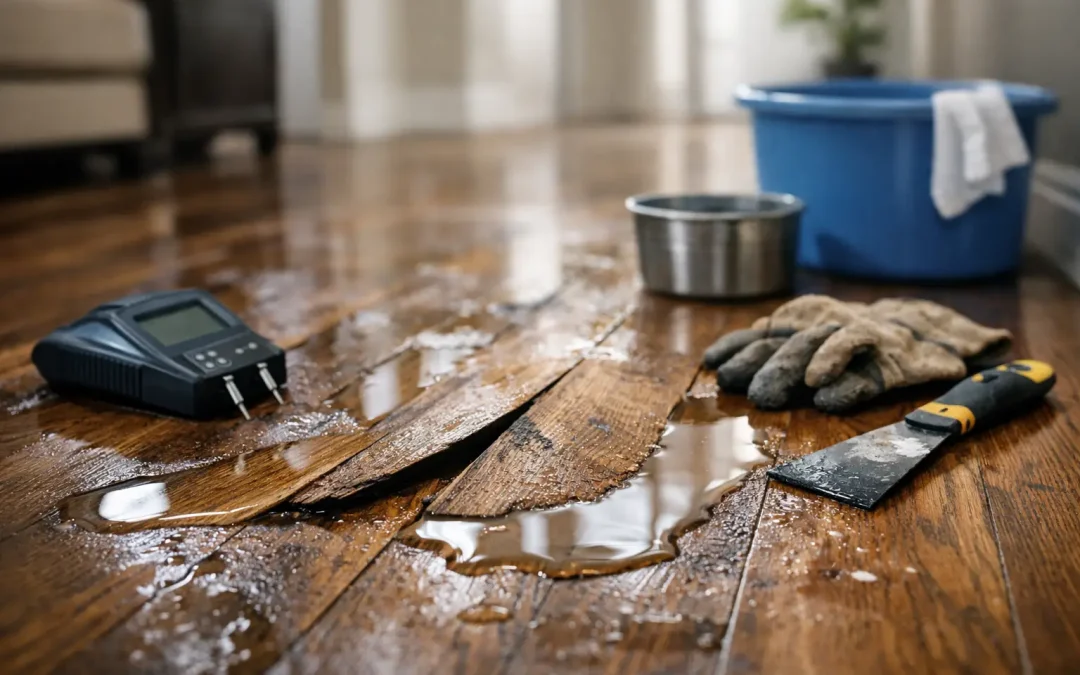
A wet spot beside the refrigerator, a slow plumbing leak, or a week of unusually high indoor humidity can change a wood floor quickly. Hardwood floor moisture damage often begins with a small visual change – a raised edge, a dark line between boards, or a section that feels uneven underfoot. The sooner the source is identified and the floor is allowed to dry correctly, the better the chance of restoring it rather than replacing it.
Wood is a natural material, which is part of its appeal. It also means wood responds to changes in moisture. In North Central Florida, where humidity can remain high for long stretches, floors are already working harder to stay stable. Add water from a leak, spill, pet accident, appliance failure, or exterior intrusion, and the moisture balance can shift fast.
Hardwood Floor Moisture Damage Starts Below the Surface
Visible water is only part of the problem. Wood flooring can absorb moisture from above, below, and along its edges. A dishwasher leak may wet the surface and seams, while a crawlspace moisture issue or slab-related condition can introduce moisture from underneath. Water can also travel farther than expected beneath baseboards or through gaps between boards.
As wood absorbs moisture, it expands. When the moisture level drops, it contracts. That movement can affect the shape of individual boards, the bond with the subfloor, and the finish protecting the floor. A floor may look acceptable immediately after an incident, then show damage days or weeks later as the wood continues to react.
This is why simply running a fan over a wet area is not always enough. Fast, controlled drying matters, but so does determining where the water came from and whether moisture remains trapped below the finished surface.
Signs Your Wood Floor Has Been Affected
The pattern of damage often provides useful clues. Cupping is one of the most common signs. The edges of each board rise higher than the center, creating a shallow U-shape. It usually means the underside of the wood is holding more moisture than the top.
Crowning is the opposite condition: the center of the board rises above the edges. This can happen when the top surface has absorbed excess moisture or when a cupped floor was sanded before it had fully dried. Once the moisture imbalance changes, the boards can reverse shape and become crowned.
Other signs deserve attention as well. You may notice dark or gray-black staining, widening or narrowing gaps, finish that looks cloudy or lifts away from the wood, boards that feel soft, or areas that squeak and move when walked on. In more severe cases, boards may buckle upward or pull loose from the subfloor.
A musty odor is another warning sign, especially after a leak or flooding event. It may point to moisture beneath the flooring, wet underlayment, or microbial growth in an adjacent wall or subfloor area. The odor should not be covered up with cleaner or fragrance. It needs a proper diagnosis.
First Steps After Water Reaches a Hardwood Floor
The first priority is stopping the water. Shut off the supply if a plumbing line or appliance is involved, address a roof or window intrusion, or move wet rugs and furniture away from the affected area. Blot standing water promptly with clean, absorbent towels. Avoid pushing water deeper into seams with a mop.
Once the immediate water is removed, improve airflow and lower indoor humidity. Air conditioning and appropriately placed fans can help, but aggressive heat is not a good shortcut. High heat can dry the surface too quickly while deeper sections remain wet, increasing the risk of cracking, checking, or uneven movement.
Do not sand, refinish, wax, or apply a fresh coat of finish to a floor that may still be damp. Sanding a cupped floor too soon is a costly mistake. The floor can flatten temporarily as it dries, leaving boards with overly thin edges or an uneven profile after premature sanding.
It is also wise to avoid heavy foot traffic and avoid replacing rugs until the area is dry. Rugs trap humidity against the finish and make it harder to see whether staining, warping, or finish failure is developing.
Can Moisture-Damaged Hardwood Be Restored?
Often, yes. The right answer depends on the type of flooring, the water source, how long the material remained wet, and whether the subfloor or surrounding structure was affected. A solid hardwood floor with mild cupping from elevated humidity may flatten as conditions stabilize. It may then be a candidate for professional refinishing if the finish has dulled, stained, or worn during the event.
Engineered wood requires more caution. Its top layer is real hardwood, but it is bonded to multiple layers beneath. When water penetrates deeply, those layers can separate or delaminate. Minor surface moisture may be manageable, while boards with swelling, loose layers, or lifted edges may need targeted replacement.
Water quality matters, too. A clean-water supply line leak is different from water that has passed through a drain line, toilet overflow, or outdoor floodwater. Contaminated water can create sanitation concerns that go beyond the floor’s appearance. In those situations, affected materials may need removal rather than restoration.
A professional assessment can distinguish between a floor that needs time and controlled drying, one that can be restored through repair and refinishing, and one with damage too extensive to preserve. That distinction protects homeowners from replacing a floor prematurely – or spending money refinishing a floor that is not stable enough to hold the repair.
Why Moisture Readings Matter Before Refinishing
A floor can feel dry to the touch and still hold excess moisture. Surface appearance is not a reliable measure of what is happening inside the wood or below it. Moisture readings help establish whether the flooring is returning to an acceptable balance with the surrounding environment.
This step is especially valuable after a leak beneath a kitchen sink, around exterior doors, near a bathroom, or over a slab or crawlspace. It helps identify whether the problem is localized or whether the moisture is more widespread. It also guides the restoration plan.
When the wood has reached a stable condition, a restoration professional can evaluate the remaining cosmetic and structural issues. Light cupping may have resolved but left worn finish or staining. A small number of damaged boards may be replaced before the rest of the floor is blended through sanding and refinishing. For floors with shallow surface discoloration, refinishing can remove damage and renew the protective finish without full replacement.
Preventing the Next Moisture Problem
Wood floors perform best in a reasonably stable indoor environment. Keeping the home’s humidity controlled, using air conditioning during humid weather, and addressing moisture in crawlspaces or around slabs can reduce seasonal movement. A hygrometer is a simple tool that helps homeowners notice when indoor humidity is staying unusually high.
Use mats near exterior doors and in front of sinks, but choose breathable options and lift them regularly to check beneath. Wipe spills promptly, and do not wet-mop hardwood floors. A barely damp microfiber mop and a cleaner made for the floor’s finish are usually safer choices than excess water or steam.
Pay attention to small changes around appliances, toilets, windows, and exterior walls. A recurring dark edge, curling board, or soft spot is easier to address when it is limited to a small area. Waiting until boards buckle or finish peels can turn a repairable issue into a larger restoration project.
When to Call for an Assessment
Call for help promptly if boards are buckling, lifting, separating, turning dark, or remaining cupped after the water source has been corrected. An assessment is also worthwhile when the affected area is larger than a small spill, when water may have reached the subfloor, or when you are unsure whether it is safe to refinish.
Natural Surface Restoration helps homeowners evaluate worn and moisture-affected wood floors with restoration in mind. The goal is to determine what the floor needs now, protect sound material where possible, and provide a clear path forward when repairs, board replacement, or refinishing are appropriate.
A hardwood floor does not have to look perfect the day after it gets wet to be worth saving. Give it the right conditions, avoid rushed cosmetic fixes, and address the source of the moisture. Careful action early can preserve the character, value, and service life of the floor beneath your feet.