
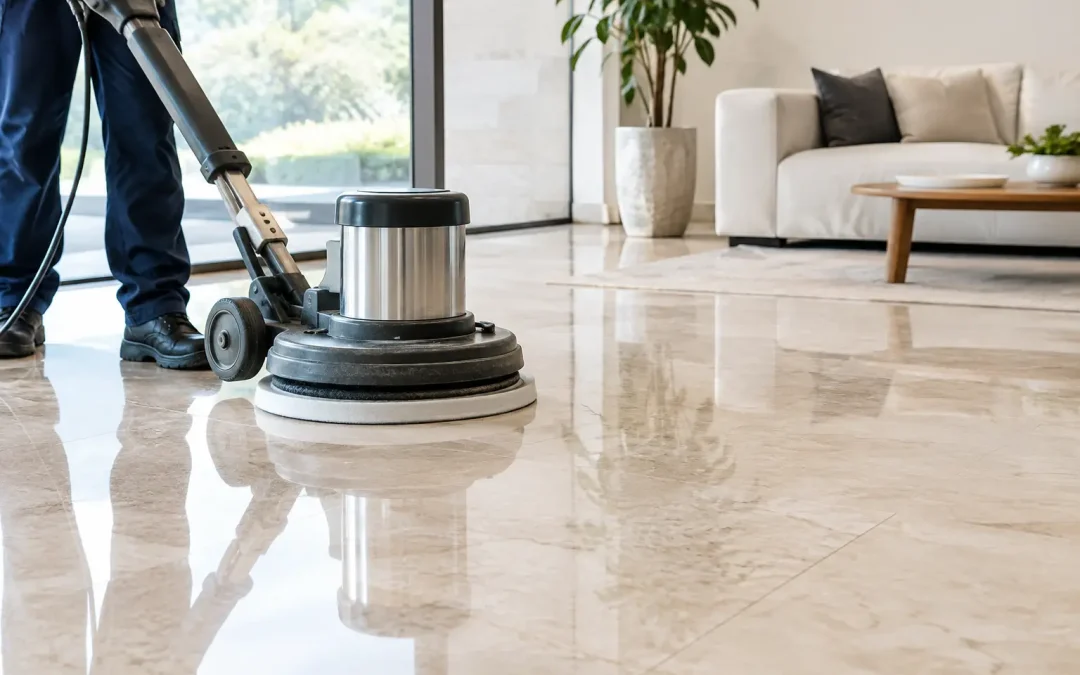
A limestone floor can look dusty and tired long before it is truly worn out. Foot traffic, gritty soil, kitchen spills, pet accidents, and the wrong cleaning products gradually take away its natural character. Professional limestone floor polishing can restore that smooth, even appearance without replacing a floor that still has years of service left.
Limestone is not a surface that responds well to guesswork. It is softer and more porous than granite, and it reacts differently than marble, travertine, ceramic tile, or porcelain. The right restoration approach depends on the stone’s finish, its condition, and the way the room is used.
Why Limestone Floors Lose Their Finish
Limestone is made largely of calcium carbonate, which gives it a warm, natural look but also makes it vulnerable to acidic products. A splash of vinegar, citrus juice, toilet bowl cleaner, or an acidic stone cleaner can leave a dull spot known as an etch. Etching is not always a stain. It is physical damage to the stone’s surface, which is why ordinary cleaning usually will not remove it.
Daily wear creates a different problem. Fine sand and grit under shoes act like sandpaper, gradually leaving traffic lanes duller than the surrounding floor. In entryways, kitchens, hallways, and open living areas, those small scratches can build up until the floor looks cloudy or uneven in natural light.
Limestone also absorbs liquids more readily than denser stone. Oils, dark beverages, plant pots, and pet accidents may leave discoloration if they are not addressed promptly. A sealer helps slow absorption, but it does not make limestone stain-proof or protect it from etching.
Limestone Floor Polishing Starts With the Right Finish
Not every limestone floor should have a high-gloss shine. Many homeowners choose limestone because of its soft, earthy appearance, and some varieties are best maintained with a honed, low-sheen finish. Trying to force a mirror-like gloss onto a stone that was installed with a matte finish can make imperfections more visible and create a look that does not fit the home.
A professional evaluation should identify whether the floor needs cleaning and sealing, honing, polishing, repairs, or a combination of services. The goal is not simply to make the stone shiny. It is to create a consistent finish that suits the material and holds up to the room’s use.
Honed Limestone vs. Polished Limestone
A honed limestone floor has a smooth but more matte appearance. It is a practical choice for busy spaces because it can disguise light scratches and water marks better than a glossy surface. Polished limestone reflects more light and can make a room feel brighter, but it requires more careful cleaning and may show etching or traffic wear sooner.
The best choice depends on the stone, the lighting, and your expectations. A formal dining room may benefit from a refined polish, while a frequently used Gainesville kitchen or pool-adjacent entry may be better served by a clean, even honed finish.
What Professional Restoration Can Address
Before any polishing begins, the floor needs to be inspected closely. Surface haze may be caused by residue, while dull spots may be etched stone. Darkened grout lines, loose tiles, cracks, and chipped edges should also be identified before the work starts.
Depending on the condition of the limestone, restoration may include deep cleaning, removal of embedded soil, filling small chips or pits, and progressive honing with specialized diamond abrasives. This controlled process levels minor surface damage and reduces scratches without using harsh chemicals that can further harm the stone.
Once the surface is refined, the finish can be brought to the appropriate sheen. A penetrating sealer may then be applied to help reduce absorption and make routine spill cleanup easier. Sealing is an important protective step, but it should be selected for the stone and applied carefully. Too much product, or the wrong type of product, can leave residue, streaks, or a plastic-looking film.
Natural Surface Restoration evaluates the condition of the limestone first, then recommends the restoration process that makes sense for the floor rather than applying the same treatment to every stone surface.
Signs Your Limestone Needs More Than Routine Cleaning
A floor does not need to be severely damaged before professional service is worthwhile. Acting before stains set deeply or traffic wear becomes pronounced can make restoration simpler and help preserve more of the original stone.
Consider an estimate when you notice four or more of these conditions:
- Dull paths through hallways, kitchens, or entryways
- White or cloudy spots caused by acidic spills or cleaners
- Dark stains around furniture, planters, or food preparation areas
- A sticky, hazy, or uneven appearance after mopping
- Small chips, open pits, or worn edges near doorways
- Water that absorbs quickly instead of beading briefly on the surface
These issues can look similar from a distance, but they do not have the same cause. For example, a topical coating failure may require a different approach than acid etching. Proper diagnosis prevents wasted effort and helps avoid treatments that can make the problem worse.
Why DIY Limestone Polishing Can Backfire
Store-bought products often promise quick shine, but many are designed to leave behind a temporary coating rather than restore the stone itself. Those coatings can trap dirt, peel in high-traffic areas, and create an uneven finish that becomes difficult to remove later.
Acidic cleaners are an even bigger risk. Products marketed for bathroom scale, grout haze, or general heavy-duty cleaning can etch limestone within minutes. Abrasive powders, stiff brushes, and aggressive scrubbing pads may add scratches while failing to correct the underlying problem.
DIY maintenance still has a place. Use a soft dust mop or vacuum with a hard-floor setting to remove grit often. Clean spills promptly with a soft cloth and a pH-neutral cleaner intended for natural stone. Use mats at exterior doors, and avoid rubber-backed mats that can discolor some stone finishes over time.
For deeper dullness, visible etching, stains, or uneven sheen, professional equipment and material-specific techniques are safer than trial and error. Limestone cannot simply be treated like tile, and grout cleaners are not automatically safe for the stone beside them.
Keeping a Restored Limestone Floor Looking Its Best
After limestone floor polishing, simple habits make a noticeable difference. The most effective protection is removing grit before it gets ground into the surface. Door mats, regular dust removal, and felt pads under furniture all reduce unnecessary wear.
Use only cleaning products that are clearly suitable for natural stone, and follow dilution directions. More cleaner does not mean a cleaner floor. Excess solution can leave a dull film that attracts more soil and masks the finish you invested in restoring.
In kitchens and dining areas, wipe up acidic foods and drinks promptly. In bathrooms, avoid using acidic products anywhere they can run onto limestone. If a spill does leave a mark, do not assume it is permanent or attempt repeated harsh cleaning. The cause should be identified first.
Sealer maintenance is also based on the floor’s use, not a fixed calendar. A lightly used room may need attention less often than a busy kitchen, entryway, or home with pets. Testing how quickly water darkens the stone can help indicate whether protection is still performing as expected.
A Better Alternative to Replacing Limestone
Replacing a limestone floor is disruptive, expensive, and often unnecessary. It can involve demolition, dust, disposal, matching challenges, and the risk of disturbing nearby finishes. When the tiles are stable and the damage is largely on the surface, restoration is usually the more practical path.
A properly restored limestone floor should still look like limestone – natural, varied, and full of character – just cleaner, smoother, and more consistent. If your floor has lost its finish or developed stains and dull traffic paths, request an estimate before assuming replacement is the only answer. The right restoration plan can protect the stone you already chose for your home and help it look right again for years to come.