
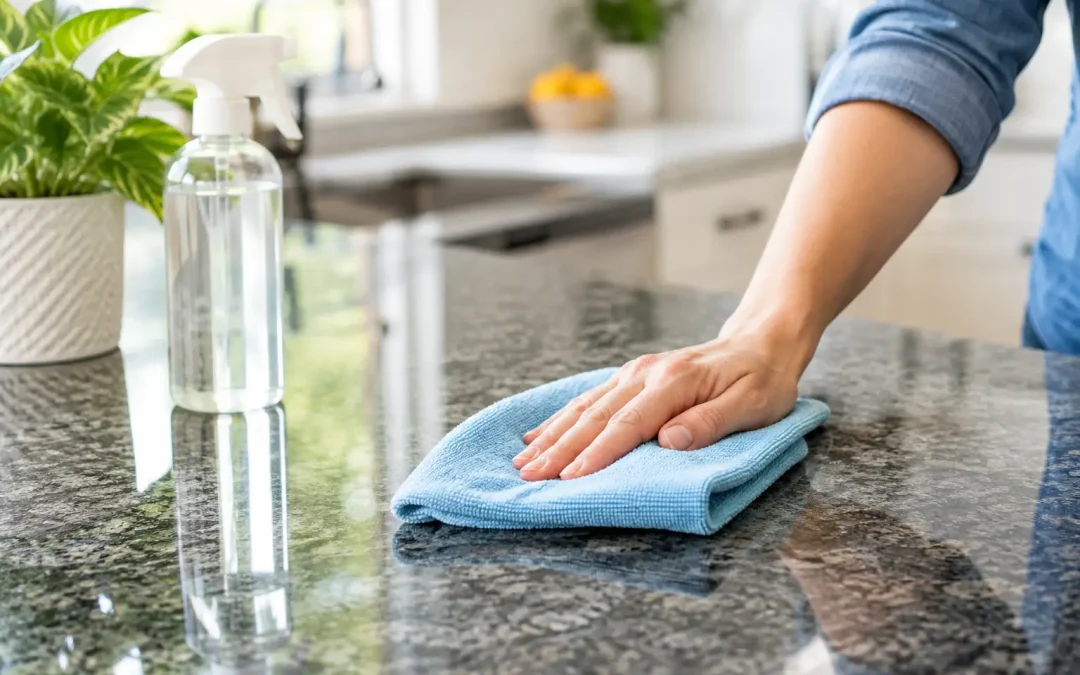
A granite countertop can look freshly wiped and still show cloudy swipe marks the moment light hits it. To clean granite without streaks, the goal is not simply using more cleaner. It is removing residue, using the right amount of moisture, and drying the surface before minerals or cleaning ingredients settle back onto the stone.
Granite is durable, but it is not maintenance-free. Many streak problems come from everyday habits that are easy to correct: spraying too much product, wiping with a saturated cloth, or leaving the counter to air-dry. With a simple routine, homeowners can keep polished granite looking clear, reflective, and well cared for.
Why Granite Looks Streaky After Cleaning
Most streaks are residue, not dirt. A cleaner can leave behind surfactants, fragrance oils, polish additives, or disinfecting ingredients that dry into a thin film. This is especially common with all-purpose cleaners, glass cleaners, and products marketed for shine.
Hard-water minerals are another frequent cause in North Central Florida homes. Water droplets left near a sink can dry into faint white spots or dull-looking lines. A cloth that has been washed with fabric softener can also transfer residue to the stone, making a clean surface look hazy.
Sometimes the issue is the countertop finish rather than the cleaning method. Honed granite has a soft, matte appearance and will not reflect light like polished granite. A worn or uneven sealer may also make portions of the counter appear darker or blotchier after cleaning. No household cleaner can fully correct a finish or sealer problem, but proper care prevents additional buildup and makes the surface easier to evaluate.
How to Clean Granite Without Streaks
Start by clearing crumbs and loose grit from the countertop with a dry microfiber cloth. This matters more than it may seem. Fine particles can drag beneath a damp cloth, creating dull smears and, over time, light wear in high-use areas.
Next, dampen a clean microfiber cloth with warm water. The cloth should be moist, not dripping. Wipe the granite in overlapping passes, working from the back of the counter toward the front edge. If the surface has normal kitchen residue, warm water is often enough for daily cleaning.
For grease, fingerprints, or dried food, add a few drops of pH-neutral stone cleaner to the cloth or use a stone-safe cleaner as directed. Avoid covering the counter with product. More spray does not mean a better clean. It usually means more material left behind to streak.
Once the surface is clean, rinse the microfiber cloth thoroughly or switch to a second cloth dampened only with clean water. This step removes any remaining cleaner film. Then dry the granite immediately with a separate, dry microfiber towel. Buff lightly in straight, overlapping strokes until the countertop is completely dry.
That final dry buff is what separates an acceptable wipe-down from a clear, streak-free finish. It removes remaining moisture before it can leave mineral deposits or uneven drying marks.
Use the Right Cloths
Microfiber is the best choice for most granite countertops because it lifts residue without being abrasive. Keep dedicated cloths for stone rather than using the same towels for windows, stainless steel, or general household cleaning. Cross-contamination from oils, furniture polish, fabric softener, or greasy kitchen messes can create the very haze you are trying to prevent.
Wash microfiber cloths without bleach or fabric softener, then allow them to dry fully. If a cloth feels waxy, smells musty, or leaves lint behind, retire it from countertop care.
Clean in Small Sections When Needed
Large islands and expansive counters can start drying before you reach the other end, particularly in a warm kitchen. Work in manageable sections if necessary. Clean a few feet of countertop, rinse away residue, and dry it before moving on.
This approach is also useful around sinks, cooktops, and coffee stations, where splashes and oils tend to build up faster. It takes a little more attention, but it prevents the streaks that show up later under overhead lighting.
Products and Habits That Cause Haze
Granite responds best to simple, stone-safe care. Strong chemicals may seem effective because they cut through grime quickly, but they can create a different problem: residue, dullness, or reduced sealer performance.
Avoid using vinegar, lemon juice, ammonia, bleach, acidic bathroom cleaners, abrasive powders, and scouring pads on granite. Granite itself is harder and less reactive than marble, but it can still be affected by repeated exposure to harsh products, especially around the sealer, grout lines, and nearby backsplash materials.
Be cautious with dish soap as well. A small amount can help with a greasy spill, but repeated soap-and-water cleaning often leaves a film that attracts smudges. If the countertop has been cleaned with dish soap for months and never looks fully clear, a residue-removal cleaning may be needed before a streak-free routine will work consistently.
Do not use countertop polish unless it is specifically approved for natural stone and the manufacturer’s instructions call for it. Many shine products create a temporary gloss by leaving material on the surface. The shine may look good for a day, then turn into smears, uneven patches, or a slippery feel.
What to Do When Streaks Will Not Go Away
If your granite still looks cloudy after cleaning with water, a stone-safe cleaner, and dry microfiber, stop adding more products. Repeated applications can build the residue layer thicker.
Instead, test a small, inconspicuous area. Wipe it with a clean damp microfiber cloth, follow with another cloth lightly dampened with fresh water, then dry it completely. If that area looks clearer, the problem is likely cleaner buildup or hard-water film. Continue carefully across the countertop using the same method.
If the haze remains in the same spots regardless of cleaning, look for signs of a surface issue. Uneven shine, rough-feeling areas, darkened zones around the sink, or spots that absorb water faster than surrounding stone can point to worn sealer, etching in adjacent materials, or a finish concern. Granite sealing helps resist staining, but it does not make the surface immune to spills or eliminate the need for proper cleaning.
A simple water test can offer useful information. Place a few drops of water on a clean, dry area and watch them for several minutes. If the stone darkens quickly, the sealer may be due for attention. That does not automatically mean the entire counter needs to be sealed immediately. The right approach depends on the stone type, finish, condition, and how the countertop is used.
A Simple Routine for Clear Granite
For most homes, wipe spills as they happen, clean daily use areas with a damp microfiber cloth, and use a pH-neutral stone cleaner only when food residue or grease calls for it. Drying the counter after each cleaning is the habit that makes the biggest visible difference.
Use trivets under hot cookware, wipe acidic foods and drinks promptly, and place a towel under dish racks or small appliances that regularly drip. These steps protect the sealer and reduce the water marks that can make polished stone look neglected.
When granite has persistent haze, staining, dullness, or uneven protection, Natural Surface Restoration can assess what the countertop actually needs rather than treating every issue as a basic cleaning problem. A professional evaluation can distinguish residue from a worn finish or sealer concern and help protect the stone for the long term.
A clear granite surface should look clean from every angle, not only from directly above. Give the countertop a final look in natural light or with the kitchen lights on before putting supplies away. That small check helps you catch moisture and residue while they are still easy to remove.