
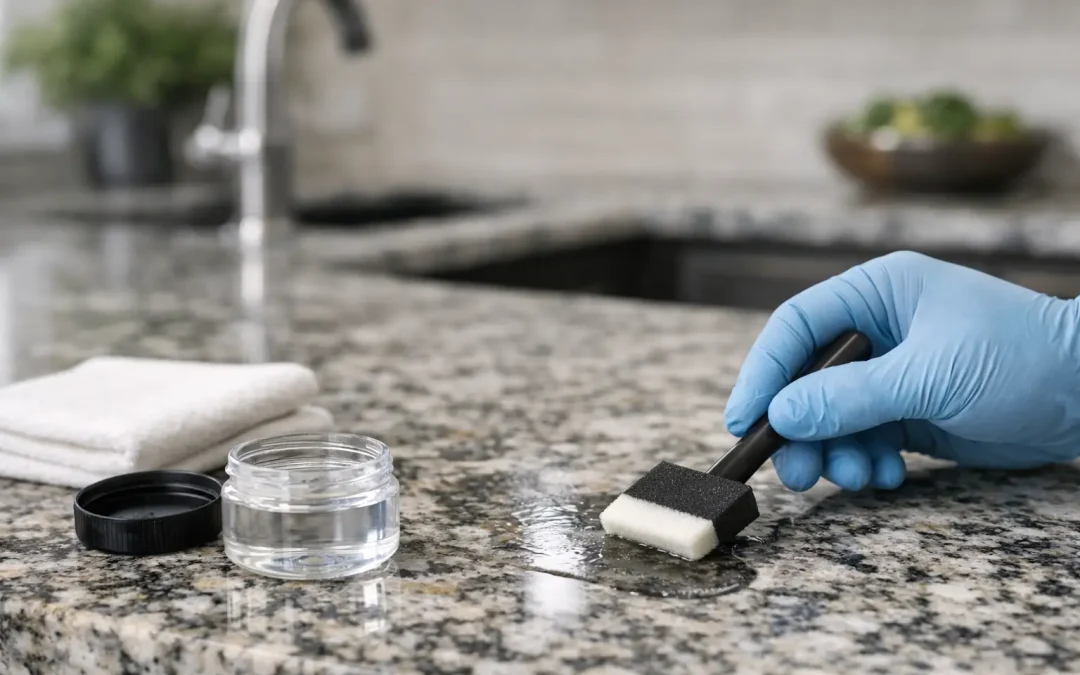
A granite countertop can look solid enough to handle anything, which is exactly why so many homeowners are surprised when dark spots, dull areas, or stubborn stains start showing up. So, does granite need sealing? In many cases, yes – but not all granite needs it at the same rate, and not every surface problem means the stone itself is failing.
Granite is a natural stone, and like most natural materials, it varies. Some slabs are dense and absorb very little. Others are more porous and can take in water, cooking oils, soap residue, or spills if they are left unprotected. That is where sealing comes in. A quality sealer helps slow absorption so your granite has more time to resist staining and stay easier to maintain.
Does granite need sealing in every home?
Not every granite surface behaves the same way. Two countertops can look nearly identical and still have very different absorption rates. The color, mineral makeup, finish, and even the specific quarry source all affect how porous the slab is.
That means sealing is not a one-size-fits-all service. Some granite countertops may hold up well for years before they need attention. Others may start absorbing moisture much sooner, especially in high-use kitchens or bathrooms where water, oils, cosmetics, and cleaners hit the surface every day.
In Florida homes, moisture and daily wear can make this more noticeable. If your granite sees frequent cooking, splashes around the sink, or cleaning with the wrong products, the protective barrier can wear down faster than expected.
What granite sealer actually does
A sealer does not turn granite into a plastic surface, and it does not make it damage-proof. That is an important distinction. Sealing helps reduce how quickly liquids soak into the stone, but it does not stop every problem.
A properly sealed granite top is still vulnerable to surface buildup, improper cleaners, and certain types of damage around seams, edges, and sink areas. Sealer also does not fix etching on acid-sensitive stones that are mistaken for granite, and it does not repair chips, cracks, or worn finishes.
What it does do is give your stone a better chance to resist staining. That extra protection matters most in areas where spills are common and cleanup is not always immediate.
How to tell if your granite needs sealing
The simplest way to check is a water test. Place a few drops of water on the surface in a few different spots, especially near the sink and prep areas. Let it sit for about 10 to 15 minutes.
If the water beads up and the stone does not darken, the sealer is likely still doing its job. If the granite darkens under the water or absorbs it fairly quickly, the surface may be ready for resealing.
You may also notice other clues. Darkened areas around the sink, oil spots near cooking zones, or sections that seem harder to clean can all point to reduced protection. These signs do not always mean the granite is permanently stained, but they do suggest it needs closer attention.
Does granite need sealing more often in kitchens?
Usually, yes. Kitchen granite works harder than almost any other stone surface in the home. It deals with cooking oils, sauces, wine, coffee, fruit juices, and constant wipe-downs. Even when homeowners are careful, the surface takes repeated daily traffic.
Bathroom granite can also need sealing, especially around vanities where water, soap, toothpaste, and cosmetics sit on the stone. But kitchen counters generally face more staining risk because of the mix of grease, color-rich foods, and heat-related residue.
That is why one countertop in your home may still be fine while another needs service. Usage matters as much as the stone itself.
How often should granite be sealed?
There is no single schedule that fits every home. Some granite may need sealing every one to three years. Other surfaces can go longer. The real answer depends on the stone’s porosity, the quality of the last sealer used, and how the surface is cleaned and used.
If you were told your granite was sealed when it was installed, that may have been true at the time. It does not mean the protection lasts forever. Builders, fabricators, and installers often apply a sealer, but the long-term performance depends on the product and the conditions in the home.
The better approach is to test the surface periodically instead of guessing by the calendar.
Common mistakes homeowners make with sealed granite
One of the biggest mistakes is assuming a shiny surface means the granite is protected. Shine and sealing are not the same thing. A polished granite countertop can still be porous if the protective barrier has worn off.
Another common issue is using harsh cleaners. Products with strong acids, bleach, or abrasive ingredients can break down sealers or leave the stone looking cloudy over time. Even if the granite does not absorb spills immediately, repeated use of the wrong cleaner can shorten the life of the finish and the sealer.
Homeowners also sometimes treat every mark as a stain in the stone, when the real problem is buildup on the surface. Soap film, residue, hard water deposits, and cooking grime can make granite look dull or discolored. In those cases, the stone may need professional cleaning before resealing makes sense.
When sealing alone is not enough
If your granite already has staining, haze, embedded residue, or dull traffic patterns, sealing may only address part of the issue. Applying fresh sealer over a dirty or worn surface does not restore the stone. In some cases, it can actually trap the problem underneath and leave the countertop still looking tired.
This is where professional surface care matters. A proper assessment can determine whether the granite simply needs resealing or whether it also needs deep cleaning, stain treatment, polishing, or repair. For homeowners trying to protect a high-value kitchen or bath, that distinction saves time and prevents disappointment.
A surface that looks “sealed” but still looks blotchy may not need more product. It may need the right restoration step first.
Does granite need sealing after professional cleaning or polishing?
Often, yes. If the surface has been professionally cleaned, stain-treated, or polished, sealing is commonly the final protection step. Once the stone is clean and properly prepared, the sealer can bond more effectively and provide more even coverage.
This is especially helpful on older granite that has gone years without proper maintenance. After restoration work, sealing helps preserve the improved appearance and makes routine care easier for the homeowner.
For homeowners in Gainesville and surrounding areas, this is often the better long-term approach than waiting until stains become obvious. Preventive care generally costs less than correcting neglected stone.
The benefit of professional granite sealing
DIY sealers are easy to find, but results depend on using the right product, preparing the stone correctly, and knowing whether sealing is even the right solution. If the granite still has residue, hidden moisture, or an existing surface issue, a store-bought sealer may not perform the way you expect.
Professional service removes the guesswork. It starts with identifying what kind of stone you actually have, how porous it is, what condition it is in, and whether the surface needs cleaning or restoration before protection is applied. That matters because not every countertop sold as granite is maintained the same way, and not every dull or stained area is solved by a fresh coat of sealer.
For a homeowner, the real goal is not just to apply a product. It is to keep the stone attractive, easier to clean, and protected against avoidable damage.
If you are unsure whether your granite needs sealing
If water is soaking in, if the stone is darkening around wet areas, or if the countertop has lost that clean, well-kept look even after wiping it down, it is worth having it looked at. The answer may be simple resealing, or it may be a combination of cleaning, polishing, and protection.
Natural Surface Restoration works with homeowners across Gainesville and nearby communities who want to preserve the surfaces they already have instead of replacing them too soon. Granite holds its value when it is cared for correctly, and a little attention at the right time can prevent much bigger problems later.
If your granite has started to look worn, uneven, or harder to keep clean, the best next step is not to guess. It is to find out what the stone actually needs so you can protect it with confidence.