
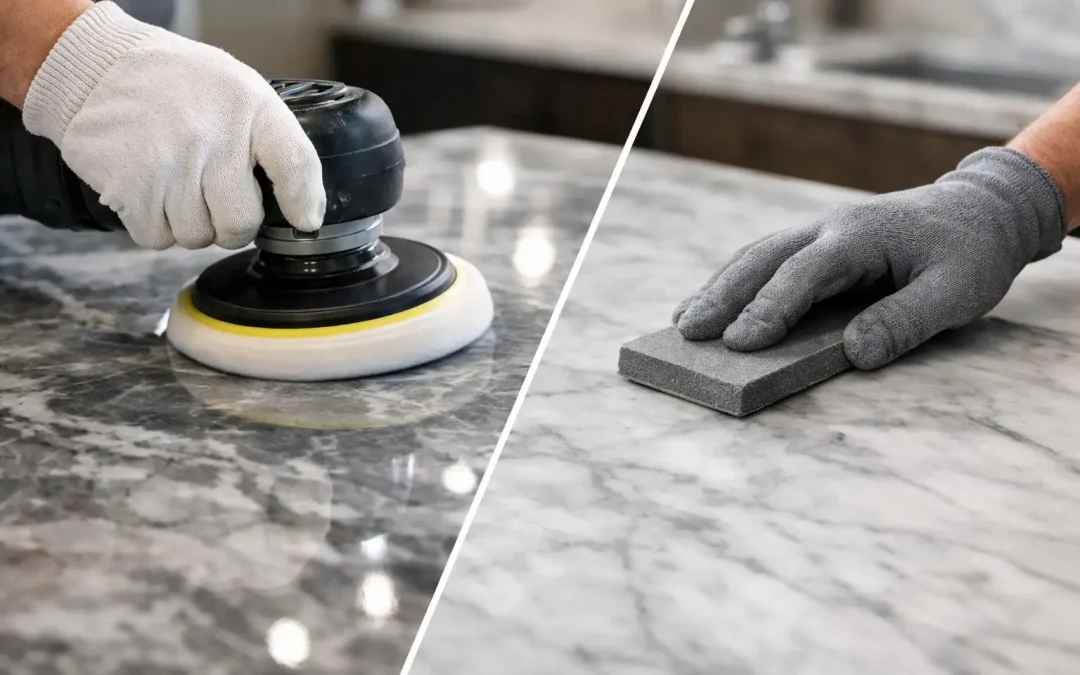
A marble floor can look dull even when it is clean. A marble vanity can show cloudy rings that no household cleaner seems to remove. In both cases, the answer often comes down to marble polishing vs honing – two restoration methods that change the stone’s appearance, feel, and ability to hide daily wear.
The right choice is not simply “shiny or not.” It depends on where the marble is installed, how your household uses the space, the condition of the stone, and the look you want to maintain. A high-gloss finish can make a foyer feel striking. A honed finish may be the more practical choice for a busy bathroom or kitchen.
What Is Marble Honing?
Honing is the process of refining marble with professional abrasives to create a smooth, even surface with little or no reflection. The result is usually called a matte, satin, or low-sheen finish. It is not rough or unfinished. Properly honed marble feels smooth underfoot and to the touch, but it does not have the mirror-like shine associated with polished stone.
Honing is also commonly used to correct surface damage. Light scratches, water marks, traffic patterns, minor lippage between tiles, and acid etching can affect the top layer of marble. By carefully removing a very thin layer of material, a restoration technician can level the affected area and restore a consistent finish.
For many homeowners, the practical advantage of a honed finish is that it is more forgiving. Etches from lemon juice, vinegar, wine, toothpaste, or some bathroom products are often less noticeable on a low-sheen surface than on highly polished marble. This does not mean honed marble cannot etch or stain. Marble is still a calcium-based natural stone, and it still needs proper care. It simply disguises certain kinds of wear better.
What Is Marble Polishing?
Polishing takes marble beyond honing. After the stone has been honed to remove damage and refine the surface, progressively finer polishing compounds or abrasives are used to bring up its natural clarity and reflection. A polished marble surface reflects light, deepens color and veining, and creates the classic formal look many homeowners want in entryways, living areas, and upscale bathrooms.
Polishing is not the same as applying wax, topical shine products, or a temporary coating. Those products can yellow, trap dirt, peel, or create uneven buildup. Professional marble polishing works with the stone itself to restore its finish rather than covering the problem.
A polished finish makes marble’s pattern more dramatic, especially on lighter stones with bold veining. It can also make a room feel brighter because the floor or countertop reflects surrounding light. The trade-off is visibility. Fine scratches, dull traffic lanes, and chemical etches are generally easier to see when the rest of the surface has a high shine.
Marble Polishing vs Honing: The Main Differences
The clearest difference between marble polishing vs honing is the amount of sheen. Polished marble is glossy and reflective. Honed marble is smooth but softly matte. Yet the choice has real consequences for maintenance and daily use.
A polished floor can show off a formal dining room, foyer, or low-traffic living space beautifully. It is a strong fit when homeowners want a refined, brighter appearance and are prepared to use stone-safe cleaners and address new damage promptly. Polished marble can also be appropriate in bathrooms, provided the area is maintained carefully and products that cause etching are kept off the stone.
Honed marble often suits high-use areas where convenience matters as much as appearance. Kitchen floors, family bathrooms, laundry rooms, and homes with children or pets may benefit from its quieter finish. Because it reflects less light, it does not highlight every small scratch or etch mark. On floors, honing can also provide a little more traction than a highly polished finish, though slip resistance depends on the specific stone, tile condition, contaminants, and moisture present.
Neither finish is automatically more durable. Both are marble. Both can be damaged by acidic cleaners, abrasive powders, standing liquids, and neglected spills. The difference is how easily normal wear shows and what visual standard you want to keep over time.
Etching Is Not the Same as Staining
This distinction helps explain why a marble surface can look damaged even after cleaning. A stain occurs when a substance is absorbed into the stone and changes its color. An etch occurs when an acidic substance reacts with marble and alters the surface itself. On polished marble, an etch often looks like a dull spot, ring, or cloudy patch because that area no longer reflects light evenly.
A cleaner cannot reverse a true etch. The affected surface usually needs honing and, if desired, polishing to blend it with the surrounding marble. Stains may require a different treatment, such as targeted cleaning or poulticing, before the finish is restored. Correct diagnosis matters because using the wrong product can worsen the problem.
How to Choose the Best Finish for Your Marble
Start with the room, not the showroom sample. A polished finish may look perfect in a controlled display, but your home has cooking spills, damp towels, pet traffic, shoes at the door, and everyday cleaning routines. The best finish is the one you will be happy to live with.
Choose polished marble when you want a more formal, high-reflection appearance and the surface is in a lower-risk area. It is especially appealing on decorative floors, fireplace surrounds, formal bathrooms, and walls where its color and veining can stand out. It is also a good option when matching existing polished marble elsewhere in the home is a priority.
Choose honed marble when you prefer a softer, more contemporary look or want to reduce the visibility of routine etching and fine wear. It works well in active kitchens and bathrooms, although it should still be sealed when appropriate and cleaned correctly. Some homeowners also choose honing because they like the natural character of stone without the highly reflective appearance.
Existing installation details matter, too. If only one section of a floor is restored, the new finish needs to blend with the surrounding stone. If the entire surface is being refinished, you have more freedom to switch from polished to honed or from honed to polished. The marble type, tile condition, grout, prior coatings, and repair needs all affect what is realistic.
Can Polished Marble Be Honed, or Honed Marble Be Polished?
Yes, in many cases. A polished surface can be honed to reduce shine, and a honed surface can be polished to increase reflection. The process is not a quick wipe-on treatment. It requires the right equipment, abrasives, technique, and testing to produce an even finish across the full area.
This is particularly important on marble floors. Spot polishing one dull area can leave a noticeable shiny patch, while spot honing can create a flat-looking section in the middle of a reflective floor. A consistent finish requires evaluating the entire surface and blending repaired areas carefully.
Natural Surface Restoration helps homeowners across North Central Florida evaluate whether their marble needs cleaning, repair, honing, polishing, sealing, or a combination of services. An on-site assessment can identify whether the issue is etching, staining, scratches, coating buildup, uneven wear, or a finish that no longer matches how the room is used.
Caring for Either Marble Finish
Good maintenance protects both honed and polished marble. Use a pH-neutral cleaner made for natural stone, rather than vinegar, citrus-based products, abrasive powders, or general bathroom cleaners. Wipe spills promptly, especially juice, wine, coffee, sauces, and toiletries. Place mats at exterior entrances and use protective pads under items that could scratch countertops or vanities.
For floors, dry dust mopping or vacuuming with a hard-floor-safe setting removes grit before it scratches the surface. Damp mop rather than soaking the floor, and avoid leaving water or cleaner residue behind. Sealer can help slow absorption and make cleanup easier, but it does not make marble acid-proof or scratch-proof.
If your marble is losing its finish, avoid trying to restore shine with consumer polish, wax, or glossy coating products. These can create a temporary improvement while making professional restoration more difficult later. A proper assessment can determine whether the stone needs a thorough cleaning, targeted stain treatment, honing, polishing, or protective sealing.
The better finish is the one that matches your home and makes marble easier to enjoy. Whether you prefer a quiet honed surface or the light-catching look of polished stone, professional restoration can bring the material back to a finish that feels intentional, even, and worth preserving.