
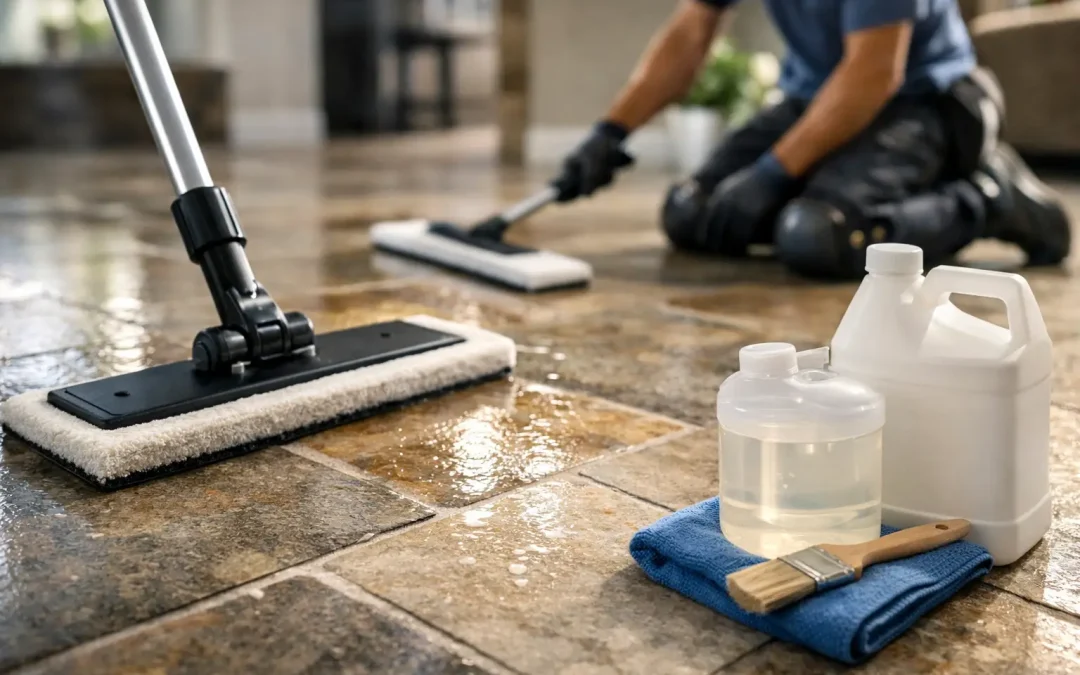
A stone floor can look solid for years and still be quietly absorbing spills, moisture, and everyday grime. That is why stone floor sealing services matter. In Gainesville-area homes, where humidity, tracked-in moisture, and daily foot traffic all take a toll, sealing is not just about appearance. It is about protecting the surface you already invested in.
What stone floor sealing services actually do
Sealing does not put a plastic coating over every type of stone, and it does not make a floor maintenance-free. What it does is help reduce how quickly porous stone absorbs liquids, oils, and dirt. On the right surface, a professional sealer gives you more time to clean up spills before they become stains and helps the floor hold its appearance longer.
That matters for materials like travertine, limestone, slate, and some marble floors. These surfaces can be naturally porous, which means they are more vulnerable to darkening from moisture, staining from oils, and general wear in kitchens, entries, hallways, and living areas. A proper sealer supports the stone without changing what makes it attractive in the first place.
Professional service also goes beyond simply applying a product. The condition of the floor has to be evaluated first. If stone is dirty, etched, scratched, or holding residue from old cleaners, sealing over that problem only locks in a poor result.
Not every stone floor needs the same approach
This is where many homeowners get mixed messages. Stone is not one category. Marble behaves differently from slate. Travertine is different from dense granite. Even two floors made from the same stone can need different treatment based on finish, age, traffic, and previous maintenance.
Porous stone usually benefits most
Travertine, limestone, sandstone, and many slate floors are often strong candidates for sealing because they tend to absorb more readily. In active households, these surfaces can pick up staining near kitchens, bathrooms, and exterior doors faster than homeowners expect.
Dense stone may need a lighter touch
Some granite and certain polished stones are less absorbent. They may still benefit from sealing, but not always in the same way or on the same schedule. Applying too much product or using the wrong type can leave residue, haze, or an uneven look.
Finish matters as much as material
Honed stone, polished stone, tumbled finishes, and textured surfaces all interact differently with sealers. A floor with grout lines and natural pits, like travertine, often needs more careful attention than a smoother surface. That is one reason a one-size-fits-all store product rarely delivers the same result as a professional evaluation.
Why homeowners call for sealing after problems start
Most people do not think about sealing until the floor starts looking harder to clean. Maybe the stone darkens when it gets wet and stays that way longer than it used to. Maybe cooking oil leaves a shadow near the kitchen island. Maybe the grout looks constantly dingy even after mopping.
Those are common signs that the surface is either unprotected, under-protected, or overdue for maintenance. The challenge is that sealing alone may not fix those issues. If staining, embedded soil, soap residue, or etching is already present, the floor may need cleaning or restoration before a new sealer is applied.
That is where an estimate from an experienced surface specialist helps. The right service plan depends on whether the issue is absorbency, buildup, surface damage, or some combination of all three.
Stone floor sealing services work best after proper prep
A sealer is only as good as the surface beneath it. If the floor is not cleaned correctly first, the result can be disappointing. Professional stone floor sealing services usually begin with identifying the material, checking porosity, spotting worn areas, and determining whether there is leftover coating or residue on the floor.
Cleaning comes first
Stone and grout often trap fine soil that ordinary mopping leaves behind. Professional cleaning removes that embedded contamination so the sealer can penetrate as intended. On some floors, this step alone makes a major visual difference.
Restoration may be needed before protection
If marble is etched, travertine is worn, or limestone has visible traffic paths, sealing is not the first fix. The stone may need honing, polishing, or targeted restoration before it is ready for protection. Sealing a damaged floor does not restore clarity or remove wear patterns.
Product selection matters
Different penetrating sealers are suited to different stones and conditions. Some are designed primarily for stain resistance. Others are chosen for enhanced color or for specialty situations. The right choice depends on the floor, the finish, and the homeowner’s expectations. More product is not always better, and the wrong sealer can create problems that are frustrating to reverse.
The value of professional sealing versus DIY
Homeowners often ask whether they can seal stone themselves. In some cases, a DIY product may seem straightforward. The problem is not just application. It is diagnosis.
If the stone is already holding residue, if the wrong cleaner has dulled the finish, or if the floor is less porous than expected, a store-bought product can lead to streaking, uneven absorption, sticky residue, or no real benefit at all. Many floors that look like they need sealer actually need cleaning or restoration first.
Professional service reduces that guesswork. It gives you a better chance of getting a result that looks right, performs as expected, and lasts longer. For homeowners who want to protect high-value interior surfaces instead of replacing them early, that difference matters.
What to expect from a local service visit
A dependable service visit should feel clear and practical, not confusing. A homeowner should be able to show the problem areas, explain how the floor is used, and get a straightforward recommendation.
In many cases, that starts with identifying the stone type and checking the condition of the finish. From there, the discussion should focus on what the floor actually needs – cleaning only, restoration plus sealing, or sealing as part of a broader maintenance plan. The best recommendations are based on the condition of the material, not a canned package.
For North Central Florida homes, local experience matters too. Moisture, traffic, sand, pets, and day-to-day cleaning habits all affect stone differently. A company that regularly works on residential surfaces in Gainesville and nearby communities is more likely to recognize the patterns homeowners here deal with.
How long sealing lasts depends on the floor
One of the most common questions is how long a stone floor stays sealed. The honest answer is that it depends. Traffic levels, stone porosity, cleaning products, spill exposure, and the quality of the original service all affect longevity.
A guest bathroom floor may hold protection longer than a busy kitchen. A dense polished surface may behave differently from a honed travertine entry. Harsh cleaners can shorten the life of the sealer, while proper maintenance helps preserve it.
That is why sealing should be viewed as part of long-term surface care, not a permanent one-time fix. A good service provider will set realistic expectations and recommend maintenance based on how the floor is actually used.
When sealing is part of a bigger restoration plan
Homeowners often reach out for one issue and discover the floor needs a more complete solution. A dull stone surface may need professional cleaning. A worn marble floor may need polishing. A stained travertine floor may need restoration before sealing can do its job.
This broader view is often where the best results come from. Instead of treating sealing as an isolated add-on, it becomes the protection step that follows proper correction. That approach helps the floor not only resist future staining, but also look better right away.
For homeowners who have multiple hard surfaces in the home, working with a company that understands stone, tile, grout, terrazzo, concrete, and wood can also simplify maintenance decisions. Natural Surface Restoration takes that practical approach by focusing on restoring the material first and then protecting it for the future.
Choosing the right stone floor sealing services
The right service should leave you with confidence, not questions. You want clear communication, realistic expectations, and visible care in how the floor is evaluated and treated. Before-and-after results matter. So do reviews, local accountability, and a willingness to explain whether sealing is truly the next step.
If your stone floor looks dull, stains too easily, or never seems fully clean, it may be time to have it looked at by a professional. A well-sealed floor is easier to maintain, better protected from everyday wear, and more likely to keep the character that made you choose stone in the first place.
A good stone floor does not usually need replacement. More often, it needs the right hands, the right process, and protection that fits the material.