
A countertop can look spotless and still have a cloudy ring around the sink, a dull patch near the coffee maker, or light marks where a cleaner sat too long. That is usually not a stain. It is etching, and marble etch removal is a very different process from regular cleaning.
For many homeowners, that distinction matters because the wrong fix can make the surface look worse. Marble is a calcium-based stone, which means common household acids can react with the finish and leave behind a rougher, lighter-looking area. Lemon juice, vinegar, some bathroom products, wine, and even certain stone cleaners can all play a role. If the shine is gone, wiping harder will not bring it back.
What marble etching really is
Etching is surface damage, not dirt sitting on top of the stone. When an acidic substance contacts marble, it chemically reacts with the calcium carbonate in the stone. That reaction changes the texture of the finish. On polished marble, the result usually looks dull, chalky, or lighter than the surrounding area. On honed marble, it may show as a darkened spot, a shadow, or a patch that catches light differently.
This is why marble etch removal is not the same as stain removal. A stain has moved into the stone and changed its color. An etch changes the actual surface. One issue calls for drawing material out. The other calls for restoring the finish.
That difference is where many DIY attempts go off track. Homeowners often try degreasers, poultices, scrubbing pads, or stronger cleaners, expecting the mark to lift. But an etch will not wash away because the stone itself has been affected.
Why marble etch removal is rarely a cleaning job
If the mark feels smooth but looks dull, there is a good chance the finish has been interrupted. If it feels slightly rough, the etch may be more severe. In either case, the solution is usually some level of refinishing.
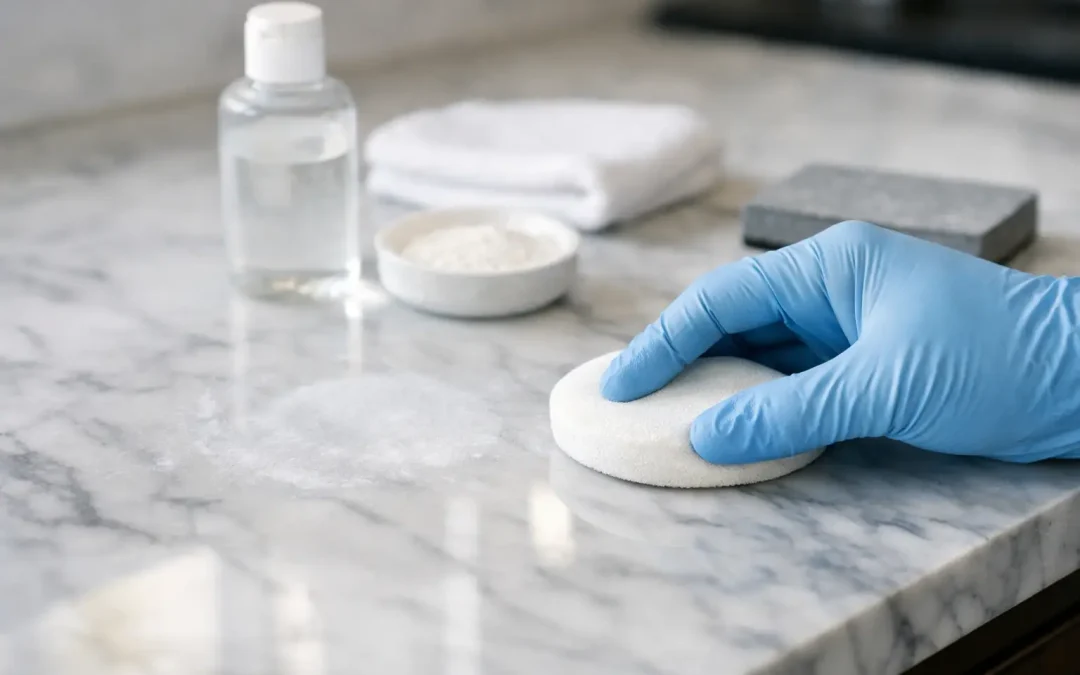
Light etching can sometimes be improved with a marble polishing powder or a specialty etch remover made for calcite-based stone. But results depend on the type of marble, the existing finish, and how deep the damage goes. A polished vanity top may respond differently than a honed floor tile or a heavily used kitchen island.
That is the trade-off with store-bought products. They can help with very minor, isolated etches, but they can also create an uneven sheen if they are not used carefully. One spot may get shinier while the surrounding stone stays muted. On a larger area, that mismatch can stand out just as much as the original damage.
Signs the surface needs professional restoration
Some etched marble can be corrected quickly. Some needs a more complete refinishing process to make the appearance consistent again. The difference usually comes down to size, depth, location, and finish.
If you are seeing widespread dullness, overlapping rings, or traffic patterns on marble floors, spot treatment is usually not enough. The same is true when etching is mixed with scratches, hard water buildup, soap residue, or worn sealer. In those cases, restoring one mark without addressing the surrounding wear often leaves a patchwork look.
Professional restoration is also the better option when the marble has a high-gloss finish and sits in a visible area like a bathroom vanity, shower, foyer, or kitchen countertop. Polished marble shows inconsistency fast. A repair that is technically better but visually uneven is still a problem.
Marble etch removal on countertops, floors, and bathrooms
Not all marble surfaces wear the same way. Countertops often show etching from cooking acids, drinks, hand soap, and skincare products. Bathroom vanities are common trouble spots because toothpaste, mouthwash, and cosmetic products can quietly damage the finish over time.
Floors are a different situation. Etching on marble floors often overlaps with abrasion from foot traffic. What looks like general dullness may be a mix of acid damage and mechanical wear. That matters because powders and hand-polishing products are usually designed for small areas, not broad floor sections that need a uniform finish.
Shower walls and wet areas add another layer. Hard water deposits can sit on top of the marble while etching affects the stone underneath. If you remove buildup without correcting the finish, the surface can still look cloudy. If you try to treat the etch without removing the buildup correctly, you may not get a clean result. It depends on what is actually happening at the surface.
Can DIY marble etch removal work?
Sometimes, yes. But only in a narrow range of situations.
If the etch is small, shallow, and limited to one area, a marble polishing product made specifically for etch repair may help. The instructions matter. So does testing in an inconspicuous spot first. Marble varies, and a product that works on one stone can leave another looking hazy or uneven.
The bigger risk is assuming every dull spot is minor etching. Some surfaces have factory finishes, resin-filled areas, coatings, or wear patterns that do not respond well to consumer products. Using the wrong pad, too much pressure, or too much product can create a visible difference in gloss that is hard to blend back in.
That is why homeowners often reach a point where the original mark is less noticeable, but the surrounding finish now looks inconsistent. At that stage, the repair usually becomes a restoration project.
How professionals handle marble etch removal
Professional marble restoration is about matching and rebuilding the finish, not just treating a mark. The process can include honing, polishing, blending, and protecting the stone depending on the extent of the damage and the finish the homeowner wants.
For polished marble, the goal is to restore clarity and reflection without leaving swirl marks or isolated shiny spots. For honed marble, the goal is a smooth, even, low-sheen finish that looks natural across the full surface. That often means treating more than just the damaged area so the result looks consistent from edge to edge.
A trained technician also evaluates whether etching is the only issue. Many marble surfaces have a combination of etches, scratches, residue, and sealer breakdown. Correcting the whole picture usually delivers a better and longer-lasting result than chasing one symptom at a time.
For homeowners in Gainesville and surrounding North Central Florida communities, that local experience matters. Humidity, hard water, and everyday household use all affect how natural stone performs in real homes, not just in product instructions.
After marble etch removal, protection matters
Once the finish has been restored, prevention becomes the next priority. Sealing helps with staining, but it does not make marble acid-proof. That is one of the most common misunderstandings about natural stone. A sealed marble countertop can still etch if lemon juice, vinegar, or a harsh bathroom product sits on it.
The better approach is day-to-day care that respects the material. Use a pH-neutral cleaner made for natural stone. Wipe spills promptly, especially anything acidic. Keep personal care products on trays when possible. Use mats and coasters where they make sense. On floors, regular dust removal helps reduce abrasive wear that can dull the finish over time.
If you love marble, these habits are part of owning it well. Marble is durable, but it is not maintenance-free. The good news is that when it does get etched, it can often be restored instead of replaced.
When it makes sense to call for help
If you are dealing with a single faint ring in a low-visibility spot, a careful DIY approach may be reasonable. If the marble is expensive, highly polished, heavily etched, or part of a larger worn area, professional service is usually the safer move.
That is especially true when the stone is a focal point in the home. Kitchen islands, primary bath vanities, entry floors, and shower surrounds all benefit from a repair that looks even under real lighting, not just better from one angle. A proper restoration also helps protect the value and appearance of the surface you already invested in.
Natural Surface Restoration works with homeowners who want to bring worn stone back to life without rushing into replacement. When marble has lost its finish, the right repair can make the surface look clean, sharp, and cared for again.
If your marble still looks dull after cleaning, trust what you are seeing. It may not need a stronger cleaner. It may need the finish restored by someone who knows how to bring the stone back evenly and protect it for what comes next.