
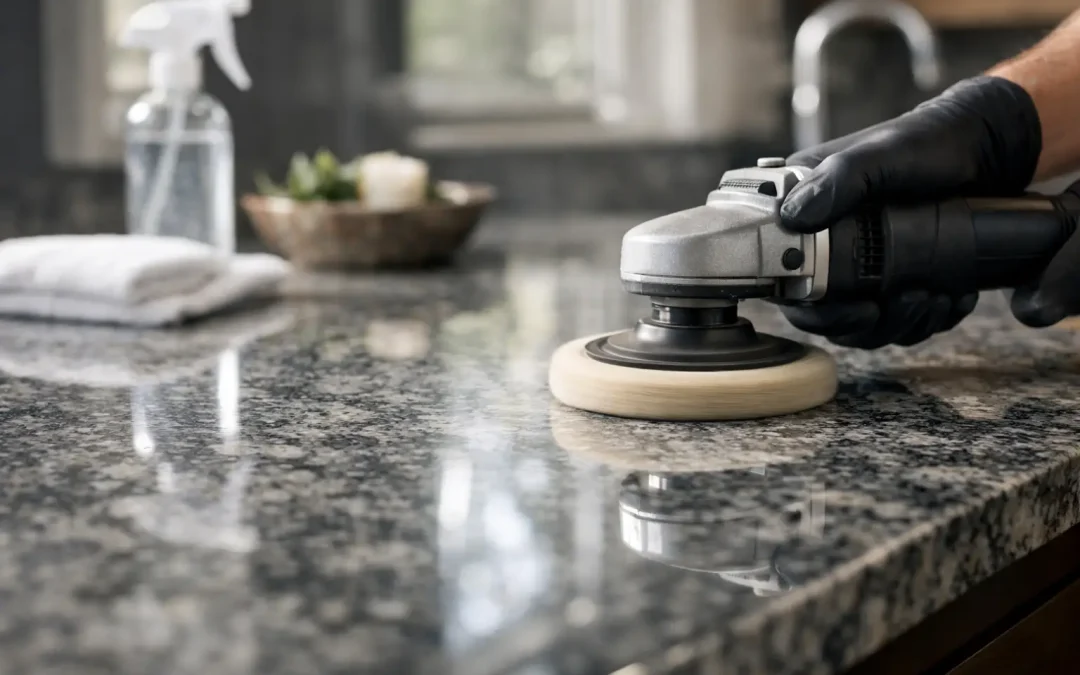
A granite countertop can look dull even when it is clean. Water spots around the sink, a cloudy film near the cooktop, fine scratches in the reflected light, or residue that never seems to wipe away can make a durable stone surface feel worn out. Granite countertop polishing can improve the finish, but it is not the right answer for every granite problem. The first step is knowing what is actually affecting the surface.
For homeowners who have invested in natural stone, that distinction matters. Polishing a countertop that only needs deep cleaning can waste effort. Applying the wrong product to a countertop with coating buildup can make the haze worse. A correct evaluation protects the stone and leads to a finish that looks clean, clear, and appropriate for the rest of the kitchen.
What Granite Countertop Polishing Can Restore
Granite is a dense natural stone that is usually finished with a polished, honed, or leathered surface. A polished granite countertop should reflect light clearly and feel smooth, while a honed countertop has a softer, matte appearance by design. The goal is not to make every granite surface glossy. It is to restore the finish the stone was meant to have.
True polishing can improve a surface that has lost clarity from light wear, minor abrasion, or an uneven finish. With the proper stone-specific abrasives and polishing methods, a restoration specialist can refine the surface rather than simply cover it with a temporary shine product. This is especially useful on older countertops that have seen years of daily cooking, cleaning, and traffic around the sink.
However, many countertops described as “dull” are not actually worn down. They may have hard-water deposits, soap residue, cooking oils, residue from improper cleaners, or a topical product that has dried unevenly. In those cases, careful cleaning and residue removal may restore the appearance without full polishing.
Why Granite Loses Its Shine
Granite has a reputation for being nearly indestructible, and it is one of the harder natural stones used in homes. Still, hard does not mean maintenance-free. The finish can lose its visual depth over time, particularly in busy kitchens.
A common issue is cleaner buildup. Products marketed for shine can leave behind waxes, oils, or polymers that initially make the countertop look better. After repeated use, that layer can attract smudges, turn cloudy, or show streaks in sunlight. Harsh degreasers and abrasive powders can also leave a countertop looking flat or uneven.
Water is another frequent source of complaints. In North Central Florida, mineral-rich water can leave deposits around faucets, soap dispensers, and sink edges. These deposits can look like dullness, but polishing over them does not solve the cause. They must be removed safely before the condition of the stone finish can be evaluated.
Fine scratches may also reduce the mirror-like reflection of polished granite. Granite resists scratching better than marble, limestone, and many other natural stones, but grit on the countertop, rough-bottomed cookware, and repeated sliding of heavy items can still affect the finish. The damage is often most noticeable when light hits the surface at an angle.
When Polishing Is Not the First Repair
Granite countertop polishing is sometimes requested for problems that need a different service. A darkened area around the sink may be a stain, moisture issue, or failed caulk joint. A rough spot may be a natural pit, fissure, or chip rather than surface wear. A white, crusty ring near a faucet is often mineral buildup. None of these issues should be treated as simple polishing projects.
Chips along an edge or near the cooktop may need a color-matched stone repair before refinishing. Deep scratches require more involved honing before a polished finish can be restored. If a countertop has been coated with an unsuitable topical sealer or enhancer, that coating may need to be stripped or corrected first.
There is also the question of finish. Honed and leathered granite are intentionally less reflective than polished granite. Trying to force a glossy look onto those finishes can create an uneven appearance and change the character of the stone. A good restoration plan respects the original finish rather than treating every countertop the same way.
How a Professional Granite Restoration Process Works
The right process begins with inspection, not a bottle of polish. A stone specialist checks the countertop’s finish, identifies buildup or damage, looks for staining, and tests how the surface responds to cleaning. This helps separate a surface-level issue from a condition that requires honing, polishing, repair, or sealing.
If residue is causing the haze, the countertop is cleaned using products and methods chosen for natural stone. If polishing is needed, the technician uses a controlled sequence of abrasives to refine the granite surface. The exact approach depends on the color, mineral makeup, finish, and condition of the stone. Dark granite, for example, can reveal swirl marks and uneven sheen more easily than lighter varieties.
After the finish is restored, sealing may be recommended if the granite is porous enough to benefit from it. Sealer is not a shine product. It is intended to slow the absorption of liquids and make routine cleanup easier. A properly sealed countertop still needs prompt spill cleanup, especially around oils, wine, coffee, citrus, and cooking ingredients with strong color.
Natural Surface Restoration evaluates granite with the full condition of the countertop in mind, including cleaning needs, finish restoration, repairs, and protection. That approach helps homeowners avoid treating a visible symptom while leaving the real cause in place.
What to Avoid on Granite Countertops
The products used between service visits have a major effect on how long granite stays clear and attractive. Daily care does not need to be complicated, but it does need to be consistent. Use a soft microfiber cloth with water or a cleaner labeled specifically for natural stone, then dry the surface to prevent water spotting.
Avoid acidic cleaners, vinegar, lemon juice, bleach-heavy products, abrasive scrub powders, and scouring pads. Granite is more acid-resistant than marble, but these products can still damage seams, degrade sealers, dull certain mineral components, or leave residue behind. Do not use furniture polish, cooking oil, or wax to create a shine. These shortcuts often produce a greasy appearance that becomes harder to remove over time.
Use trivets for hot cookware and cutting boards for food preparation. Granite handles everyday heat well, but sudden temperature changes and repeated stress can contribute to cracking, especially near seams, edges, or existing fissures. Wipe spills promptly, and keep soap dispensers and wet sponges from sitting in the same place for long periods.
How to Tell Whether Your Countertop Needs Service
A countertop may be ready for professional attention if it remains cloudy after proper cleaning, has visible scratches or dull traffic areas, shows persistent rings near fixtures, or absorbs water and darkens quickly. A simple water test can offer a clue: place a few drops of water on a clean, dry area and watch them for several minutes. If the stone darkens quickly, it may be time to discuss sealing. This test does not diagnose every issue, but it can help identify changes in the surface’s resistance to moisture.
Photos can be useful when requesting an estimate, particularly if they show the issue in both natural light and overhead light. Include close images of dull spots, chips, staining, or areas around the sink, along with a wider view of the countertop. An on-site evaluation is still the best way to determine whether cleaning, repair, granite countertop polishing, or sealing will provide the right result.
For homeowners in Gainesville and surrounding North Central Florida communities, restoring granite can often preserve a valuable countertop without the cost and disruption of replacement. The best next step is simple: have the surface assessed before reaching for a shine product. A correct diagnosis can bring back the stone’s natural clarity and help protect it for years of daily use.