
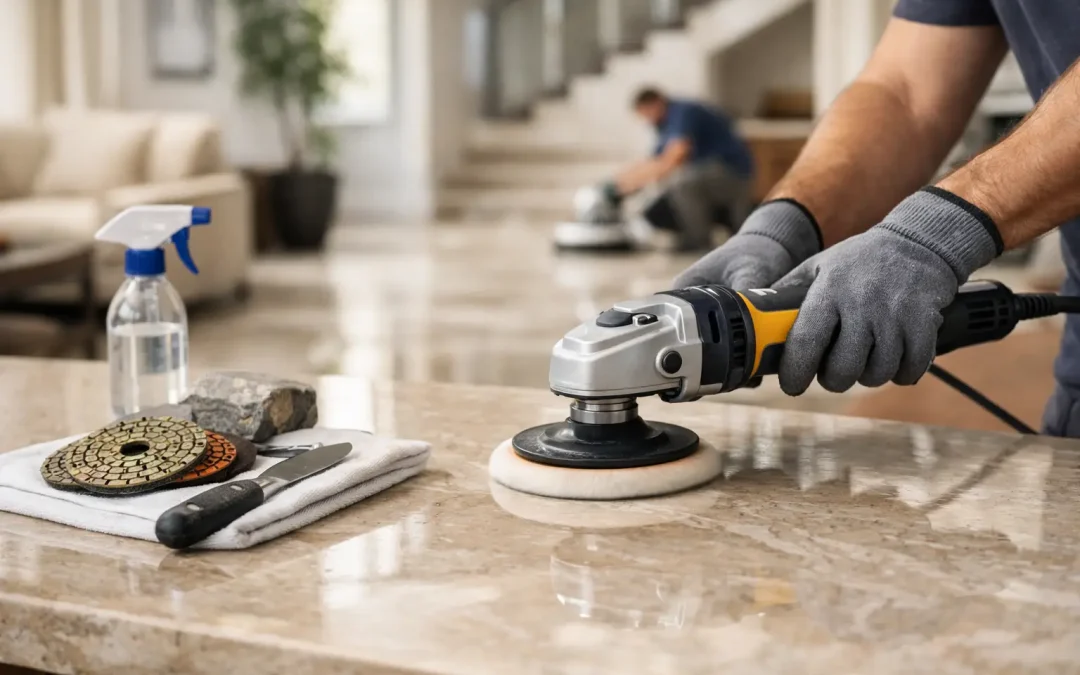
A marble foyer can look permanently worn after years of foot traffic. A travertine floor may develop dark, uneven areas that no mop seems to improve. Granite counters can lose their clean appearance around sinks and cooktops. Stone surface restoration services address these problems at the source, restoring the material’s appearance while helping protect the investment you have already made in your home.
For Gainesville homeowners, professional restoration is often a better answer than replacement. Natural stone is durable, but it is not maintenance-free. The right process can remove buildup, reduce visible wear, correct dullness, and bring back the finish that made the surface stand out in the first place.
What Stone Surface Restoration Services Can Correct
Stone problems do not always look the same. A dull floor may be covered with embedded soil, soap residue, or an old coating that has yellowed over time. On marble, limestone, and travertine, dull spots are often etching caused by acidic products, food, or spills. What appears to be a stain could be moisture movement, mineral deposits, or a contaminant that has entered the stone’s pores.
That distinction matters. Using the wrong cleaner or polishing product can make the issue worse, particularly on softer calcite-based stones. Professional stone surface restoration begins with identifying the material, the finish, and the actual cause of the damage before work begins.
Depending on the surface condition, restoration may include deep cleaning, stain treatment, honing, polishing, crack or chip repair, grout cleaning, sealing, or color enhancement. The goal is not to make every surface look artificially new. It is to restore a clean, even, appropriate finish that fits the stone and the room.
Signs Your Stone Needs Professional Attention
Homeowners often wait until stone looks severely damaged before calling for help. In many cases, earlier service produces a better result and can reduce the amount of corrective work needed.
A professional evaluation is worthwhile when floors stay dull after routine cleaning, when polished stone has cloudy or etched areas, or when grout lines make an otherwise clean room look neglected. Other common concerns include dark traffic paths, water marks around faucets, discoloration near showers, rough patches on a once-smooth floor, and sealers that no longer seem to repel water or spills.
Stone can also become slippery or hard to clean when residue builds up on its surface. This is especially common in bathrooms, kitchens, entryways, and pool-adjacent areas where moisture, body oils, soap, and outdoor soil collect over time.
The Right Restoration Process Depends on the Stone
There is no single product or machine that is right for every natural stone surface. Marble requires a different approach than granite. Travertine and limestone have different needs than slate, sandstone, or terrazzo. A reliable restoration company should explain what your specific surface needs and why.
Deep Cleaning Comes Before Polishing
A polished surface will not look its best if dirt, residue, or old coatings remain in the stone or grout. The restoration process commonly starts with professional cleaning designed to remove contaminants without damaging the material.
This is more than a stronger version of household cleaning. The proper method accounts for the stone’s porosity, surrounding grout, existing sealers, and finish. For example, acidic cleaners may cut through some mineral deposits, but they can etch marble, travertine, and limestone. A surface that looks cleaner for a day can be left permanently dull if the wrong chemistry is used.
Honing and Polishing Restore the Finish
Honing uses specialized abrasives to remove or reduce scratches, etching, wear patterns, and unevenness. It is often the step that brings a damaged stone floor back to a consistent appearance. Polishing then refines the surface to achieve the appropriate sheen, whether that is a soft satin finish or a higher polish.
Not every floor should be highly polished. A honed finish can be a practical choice for active households because it tends to make small scratches and future etching less noticeable. The best finish depends on the stone, its location, lighting, traffic, and your expectations for ongoing care.
Repairs and Sealing Protect the Work
Small chips, holes, open seams, and damaged grout can take away from an otherwise beautiful surface. In many cases, these issues can be repaired as part of the restoration process. Travertine, for example, often has natural voids that may need filling and blending before the floor is honed or sealed.
After cleaning and restoration, a quality sealer can help reduce absorption and make routine maintenance easier. Sealer is not a force field. It will not prevent every stain, scratch, or etch mark, and it does not replace prompt spill cleanup. It does provide an added layer of protection when the right product is selected and applied correctly.
Marble, Granite, Travertine, and Terrazzo Need Different Care
Marble is valued for its elegance, but it is especially vulnerable to etching. Citrus, vinegar, wine, some bathroom products, and even certain cleaners can leave dull marks that look like stains. Polishing may improve the appearance, but deeper etching often requires honing first.
Granite is generally harder and more resistant to scratching, yet it can still absorb oils, develop residue, or lose its even finish. Proper granite cleaning and sealing can restore the countertop’s appearance without relying on harsh products that may affect the stone or surrounding caulk.
Travertine and limestone are porous, softer stones that benefit from careful cleaning, repair, and sealing. Their natural variation is part of their appeal, so restoration should improve uniformity without erasing the character of the material.
Terrazzo has its own restoration requirements. Its mix of stone chips and binder responds best to a process designed for terrazzo, particularly when the floor has lost gloss, developed stains, or needs renewed protection. Using a one-size-fits-all method can lead to uneven results across these different surfaces.
Restoration Often Makes More Sense Than Replacement
Replacing a stone floor or countertop can involve demolition, disposal, material selection, installation, and repairs to nearby finishes. Costs can rise quickly, especially when the stone runs through multiple rooms or connects to cabinets, backsplashes, baseboards, and doorways.
Restoration preserves the original material while addressing the wear that makes it look outdated or neglected. It is usually less disruptive than replacement and can extend the useful life of a premium surface for years. That said, restoration has limits. Severe cracking, loose tiles, structural movement, or extensive stone loss may require repair work beyond refinishing alone.
A clear estimate should set realistic expectations. Some deep stains may lighten rather than disappear completely. Natural pits, veins, and color variation may remain visible because they are features of the stone, not defects. Honest guidance helps homeowners choose the right level of service without promising an unnatural result.
Choosing a Local Stone Restoration Specialist
The best provider is not simply the company that offers the lowest price. Look for a specialist who works with multiple stone types, evaluates the condition before recommending a treatment, and can explain the difference between cleaning, honing, polishing, and sealing.
Before-and-after work is helpful because it shows the kind of change the company can produce on real residential surfaces. Reviews also matter, particularly when they mention communication, care around the home, professionalism, and lasting results. For a Gainesville-area homeowner, local experience is valuable because the provider is accountable to the community and available for future maintenance needs.
Natural Surface Restoration serves homeowners throughout Gainesville, Alachua County, and surrounding North Central Florida communities with restoration options for marble, granite, travertine, terrazzo, tile, grout, concrete, and other hard surfaces. A professional assessment can determine whether your surface needs a deep clean, refinishing, protection, or a combination of services.
Keep Restored Stone Looking Better Longer
After restoration, simple maintenance goes a long way. Use cleaners made for your specific type of stone, wipe spills promptly, and avoid acidic or abrasive household products unless a stone professional confirms they are safe. Entry mats can reduce the grit that scratches floors, while protective pads help prevent countertop damage from heavy objects.
Resealing schedules vary widely. A busy kitchen counter, shower, or entry floor may need more frequent attention than a low-traffic room. Instead of relying on a calendar alone, watch how the surface responds to water and spills. If moisture quickly darkens porous stone or cleaning has become more difficult, it may be time for a professional check.
If your stone has lost the clean, finished look you expect, do not assume replacement is your only option. An experienced restoration professional can help you understand what is happening beneath the dullness and recommend a practical path to bringing the surface back to life.