
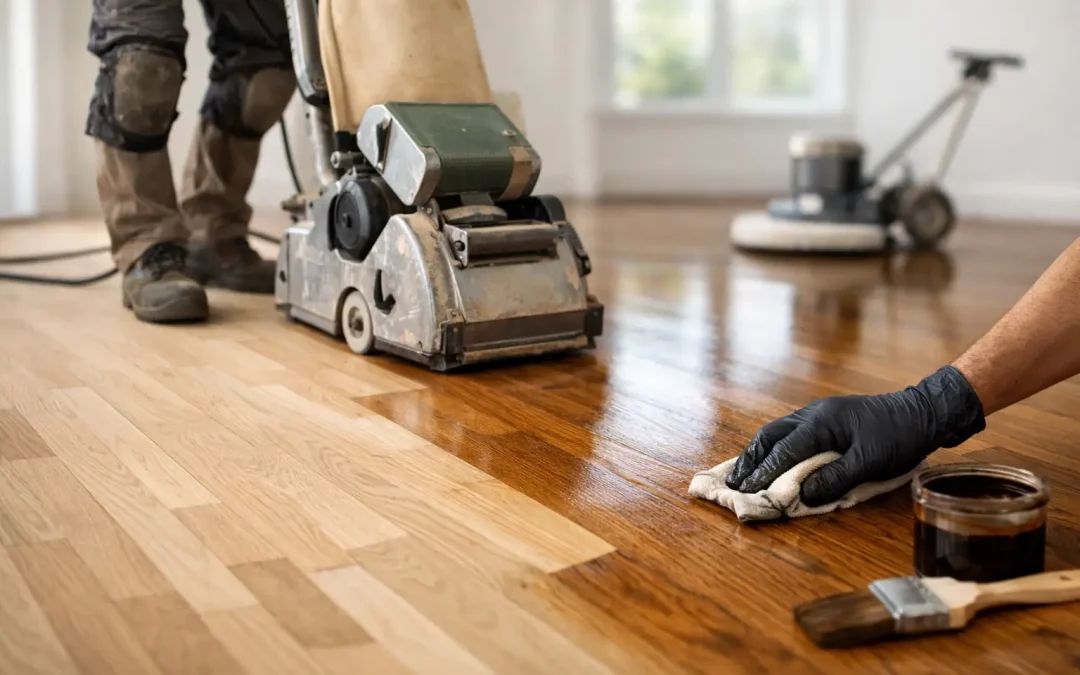
Afternoon sunlight has a way of revealing what everyday life hides: dull traffic paths, shallow scratches around the dining table, fading near doors, and a finish that no longer looks clean even after mopping. A hardwood refinishing service addresses more than surface appearance. When the wood itself is still sound, refinishing can remove years of wear and give the floor a fresh protective finish without the cost and disruption of replacement.
For homeowners, the key question is not simply whether a floor looks old. It is whether the existing hardwood has enough life left to restore. The answer depends on the thickness of the wood, the condition of the finish, past refinishing work, moisture exposure, and the type of damage present.
Signs Your Hardwood Floor May Need Refinishing
A worn finish is often the first warning sign. If high-traffic areas appear gray, cloudy, or noticeably lighter than the rest of the room, the protective coating may be worn away. Wood that absorbs a small drop of water rather than holding it on the surface can also indicate that the finish is no longer doing its job.
Scratches are another common concern, especially in homes with pets, active families, or furniture that is moved regularly. Fine scratches limited to the coating may be addressed with a lighter restoration approach. Scratches that cut into bare wood, however, leave the floor vulnerable to moisture, stains, and deeper damage.
Discoloration can be more complicated. Area rugs, window light, spills, and old water exposure may leave uneven color across the floor. Refinishing can often improve these issues by sanding away the existing finish and creating a consistent new color. It cannot always erase dark stains that have penetrated deeply into the wood fibers, but a proper assessment will show what level of improvement is realistic.
Finish Wear Is Different From Structural Damage
Not every damaged-looking floor needs full sanding and refinishing. In some cases, the floor only needs a screen and recoat, which lightly abrades the existing finish and adds a new protective topcoat. This option works best when the finish is dull or lightly scratched but remains intact.
Refinishing is the better fit when there are bare spots, widespread scratches, uneven color, old finish failure, or damage that extends below the topcoat. It is also useful when homeowners want to change the stain color or remove an outdated orange or yellow tone.
Severe cupping, loose boards, soft spots, active moisture problems, or extensive pet stains require a closer look. Sanding a floor before the underlying moisture issue is corrected can lead to wasted work and recurring damage. A dependable contractor should identify those concerns before recommending a solution.
What a Hardwood Refinishing Service Can Fix
A professional hardwood refinishing service is a restoration process, not a quick cosmetic coating. The work begins with evaluating the floor type, wear layer, repairs needed, and condition of the existing finish. Solid hardwood can often be refinished several times during its lifespan. Engineered hardwood may also be refinished, but only if its top wood layer is thick enough for safe sanding.
After the evaluation, the floor is prepared by removing furniture and addressing damaged boards, gaps, protruding fasteners, or other conditions that could affect the final result. The old finish is then sanded away in controlled stages. This step levels worn areas, reduces scratches, and exposes clean wood for the new finish system.
Edges, corners, and detailed areas require careful hand work. These are the places where poor technique often shows up, with uneven color, visible sanding marks, or damage along baseboards. Proper equipment and experience make a meaningful difference in how even the restored floor looks from one side of the room to the other.
Once sanding is complete, the floor can be stained if a color change is desired. Some homeowners prefer a natural finish that lets the species and grain stand out. Others choose a deeper tone to complement cabinetry, paint, or updated furnishings. Stain samples are useful because the same color can look very different on red oak, white oak, maple, hickory, or reclaimed wood.
The final step is applying protective finish coats. The right sheen and finish type depend on the room, lifestyle, and maintenance expectations. A flatter sheen can help hide small scratches and everyday dust, while a glossier finish reflects more light but tends to reveal wear more easily. There is no single best choice for every home.
Refinishing Versus Replacing Hardwood Floors
Replacement is sometimes necessary, but it should not be the automatic answer to a worn floor. If the hardwood boards are stable, the floor is not excessively thin, and damage is largely cosmetic, refinishing is usually the more practical investment. It preserves the original material, avoids demolition, and gives homeowners more control over the final color and sheen.
Replacement becomes more likely when there is major water damage, widespread rot, extensive movement, or boards that have been sanded too many times. Floors with severe structural problems may also need repairs below the surface before new hardwood is installed.
The middle option is a recoat. A recoat costs less and creates less disruption than full refinishing, but it will not remove deep scratches, change stain color, or correct uneven wear in the wood. Choosing it when the floor truly needs sanding can leave homeowners disappointed. Choosing full refinishing when a recoat would work can add unnecessary cost. The right recommendation starts with an honest inspection.
Why Florida Homes Need a Careful Approach
North Central Florida homes face a few conditions that can affect hardwood over time. Humidity changes can cause natural expansion and contraction, especially when indoor climate control is inconsistent. Sand and grit tracked in from outside act like fine abrasives under shoes, pets, and furniture. Water near entryways, kitchens, and pet bowls can wear through a weakened finish faster than many homeowners expect.
That does not mean hardwood is a poor choice for Florida homes. It means the floor needs the right protection and regular care. Refinishing restores that protective barrier, but the finish should be matched to how the room is actually used. A quiet formal living room and a busy family room with dogs have different demands.
After refinishing, use walk-off mats at exterior doors, place protective pads under furniture, and clean with products appropriate for finished wood. Avoid wet mops, steam mops, and harsh cleaners that can leave residue or interfere with the finish. Address spills promptly rather than allowing moisture to sit along board seams.
What to Expect Before and After the Work
A refinishing project requires planning because the room must be cleared and the floor needs time to cure. Furniture, rugs, and breakable items should be removed before work begins. Homeowners should also discuss access, pets, ventilation, adjoining rooms, and any areas where dust containment needs special attention.
Modern sanding equipment can reduce airborne dust, but no refinishing project is completely disruption-free. Sanding, staining, and finishing involve equipment, odors, drying time, and temporary limits on using the space. The project timeline varies with floor size, repairs, stain selection, finish system, and weather conditions.
Dry-to-the-touch is not the same as fully cured. A floor may be ready for light foot traffic before it is ready for furniture, rugs, or heavy use. Following the recommended curing schedule protects the finish during its most vulnerable stage and helps preserve the result.
Choose Restoration Based on the Floor You Have
Before approving work, ask whether the floor is solid or engineered hardwood, whether it has been refinished before, and whether moisture or structural issues are present. You should also ask what repairs are included, what finish system is being used, and what the expected appearance will be around deep stains or damaged boards.
Natural Surface Restoration helps homeowners evaluate worn hardwood with the goal of restoring what can be saved and protecting it for the years ahead. A clear estimate and realistic expectations matter because every floor tells a different story through its grain, age, prior repairs, and daily use.
If your floor looks tired but still feels solid underfoot, do not assume replacement is the only path. A professional evaluation can show whether the wood beneath the wear is ready for a second life.