
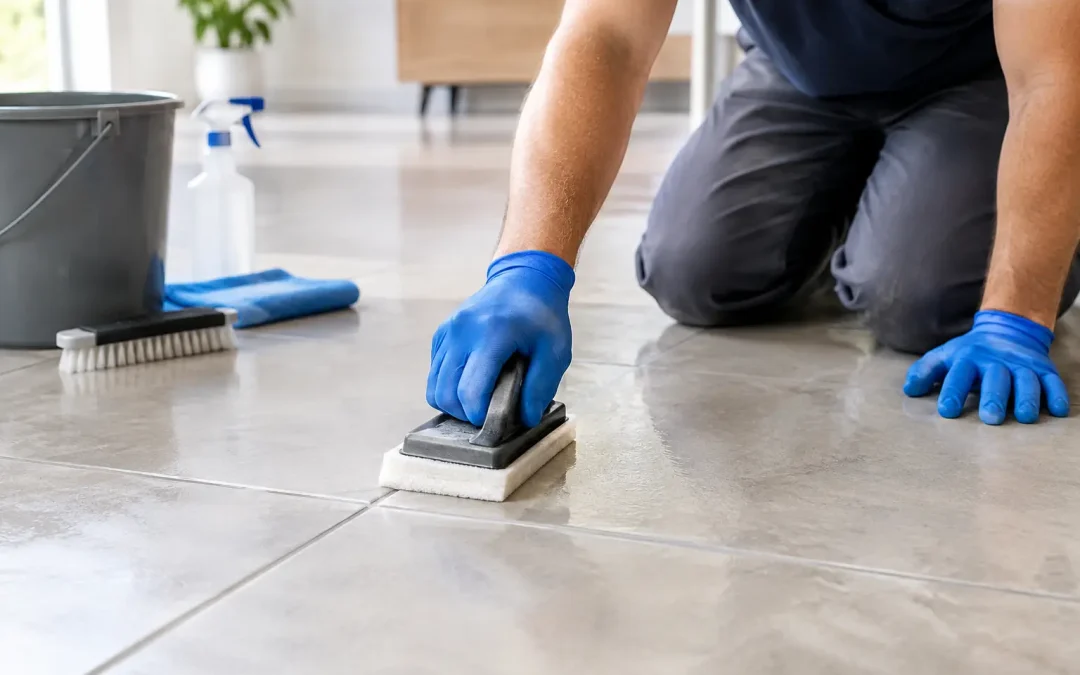
A tile floor can look permanently worn long before the tile itself has reached the end of its life. Dark grout lines, a cloudy film, stubborn stains, and dull traffic paths can make a bathroom, kitchen, or entryway feel dated. This guide to restoring tile floors helps homeowners separate fixable surface problems from damage that requires skilled restoration.
The first rule is simple: do not treat every tile floor the same. Ceramic and porcelain tile can handle cleaning methods that may damage natural stone. Grout may need deep cleaning, color sealing, or repair. A haze may be leftover cleaner, while a dull finish on stone can be actual surface wear. Identifying the material and the problem before reaching for a product saves time and prevents expensive mistakes.
Start by Identifying What You Have
Most residential tile floors fall into two broad categories: manufactured tile, such as ceramic or porcelain, and natural stone, such as travertine, marble, limestone, slate, or terrazzo. They can look similar at a glance, but they respond very differently to moisture, cleaners, abrasion, and sealing.
Ceramic and porcelain are generally durable and low-porosity. Their glazed surfaces often resist staining, but the grout between them absorbs soil, grease, and spills. When these floors look dirty after mopping, the grout is often the real issue.
Natural stone is more sensitive. Polished marble and travertine can lose their shine from acidic products or abrasive scrubbing. Honed stone may develop darkened traffic paths, etching, or uneven color. Stone also needs the right cleaner and, in many cases, periodic sealing to slow absorption and make routine care easier.
If you are unsure what is on your floor, avoid acidic cleaners, bleach-heavy products, and aggressive scrubbing until the material is confirmed. A product that works on porcelain may etch or dull calcium-based stone.
Assess the Floor Before You Clean
A close inspection reveals whether the floor needs a careful cleaning, a grout-focused service, or more involved restoration. Work in good daylight and look at the floor from more than one angle. A floor can appear clean standing up but show residue and uneven sheen when light reflects across it.
Look for signs such as loose or cracked tile, hollow-sounding areas, chipped edges, missing grout, mold around wet areas, white mineral buildup, or persistent dark spots. These are not all cleaning problems. Loose tile can point to moisture or installation issues. Missing grout allows water and debris to move where they do not belong. Mineral deposits may return until the moisture source is addressed.
Also pay attention to where the problem is worst. A greasy kitchen floor needs a different approach than a shower floor with soap film or an entryway with embedded outdoor soil. Restoring appearance means removing the specific contaminant, not simply applying a stronger cleaner.
A Practical Guide to Restoring Tile Floors
Begin with dry soil removal. Vacuum using a hard-floor setting or sweep thoroughly, especially along baseboards and in corners. Grit is one of the most common causes of dull-looking floors because it acts like fine sandpaper when dragged under shoes or a mop.
Next, use a neutral cleaner made for the surface type and a clean microfiber mop. The word “clean” matters here. A mop head that has already picked up kitchen grease or dirty water can leave a film across the floor. Change the water when it turns cloudy rather than spreading it room to room.
For textured ceramic or porcelain, a soft nylon brush can help lift soil from low spots and grout joints. Work in small sections so cleaner does not dry on the surface. Rinse with clean water and dry the floor with microfiber towels or allow good airflow. Residue left behind after cleaning is a frequent reason tile appears hazy or streaky.
Avoid soaking the floor. Excess water can work into cracked grout, failed caulk, and gaps at transitions. In bathrooms and laundry rooms, that moisture can contribute to problems below or behind the tile that a surface cleaning cannot solve.
Treat Grout as Its Own Surface
Grout is porous, textured, and usually lower than the tile surface. It collects oils, soap, spills, dust, and fine particles that a flat mop may never fully remove. That is why a freshly mopped floor can still have dark, uneven grout lines.
Start with a grout-safe cleaner and a stiff nylon grout brush. Give the cleaner enough dwell time to loosen soil, but do not let it dry. Scrub in short sections, rinse thoroughly, and evaluate the grout after it dries. Wet grout often looks darker than it actually is.
If cleaning improves the grout but does not restore an even color, color sealing may be the better solution. A grout color sealant can refresh faded joints, cover permanent discoloration, and add a protective barrier against future staining. It is especially useful in high-traffic kitchens, bathrooms, and entryways where original grout has become permanently uneven.
Color sealing is not a substitute for repair. Cracked, loose, or missing grout should be repaired first. Applying a coating over failing grout can make the floor look better temporarily without correcting the underlying weakness.
Remove Haze Carefully
A cloudy white or dull film on tile is often caused by cleaner buildup, hard-water minerals, soap residue, or leftover construction grout haze. The right solution depends on the source.
For routine product buildup on ceramic or porcelain, a proper deep cleaning and complete rinse may be enough. Hard-water deposits around showers and toilets may require a targeted mineral-removal product that is safe for the material. Never assume an acidic cleaner is safe because the floor is called “tile.” Marble, travertine, limestone, and terrazzo can etch from acid, leaving a dull mark that cleaning will not remove.
Construction haze is another situation where caution pays off. It may require a specialized remover, and the wrong product can affect grout color, metal trim, nearby stone, or a sealed finish. Test any product in an inconspicuous area before treating an entire room.
When Cleaning Will Not Restore the Finish
There is a clear difference between dirt on a floor and damage in a floor. Cleaning removes contaminants. Restoration corrects worn finishes, etched stone, deep staining, damaged grout, and other issues that remain once the surface is clean.
Porcelain and ceramic tile often respond well to professional deep cleaning and grout restoration. Natural stone may require honing, polishing, stain treatment, and resealing to bring back an even appearance. Marble and travertine, for example, can lose their reflection from etching and foot traffic even when they are spotless. No household cleaner will polish that damage away.
Call for an evaluation when grout remains dark after thorough cleaning, tile has a persistent haze, stone has dull or etched patches, stains keep returning, or you see cracking and movement. Natural Surface Restoration helps homeowners across Gainesville and North Central Florida determine whether a floor needs cleaning, color sealing, repair, or a more complete restoration process. The goal is to restore the surface you already own whenever that is the practical option.
Protect the Result After Restoration
Once the floor looks right again, a few habits can keep it that way. Use walk-off mats at exterior doors, but choose mats with breathable backing so moisture is not trapped against the floor. Wipe spills promptly, particularly on natural stone and unsealed grout. Place felt pads under movable furniture and avoid dragging heavy pieces across tile.
For weekly care, sweep or vacuum first and mop with a neutral cleaner in the proper dilution. More cleaner is not better. Overusing it is one of the fastest ways to create a sticky film that attracts more soil. Skip oil soaps, waxes, and shine-enhancing products unless they are specifically recommended for your surface.
Sealing also depends on the material. Many porcelain and glazed ceramic tiles do not need a topical tile sealer, though the grout may benefit from protection. Natural stone and porous grout often do benefit from a penetrating sealer, but it must be applied to a clean, dry surface. A sealer will not fix stains, etching, or dullness already present.
A tile floor does not need to look brand-new to look well cared for. It needs clean, even grout, an appropriate finish for its material, and protection that fits the way your household uses the room. Address the cause of the wear, and the restored result has a much better chance of lasting.