
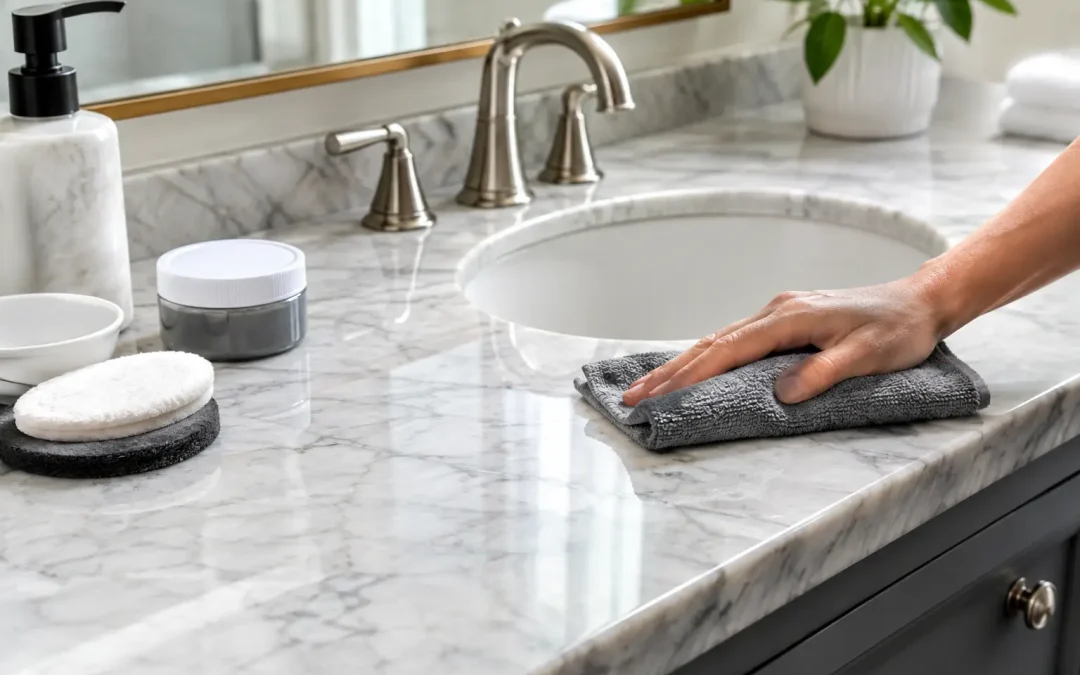
A marble vanity can look permanently damaged after a spilled toiletry, a leaking soap dispenser, or years of daily use. In many cases, it is not. Professional marble vanity repair can remove dull etching, reduce stains, restore an even polish, and protect the stone from further wear without the cost and disruption of replacing the entire countertop.
Marble is a premium natural material, but it is not maintenance-free. Its beauty comes from minerals that react easily to acids, moisture, and abrasive cleaning methods. Knowing what caused the damage is the first step toward choosing the right repair.
What Marble Vanity Damage Really Looks Like
Not every mark on marble is a stain, and treating the wrong problem can make it worse. A darkened area may be absorbed moisture or oil. A cloudy, light-colored spot is often etching. A rough edge around a sink may be worn finish, while a visible line may be a crack in the stone or simply a natural vein.
Etching is one of the most common bathroom marble problems. Products containing acids can react with the calcium in marble and leave a dull or faded spot. Facial cleansers, acne treatments, makeup removers, toothpaste, hair products, and even some household cleaners can cause etching. The mark may look white on dark marble or simply appear less reflective than the surrounding surface on lighter stone.
Stains work differently. A stain enters the pores of the stone and changes its color. Cosmetics, dyes, oils, rust from metal containers, and standing water can all leave discoloration. Because a bathroom vanity is regularly exposed to personal-care products, stains are often concentrated around the sink, soap dispenser, and areas where bottles sit.
Scratches are another concern, especially on polished marble. Fine scratches can make a vanity look hazy when light hits it from the side. Deeper scratches, chips, and cracks require closer inspection because the repair approach depends on the depth of the damage and the stability of the stone.
Marble Vanity Repair Starts With the Right Diagnosis
A good repair does more than improve the appearance of one spot. It identifies whether the issue is surface-level, absorbed below the surface, or structural. This matters because marble polishing will correct etching and many light scratches, but it will not pull an oil stain out of the stone. A stain treatment alone will not restore a polished finish that has been chemically dulled.
For light etching, the repair may involve carefully refinishing the affected area and polishing it to blend with the surrounding marble. The goal is not merely to make the mark less visible. The repaired section needs to match the vanity’s existing sheen so it does not stand out under bathroom lighting.
Stains may need a targeted poultice treatment. This process uses an absorbent material and the proper cleaning agent to draw discoloration from the stone. It can take more than one application, particularly if the stain has been present for a long time or has penetrated deeply. Results depend on the type of stain, the marble’s color and density, and whether the stone was previously sealed.
Chips around an edge, backsplash, or sink cutout can often be filled and color-matched. A successful repair requires more than adding filler. The damaged area must be stabilized, shaped, blended, and finished to suit the stone’s texture and polish. Very small chips may become difficult to notice. Larger breaks or missing pieces can be improved significantly, though an invisible repair is not always realistic.
Cracks deserve special attention. Some are stable and can be repaired cosmetically. Others are caused by movement, improper support, or stress around a sink opening. If the underlying issue remains, a crack may return after repair. This is where a careful inspection is more valuable than a quick surface fix.
Why DIY Marble Repairs Can Go Wrong
Homeowners often try a general-purpose stone cleaner, a polishing powder, or a store-bought repair kit before calling for help. Those products can be useful in limited situations, but marble does not respond well to guesswork.
Acidic cleaners can enlarge etched areas. Abrasive pads can create a visibly different finish. A dark wax or colored polish may temporarily hide a problem while attracting soil and making future restoration harder. Even a product labeled for stone may be unsuitable for a polished marble vanity if it is too aggressive or leaves a residue.
DIY repair kits can also create an uneven result on a highly visible bathroom countertop. A fill material that looks close in the package may dry to a different color. Hand polishing one small section can leave a patch with more shine or less shine than the rest of the vanity. When the vanity has veining or a glossy finish, these differences are easy to see.
The practical line is simple: gentle cleaning and quick spill removal are good homeowner tasks. Persistent staining, etching, chips, cracks, and uneven shine are better handled with the appropriate restoration methods.
How Professional Marble Vanity Repair Restores the Surface
The repair process should be matched to the vanity rather than treated as a one-size-fits-all service. Polished white Carrara marble, dark Emperador marble, and honed marble each show damage differently and require different expectations for blending and finish.
The work generally begins with a close evaluation of the stone, damage, previous coatings, and condition around the sink and backsplash. The surface is then cleaned to remove residue that could interfere with repair. Depending on the problem, restoration may include stain treatment, honing to remove etching or scratches, crack or chip repair, and controlled polishing.
Honing uses fine abrasives to level damaged portions of the surface. It is often the key step for etching because etching is a physical change in the marble’s finish, not just a substance sitting on top. Polishing follows when the vanity needs a reflective finish restored. The technician works carefully to keep the sheen consistent and avoid leaving a noticeable transition around the repaired area.
After the stone is restored, sealing may be recommended. A quality penetrating sealer helps slow the absorption of water, oils, and cosmetics. It does not make marble acid-proof, scratch-proof, or stain-proof. That distinction matters. Sealing gives homeowners more time to wipe up a spill, but it cannot prevent etching from acidic products left on the surface.
For homeowners in Gainesville and throughout North Central Florida, Natural Surface Restoration evaluates the condition of the marble first, then recommends repair based on what will produce a lasting, realistic result. Restoration is often the smarter investment when the stone is structurally sound and the damage is limited to the surface.
When Repair Makes More Sense Than Replacement
Replacing a marble vanity can involve more than changing the countertop. It may require disconnecting plumbing, replacing a backsplash, modifying a sink opening, adjusting cabinetry, and finding new stone that coordinates with the rest of the bathroom. Even a close marble match can look different because natural stone varies from slab to slab.
Repair is often the better choice when the vanity is dull, etched, lightly scratched, stained in limited areas, or chipped along an edge. It preserves the original material and can extend the useful life of a high-value surface. It also avoids the dust, demolition, and added expense that can come with replacement.
Replacement may be the better option if the slab is badly fractured, has widespread deep staining that cannot be reduced to an acceptable level, or has failed around an undermount sink. A professional assessment should be honest about that trade-off. The purpose of restoration is not to promise a result the stone cannot deliver. It is to bring the surface back as far as its condition allows and protect the investment already in your home.
Keep a Restored Marble Vanity Looking Its Best
Daily habits have a greater effect on marble than most homeowners expect. Use a soft cloth and a pH-neutral stone cleaner rather than bathroom sprays, vinegar, lemon-based products, or abrasive powders. Wipe up toothpaste, makeup, hair products, and standing water promptly, especially near seams and the sink rim.
Avoid leaving metal cans, cosmetic containers, or wet bottles directly on the vanity. A small tray can prevent rust marks, rings, and residue buildup. If you use a soap dispenser, check it regularly for drips. What looks like a harmless soap trail can gradually dull polished marble.
A restored vanity does not need to be treated like a museum piece. It simply needs the right cleaning routine and timely attention when new damage appears. If your marble has lost its polish, developed stubborn spots, or shows chips around the sink, an experienced evaluation can help you decide whether repair will give the bathroom the fresh, cared-for appearance you want.