
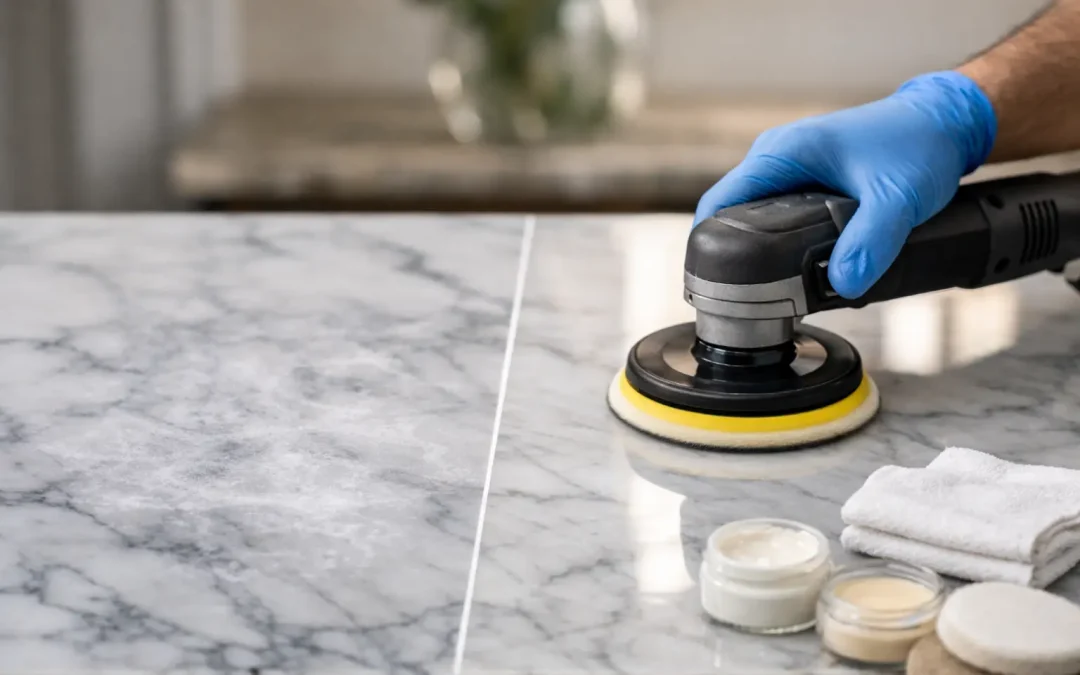
A cloudy ring around the kitchen island, dull spots near a bathroom sink, or pale marks beneath a wine glass can make expensive marble look permanently damaged. The good news is that, in most cases, can etched marble be polished has a straightforward answer: yes. Proper marble polishing can restore the shine or even finish that acid etching removes, often without replacing the stone.
The key is confirming that the mark is truly an etch and choosing a restoration method that matches the marble’s finish, color, and condition. A quick DIY product may improve a very light mark, but it can also leave an uneven patch that is more visible than the original damage.
What Etching Does to Marble
Marble is largely made of calcite, a mineral that reacts when it contacts acidic liquids. Lemon juice, vinegar, wine, tomato sauce, coffee, many bathroom products, and some household cleaners can all trigger that reaction. The acid does not simply sit on top of the surface. It dissolves a microscopic layer of the stone.
On polished marble, that reaction removes the reflective surface and leaves a dull, lighter-looking area. On honed marble, which has a soft matte finish, etching may look darker or feel slightly rough instead. Either way, the issue is physical surface damage, not ordinary dirt.
That distinction matters because cleaning alone will not remove an etch. A sealer will not remove it, either. The affected area must be refinished so it reflects light consistently with the surrounding marble.
Can Etched Marble Be Polished Successfully?
Yes, light to moderate etching can usually be polished successfully. Professional restoration uses the right combination of abrasives, polishing compounds, pads, equipment, and technique to refine the damaged surface. The goal is not merely to make the spot less obvious. It is to blend the repaired area into the rest of the countertop, vanity, floor, or tabletop.
Results depend on several factors. Dense, light-colored polished marble may respond very well to spot polishing. Dark marble can be less forgiving because it may show a difference in gloss more easily. Veined material, soft marble, heavily trafficked floors, and large areas of repeated etching may need a broader restoration approach rather than isolated repairs.
A polished finish also requires different treatment than a honed finish. If your marble was originally honed, restoring it to a high shine is not necessarily an improvement. It can create an obvious shiny patch. The proper repair matches the existing finish, whether that finish is satin, matte, or glossy.
How to Tell Etching From a Stain or Scratch
Homeowners often call every marble mark a stain, but the right diagnosis saves time and prevents the wrong treatment. An etch commonly appears as a dull spot, a cloudy ring, or a patch that looks lighter from certain angles. It may feel smoother or slightly rougher than the surrounding stone, depending on the finish and severity.
A stain is a discoloration caused by something absorbed below the surface, such as cooking oil, cosmetics, rust, or a spilled drink. It often retains the same surface shine as the rest of the marble. Stains may require a targeted poultice or stain-removal process before polishing is considered.
Scratches tend to be narrow lines you can see or feel. Fine scratches can sometimes be addressed during honing and polishing, while deeper scratches may require more surface refinement. A surface can have all three problems at once: etching, staining, and scratches. That is why a close assessment is better than treating every mark with one bottle from the store.
When a DIY Marble Polish May Be Enough
A homeowner-grade marble polishing powder may help with a very small, faint etch on polished marble. It is most reasonable for a minor spot in an inconspicuous area where you can test the product first. Follow the product directions exactly, use only products made specifically for calcite-based stone, and stop if the sheen begins to look uneven.
The trade-off is that polishing is not simply a cleaning task. Too much pressure, the wrong pad, or an unsuitable compound can create swirl marks, alter the gloss, or leave a visible halo. DIY polishing also will not solve a deep etch, widespread dullness, lippage between floor tiles, cracks, chips, or old coatings on the stone.
Avoid vinegar, lemon-based cleaners, abrasive scrub powders, bathroom descalers, and general-purpose acidic products. They can worsen the etching you are trying to correct. Baking soda is also not a reliable cure for etching. It may be useful in certain stain-treatment situations, but it does not rebuild a polished marble surface.
When Professional Marble Restoration Makes More Sense
Professional help is usually the better choice when damage covers more than a small spot, when the marble is dark or highly polished, or when the affected surface is in a prominent area. Kitchen counters, bathroom vanities, foyers, showers, and marble floors all tend to show inconsistent repair work quickly because light reflects across a broad surface.
A restoration specialist can determine whether the stone needs spot work, honing, polishing, or a full refinishing sequence. Honing uses progressively finer abrasives to remove damage and level the surface. Polishing follows when the desired finish is glossy. For honed marble, the process stops at the appropriate satin or matte level instead of forcing a shine the stone was not meant to have.
Natural Surface Restoration evaluates the actual condition of the marble before recommending work. That matters for homeowners who want a clear answer about what can be restored, what will remain visible, and whether restoration is a better value than replacement. In many cases, refinishing preserves the original stone and avoids the disruption of removing countertops, tile, or flooring.
What to Expect During Marble Polishing
For a small countertop etch, restoration may focus on a contained area, carefully blended to match the surrounding finish. For a floor with traffic wear, acidic spills, and widespread dullness, the more reliable result may come from refinishing the entire room or a defined continuous section of flooring.
Before polishing begins, the surface should be cleaned and evaluated for coatings, residue, loose tiles, cracks, or damaged grout. If staining is present, it may need separate treatment. The marble is then honed as needed to remove the etched layer and polished or finished to the correct sheen.
After restoration, a penetrating sealer may be recommended for porous marble. Sealing helps slow down absorption from spills, which can reduce staining risk. It does not make marble acid-proof. Wine, citrus, vinegar, and acidic cleaners can still etch a sealed surface, so daily care remains essential.
Keeping Restored Marble Looking Better Longer
The simplest protection is quick cleanup. Blot spills rather than wiping them across the stone, especially citrus juice, wine, coffee, tomato sauce, and personal-care products. Use a pH-neutral stone cleaner for routine cleaning and a soft cloth or mop rather than abrasive pads.
In kitchens, keep a tray under oils, soaps, and acidic bottles that tend to drip. Use coasters under drinks and placemats beneath serving dishes. On marble floors, entry mats reduce grit that can scratch the finish, while felt pads beneath furniture help prevent scuffs.
For bathrooms, do not leave hair products, perfumes, or cleaners directly on a marble vanity. Even products that seem mild can leave marks after repeated contact. A simple tray makes cleaning easier and limits exposure to the stone.
Is Replacement Ever Necessary?
Replacement is rarely the first answer for etched marble alone. Even substantial dullness can often be corrected through professional honing and polishing. Replacement becomes more likely when there are structural problems, severe cracks, extensive spalling, loose tiles, or damage that extends beyond the surface layer.
If the marble has a finish you no longer like, restoration can still be useful. A highly polished counter can sometimes be refinished to a more forgiving honed appearance, for example. The best choice depends on the stone, the installation, and how the space is used.
A dull marble mark does not have to become a permanent reminder of one spilled drink or one harsh cleaner. Protect the area from further exposure, avoid experimenting with acidic remedies, and have the finish assessed before the damage spreads into a larger restoration project.