
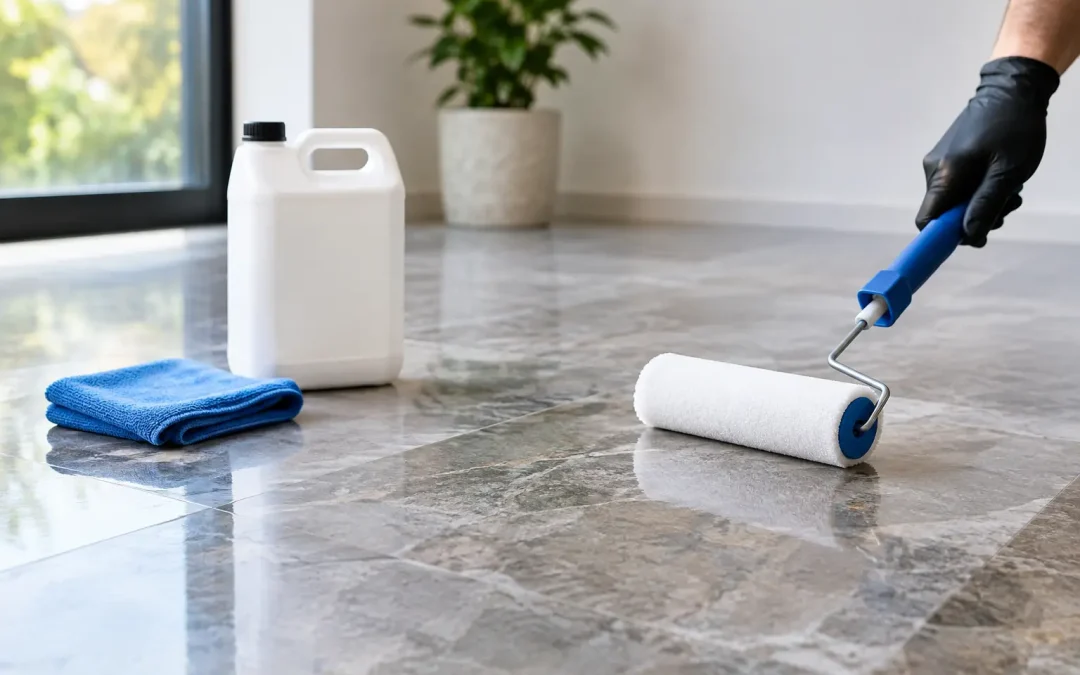
A stone floor can look clean one week and suddenly show dark spots, dull traffic paths, or stubborn water marks the next. The best stone sealer for floors is not simply the strongest product on the shelf. It is the sealer that suits your specific stone, its finish, its location, and the way your household uses the room.
For most interior natural stone floors, a quality penetrating sealer is the right starting point. It protects within the pores of the stone instead of leaving a visible plastic-like coating on top. Still, marble, travertine, limestone, slate, granite, and terrazzo do not absorb or react the same way. Choosing incorrectly can leave a floor streaky, slippery, too dark, or still vulnerable to staining.
What Makes the Best Stone Sealer for Floors?
A good floor sealer should slow down the absorption of water, oils, spills, and everyday soil while preserving the natural look and safe walking surface of the material. It should not turn a honed marble floor glossy, make textured slate slick, or create a surface film that peels under foot traffic.
For many Gainesville-area homes, the best choice is a penetrating or impregnating sealer designed for natural stone. These products enter the stone’s pores and form a barrier below the surface. They are especially useful for porous materials such as travertine, limestone, sandstone, and some slate.
Penetrating sealers do have limits. They help give you time to wipe up a spill, but they do not make stone stain-proof. They also do not prevent etching, which is a chemical reaction that occurs when acidic products contact calcium-based stone. Lemon juice, vinegar, some bathroom cleaners, and certain food spills can etch marble, travertine, and limestone even when the floor is properly sealed.
Match the Sealer to the Stone, Not the Label Claims
The words “stone sealer” on a container do not tell the full story. Before choosing a product, identify the material and determine whether it has a polished, honed, tumbled, brushed, or cleft finish. The same stone can need a different approach depending on how it was finished.
Marble, Travertine, and Limestone
These calcium-based stones are popular because they bring warmth and character to kitchens, baths, foyers, and living areas. They are also naturally sensitive. A breathable penetrating sealer is generally the preferred protection for interior floors because it reduces absorption without changing the surface appearance.
Avoid relying on a sealer to solve etching, dullness, scratches, or worn traffic lanes. Those are restoration issues, not sealing issues. If a polished marble floor has lost its shine or a travertine floor has visible etch marks, it may need professional honing and polishing before sealing. Applying sealer over damage will not restore the finish.
Slate and Other Textured Stone
Slate can range from dense and low-absorption to highly porous, depending on the variety. A clear penetrating sealer is often the safest choice when you want to retain its natural, matte appearance. For some homeowners, an enhancing penetrating sealer is a better fit because it deepens the stone’s natural color and brings out its variation.
Enhancing sealers can look excellent on slate, tumbled travertine, and some rustic stone floors, but they are a commitment. Always test an inconspicuous area first. Once the color becomes richer, it may not return to its original appearance without significant work.
Granite
Granite is often denser than travertine or limestone, but that does not mean every granite floor is maintenance-free. Some varieties absorb moisture or oils more readily than others, particularly when honed or flamed rather than highly polished. A penetrating sealer can be appropriate when testing shows that the stone absorbs water.
A simple water test can help: place a few drops of water on a clean, dry section of floor and observe it for several minutes. If the stone darkens as it absorbs the water, it may benefit from sealing. If the water remains on the surface and wipes away without darkening, more sealer may not be necessary.
Terrazzo
Terrazzo needs careful evaluation because its composition and finish vary. Cement-based terrazzo is more porous than epoxy terrazzo and may need a different protection plan. A product that works well on travertine is not automatically the best option for terrazzo. The floor may need cleaning, honing, polishing, crack repair, or refinishing before the protective step is applied.
Penetrating vs. Topical Sealers
The biggest decision is whether to use a penetrating sealer or a topical coating.
Penetrating sealers are usually the practical choice for natural stone floors. They are designed to preserve the feel and appearance of the stone, allow moisture vapor to move through the material, and avoid the peeling associated with surface coatings. They are well suited to high-traffic areas when the floor has been properly cleaned and restored first.
Topical sealers sit on the surface and create a film. They can add sheen or provide a sacrificial layer, but they require more maintenance and can become scratched, cloudy, or slippery. On the wrong stone floor, especially one with moisture movement or frequent foot traffic, a topical coating can create more problems than it solves.
There are situations where a topical system is appropriate, particularly for certain concrete, terrazzo, or specialty finishes. That decision should be based on the actual material, condition, and desired appearance, not a promise of instant shine.
Do Not Seal a Dirty or Damaged Floor
Sealer locks in what is already there. If the pores contain ground-in soil, residues from mop products, old wax, or discoloration, sealing too soon can make the floor look worse and make later cleaning more difficult.
Preparation matters as much as the product. The floor should be thoroughly cleaned with a stone-safe cleaner, fully rinsed, and allowed to dry completely. Any stains, etching, haze, loose grout, cracked tiles, or finish damage should be addressed before sealing. This is why a floor that looks “sealed” can still look dull or dirty: the issue may be below the surface or in the finish itself.
At Natural Surface Restoration, we evaluate the stone and its current condition before recommending restoration or protection. A homeowner may think they need another coat of sealer when the real need is deep cleaning, honing, polishing, or grout restoration.
How Often Should Stone Floors Be Sealed?
There is no honest one-size-fits-all schedule. A busy kitchen with tumbled travertine may need attention sooner than a lightly used polished granite foyer. The quality of the prior sealer, cleaning habits, moisture exposure, and the stone’s porosity all affect longevity.
Instead of sealing on a fixed annual schedule, watch how the floor behaves. Water that quickly darkens the stone, spills that leave persistent marks, and areas that absorb cleaner unevenly can signal that protection has weakened. Test several areas, especially near entrances, sinks, dining spaces, and pet water bowls. A floor can wear unevenly, so the high-traffic path may need attention before the rest of the room.
Avoid applying fresh sealer repeatedly without testing. Overapplication can leave residue, streaks, or a tacky appearance. More product is not better if the stone has already reached saturation.
Everyday Care That Helps Sealer Last
The right sealer works best when paired with simple maintenance. Sweep or vacuum with a hard-floor-safe setting so grit does not grind into the surface. Use a neutral, stone-safe cleaner rather than vinegar, bleach-heavy products, or all-purpose cleaners that leave a film.
Wipe spills promptly, especially cooking oils, wine, juice, coffee, and pet accidents. Use entry mats to reduce sand and dirt, but choose mats that do not trap moisture against the floor or transfer dyes. In bathrooms and kitchens, dry wet areas instead of allowing standing water and soap residue to build up.
These habits do more than protect sealer. They preserve the clarity, color, and finish that made you choose natural stone in the first place.
When Professional Help Is the Better Choice
If you are unsure what kind of stone you have, see uneven darkening after cleaning, or notice dull spots that do not improve with routine care, stop before applying a store-bought coating. A quick product choice can change the appearance of a floor for the worse.
The best result often starts with an accurate diagnosis: identify the material, restore the surface if needed, select the proper protection, and apply it evenly. A properly protected stone floor should still look like stone – clean, natural, and ready for daily life. If your floors no longer look that way, an estimate can give you a clear path back to a finish you can feel confident maintaining.