
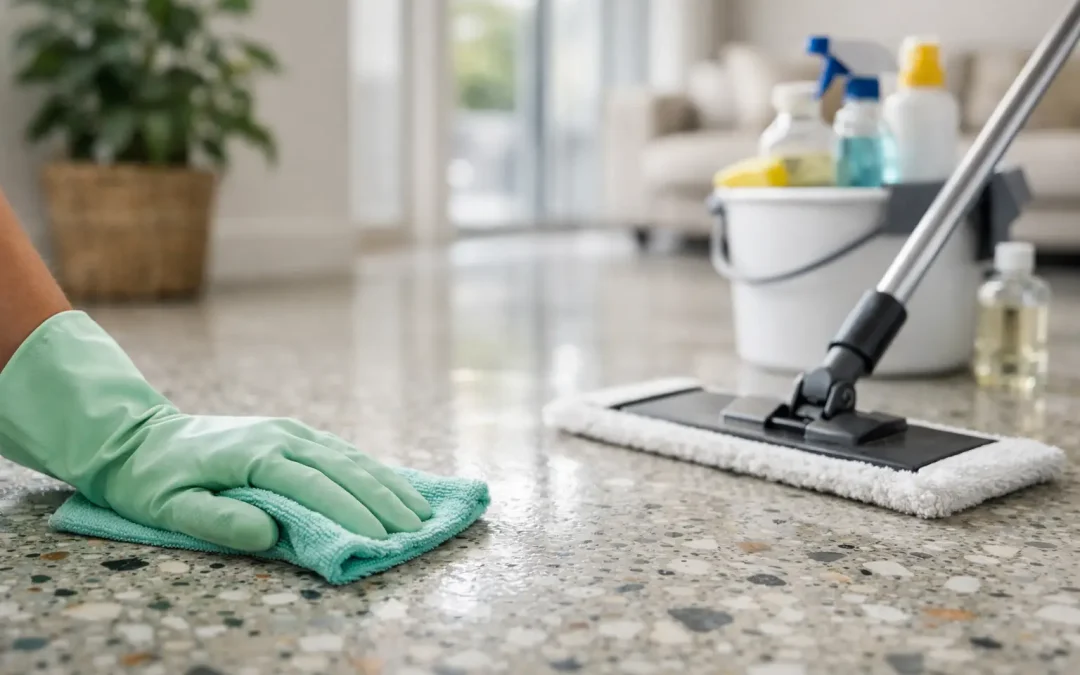
A terrazzo floor can look almost indestructible until a cloudy cleaning film, a dark spill mark, or a dull traffic lane shows up in direct afternoon light. The good news is that most of those problems are preventable. This guide to terrazzo maintenance explains how to care for the surface without using cleaners or methods that gradually take away its shine.
Terrazzo is not a standard tile floor. It is a composite surface made with stone, glass, or marble chips held in a cement or epoxy base, then ground and polished smooth. That construction gives it remarkable longevity, but it also means the wrong product can affect the binder, the exposed aggregate, the sealer, or the polished finish. Consistent, gentle care will do more for terrazzo than aggressive cleaning ever will.
Know What Kind of Terrazzo You Have
Before choosing a cleaner or deciding whether the floor needs sealing, identify the type of terrazzo in your home. Traditional cement-based terrazzo is common in older Florida homes. It is durable but can be more absorbent than epoxy terrazzo, especially when the existing sealer has worn away. It may darken when wet, hold stains more readily, and benefit from periodic professional sealing.
Epoxy terrazzo generally has greater stain resistance and less porosity. That does not mean it is maintenance-free. Its surface can still become scratched by grit, dulled by abrasive pads, or hazy from soap and cleaner residue. A floor’s age, prior coatings, repairs, and exposure to sunlight also affect the care it needs.
If you are unsure which type you have, avoid treating it as a test surface. A small mistake with an acidic cleaner or harsh stripping product can create a larger restoration project. A professional evaluation can identify the material, its current finish, and whether the floor needs deep cleaning, polishing, sealing, or repair.
Daily and Weekly Terrazzo Care
The greatest enemy of a polished terrazzo floor is not usually a dramatic spill. It is fine grit tracked in from driveways, patios, and entryways. Sand acts like sandpaper under shoes, pet paws, and furniture legs. Over time, it creates tiny scratches that scatter light and make a once-reflective floor appear dull.
Dry dust mop or vacuum the floor frequently, particularly near exterior doors and in busy areas such as kitchens, hallways, and living rooms. Use a vacuum with a hard-floor setting or a soft brush attachment. Avoid beater bars, which can scuff the finish or catch on damaged areas.
For routine wet cleaning, use a clean microfiber mop and a neutral-pH cleaner made for polished stone or terrazzo. Follow the dilution instructions closely. More cleaner does not produce a cleaner floor. It often leaves a sticky or cloudy film that attracts additional dirt.
Use only enough solution to damp-clean the floor. Saturating terrazzo with water is unnecessary and can be a concern where cracks, failed joints, or worn edges allow moisture to reach the substrate. After mopping, rinse the mop thoroughly and change dirty water rather than spreading it across the next room.
Entry mats can significantly reduce wear, especially in Gainesville-area homes where rain, landscaping debris, and grit are regularly carried indoors. Choose breathable mats that stay dry underneath, and lift them periodically for cleaning. Moisture and trapped soil left beneath any mat can leave uneven discoloration or make a protected area age differently than the exposed floor.
Clean Spills Before They Set
Terrazzo handles everyday life well, but it should not be treated like a countertop built for repeated food preparation. Blot spills promptly with a soft white cloth or paper towel. Do not rub, which can spread the stain and grind abrasive particles over the finish.
Water is usually enough for a fresh spill. Follow with a neutral stone cleaner if needed, then wipe the area dry. Oil, cooking grease, cosmetics, pet accidents, wine, coffee, rust, and plant-pot moisture can all leave marks, particularly on cement-based terrazzo or surfaces with compromised sealer.
Avoid using vinegar, lemon juice, bathroom descalers, toilet bowl cleaners, or other acidic products. Marble chips in terrazzo can react to acid, causing dull etched spots that are different from ordinary dirt. Bleach, ammonia, strong degreasers, and highly alkaline cleaners can also damage a finish or interfere with sealers. Even a product labeled natural is not automatically safe for terrazzo.
A stain that remains after gentle cleaning is a reason to pause, not escalate. The correct treatment depends on what caused the stain and whether it is in the terrazzo itself, the sealer, or a topical coating. Improvised stain removal can set a stain deeper or leave a visibly lighter patch around it.
Prevent Scratches, Chips, and Dull Paths
Furniture protection is simple and worthwhile. Place clean felt pads beneath chair, table, and sofa legs, and check them occasionally. A pad that has collected grit can scratch just as badly as an unprotected leg. Lift furniture when moving it instead of dragging it across the floor.
Use rugs in high-use areas, but keep the underside clean and dry. It also helps to rotate rugs occasionally in rooms with strong natural light. Sun exposure and day-to-day wear can change the appearance of a floor gradually, and rotating coverings promotes more even aging.
Be cautious with do-it-yourself floor machines and abrasive scrub pads. A machine may appear to restore shine for a short time while actually cutting the finish unevenly or leaving swirl marks. Store-bought gloss products and waxes are another common source of trouble. They can create temporary shine, but they may yellow, trap dirt, peel, or make future restoration more difficult. A floor that looks cloudy may need professional cleaning and polishing rather than another coating.
When Terrazzo Needs Professional Service
Routine care preserves terrazzo, but it cannot correct physical wear or finish failure. A professional assessment is worthwhile when the floor has persistent haze, scratches, visible traffic lanes, etched spots, uneven sheen, stains that return after cleaning, or an old coating that is peeling or yellowing.
Polishing can renew the clarity and reflection of terrazzo by refining the surface rather than covering it. The process should be matched to the floor’s condition. Light wear may need cleaning and polishing, while deeper scratches, etching, or uneven repairs may require a more involved restoration process. The goal is an even, natural-looking finish that fits the floor, not an artificial shine that will quickly fail.
Sealing is equally dependent on the material and condition. Cement-based terrazzo often benefits from a quality sealer after proper restoration because it helps slow stain absorption and makes routine cleaning easier. Epoxy terrazzo may not need the same approach. Applying sealer over embedded grime, an incompatible coating, or a damaged finish can make the appearance worse, so preparation matters as much as the product itself.
Cracks, loose areas, chips, and failing joints deserve early attention. Some cracking is cosmetic, while other damage can point to movement beneath the floor or moisture concerns. Filling a crack without understanding why it formed may only provide a short-lived improvement. Matching aggregate and color also requires care if the repair is expected to blend with an existing terrazzo field.
A Practical Maintenance Rhythm
For most homes, dry soil removal should happen several times a week, with more frequent attention near entrances and in homes with pets. Damp mop as needed, usually weekly or when the floor no longer feels clean underfoot. Address spills as they happen, and inspect mats, felt pads, and high-traffic zones every few months.
There is no universal schedule for polishing or resealing. A lightly used terrazzo floor may stay attractive for years with good daily care, while an active household with outdoor access may show wear much sooner. The condition of the surface is more useful than the calendar. If water quickly darkens a cement-based floor, if cleaning no longer restores clarity, or if traffic paths remain visibly dull, it is time to have the floor evaluated.
For homeowners who want to preserve original terrazzo rather than cover it or replace it, Natural Surface Restoration provides professional terrazzo cleaning, polishing, restoration, and sealing throughout North Central Florida. A clear assessment helps separate ordinary maintenance needs from damage that requires a more specialized solution.
A terrazzo floor rewards restraint. Keep grit off the surface, clean with the right products, and let its natural polish do the work. When the floor stops responding to careful maintenance, addressing the cause early can protect both its appearance and the investment beneath your feet.