
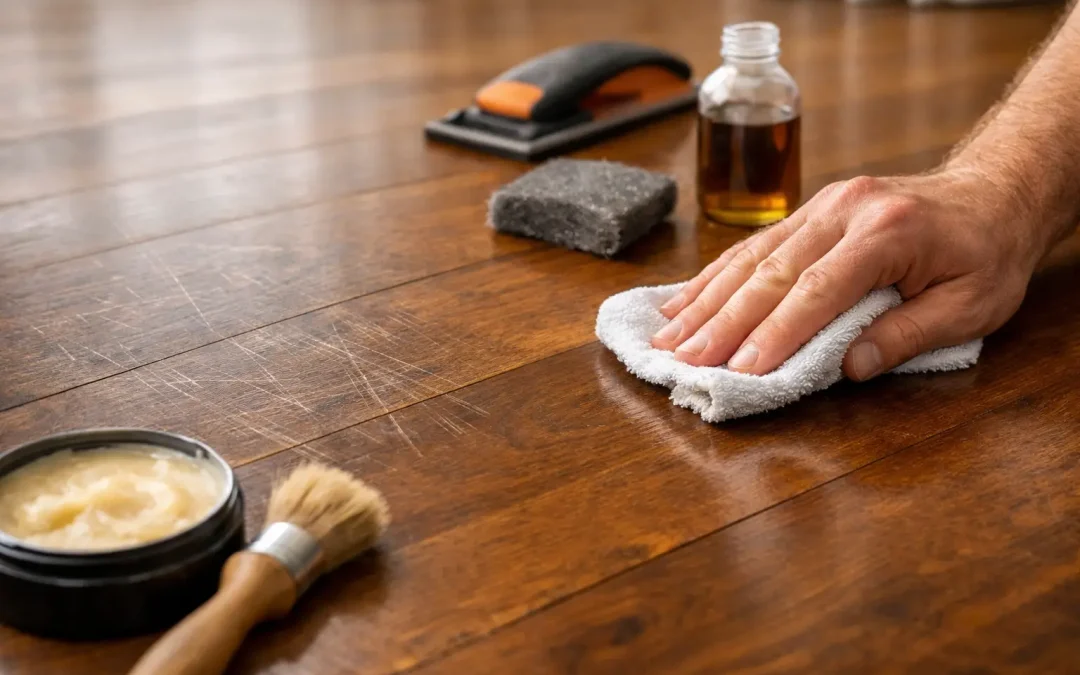
A few scratches near the kitchen, a dull traffic path through the living room, or marks left by a moved chair can make an otherwise beautiful floor feel worn before its time. The right way to restore scratched hardwood floors depends on one thing: how far the damage goes. A surface scuff and a deep gouge may look similar from across the room, but they require very different repairs.
Hardwood is worth preserving. Quality wood floors can often be cleaned, repaired, refinished, and protected for many more years, avoiding the cost and disruption of replacement. The key is diagnosing the floor correctly before applying a product or starting a repair.
Start by Identifying the Type of Scratch
Most floor scratches fall into three categories. Light surface marks affect only the protective finish. They often appear white, hazy, or slightly dull and may disappear when the area is cleaned. These are common around entryways, dining chairs, pet traffic, and high-use hallways.
Moderate scratches break through the finish and expose stained wood beneath it, but they do not cut deeply into the board. You may see a darker line where the wood has absorbed dirt or moisture. These areas often need color blending and a new protective finish, not a full floor sanding.
Deep scratches, gouges, and dents cut into the wood itself. If you can feel the defect with a fingernail, see raw wood, or notice splintering at the edge, a simple polish will not solve it. Those areas may need filler, board-level repair, sanding, and refinishing.
Before choosing a method, make sure the floor is solid hardwood and not a thin engineered product. Solid wood can usually be sanded and refinished several times. Engineered hardwood has a hardwood wear layer over a core, and that top layer may be too thin for aggressive sanding. A careful assessment prevents permanent damage.
How to Restore Scratched Hardwood Floors Safely
Begin with a thorough but gentle cleaning. Fine grit can settle into scratches and make them appear deeper than they are. Use a wood-floor-safe cleaner and a lightly damp microfiber mop, then let the floor dry completely. Avoid soaking the boards or using steam. Excess water can enter seams, swell the wood, and create a much larger repair problem.
For light finish scratches, a compatible hardwood floor polish or finish restorer can improve the appearance of a larger area. This is most effective when the existing finish is simply dull or lightly scuffed. It does not remove deep damage, and it should only be used on floors with an appropriate, intact finish.
Be cautious with quick-fix products. Wax sticks, oil soaps, silicone-heavy sprays, and some DIY scratch concealers can make a floor look better temporarily while creating trouble later. Residue can interfere with a new finish, causing adhesion problems when the floor eventually needs professional restoration. If you are unsure what has been applied to the floor before, it is safer to stop before layering on more products.
Moderate scratches may be corrected by carefully blending the color and restoring the protective coating in the affected area. The challenge is matching the existing stain, sheen, and grain direction. A repair that is too dark, too glossy, or too heavily applied can be more visible than the scratch itself.
Deep damage needs a more deliberate approach. A technician may fill the gouge with a color-matched wood filler, level the repair, sand the surrounding surface, blend stain where needed, and apply finish that matches the rest of the floor. If several boards are heavily damaged or the finish has worn away across an entire room, refinishing the full area is usually the better long-term answer.
When Screening and Recoating Is the Better Option
A floor does not always need to be sanded down to bare wood. When the finish is worn, scratched, and dull but the boards are still in good condition, a screen-and-recoat process may restore the appearance and protection of the floor.
Screening lightly abrades the existing finish so a fresh coat can bond properly. It is less invasive than full sanding and preserves more of the original wood. It is often a good choice for floors with broad surface wear, small scratches, and fading sheen.
This option has limits. It may not work if the floor has deep gouges, significant discoloration, wax or silicone contamination, peeling finish, or areas where bare wood is exposed. It also cannot correct deep stains that have penetrated the boards. A close inspection is the only dependable way to determine whether recoating will produce the result you expect.
Signs Your Hardwood Floor Needs Full Refinishing
Full refinishing is appropriate when the damage is more than cosmetic. Bare wood, widespread scratches, uneven color, deep stains, cupping, and old finish that is failing all point to a more complete restoration process.
During refinishing, the old finish is removed, surface imperfections are addressed, and the wood is prepared for stain and new protective coatings. This can dramatically change the look of a floor, from reviving its original natural color to updating the stain for a different style.
There are trade-offs. Full refinishing takes more time than a recoat, creates more preparation work, and may require rooms to be cleared. It is also not appropriate for every engineered hardwood floor. Still, when the underlying wood is sound, refinishing can deliver a far more consistent and durable result than repeated spot repairs.
Why Scratch Repairs Often Go Wrong
The most common mistake is treating every scratch as a surface problem. Rubbing in a repair marker may disguise a shallow line, but it will not protect exposed wood. Likewise, adding shine to a floor with a failing finish may make the worn areas stand out even more.
Another issue is sheen mismatch. Hardwood finishes come in matte, satin, semi-gloss, and gloss levels. Even when the color is close, a repaired spot can catch the light differently from the surrounding boards. Professional restoration considers the whole floor, including the direction of natural light, the age of the finish, and how wear has developed in high-traffic areas.
Homes in North Central Florida also benefit from attention to indoor humidity and moisture control. Wood naturally expands and contracts with changing conditions. Consistent indoor climate control, prompt cleanup of spills, and protective mats near exterior doors help reduce gaps, movement, and finish wear over time.
Protect the Floor After Restoration
Once scratches have been repaired, a few practical habits can protect the investment. Use felt pads under chairs, tables, and furniture that moves regularly. Lift furniture instead of dragging it, especially heavy pieces with narrow legs. Keep grit off the floor with mats at entrances and regular dry dust mopping.
For pet owners, keeping nails trimmed can reduce surface scratches. For busy family spaces, area rugs can help protect high-traffic paths, provided the rug backing is safe for hardwood finishes and does not trap moisture. Avoid rubber-backed mats unless the manufacturer confirms they are suitable for wood floors.
Natural Surface Restoration helps homeowners assess whether scratched hardwood needs cleaning, targeted repair, recoating, or complete refinishing. The right recommendation should be based on the floor’s condition, construction, finish history, and the result you want to achieve.
If the scratches are becoming more noticeable, do not wait until moisture and dirt reach exposed wood. A professional evaluation can clarify the repair options and help preserve the warmth, value, and character that made hardwood the right choice for your home in the first place.