
A scratch across a wood floor can pull attention from an otherwise beautiful room. The right wood floor scratch repair depends on more than the scratch itself – it depends on the floor’s finish, wood species, color, age, and how deeply the damage reaches. A quick fix can improve a light surface mark, but the wrong product can leave a cloudy patch, shiny spot, or color mismatch that is harder to correct than the original scratch.
For Gainesville homeowners, wood floors also deal with Florida humidity, tracked-in grit, pet traffic, and everyday furniture movement. Knowing when a scratch is cosmetic and when it needs professional restoration helps protect both the appearance and value of the floor.
Start by identifying the type of scratch
Not every mark in a wood floor is the same. A light scratch may affect only the protective topcoat. It often appears as a thin pale line, especially when sunlight hits it at an angle. If the wood color beneath the finish is still intact, the repair may be limited to cleaning, blending, and restoring the finish layer.
A deeper scratch cuts through the finish and stain into the wood itself. These scratches may look darker because dirt has settled into exposed grain, or lighter because raw wood is showing through. A fingernail that catches in the scratch is usually a sign that it is deeper than a simple surface scuff.
Gouges, dents, and chipped areas require a different approach. They may need wood filler, color matching, careful sanding, spot staining, and a compatible finish. Board movement, gaps, water staining, and cupping are separate issues that should not be treated as ordinary scratch repair.
Wood floor scratch repair for light surface marks
For minor scratches in an intact finish, the first step is always a thorough cleaning. Fine sand and grit can collect in a scratch and make it look more severe. Use a cleaner made specifically for sealed wood floors and a soft microfiber cloth. Avoid wet mops, steam cleaners, abrasive pads, and all-purpose household cleaners, which can dull or weaken many floor finishes.
After cleaning, a touch-up product designed for your floor’s finish may help blend very light marks. This can be useful in small, low-traffic areas where the sheen and color are easy to match. The result is usually cosmetic rather than permanent, and it should be tested in an inconspicuous location first.
Wax-based products deserve caution. They can temporarily hide fine scratches on certain waxed floors, but many modern hardwood floors have polyurethane or aluminum oxide finishes that should not be waxed. Applying wax to the wrong finish can create adhesion problems if the floor is later recoated or refinished. If you do not know what is on your floor, it is safer to have the finish identified before applying a treatment.
When a touch-up marker is enough
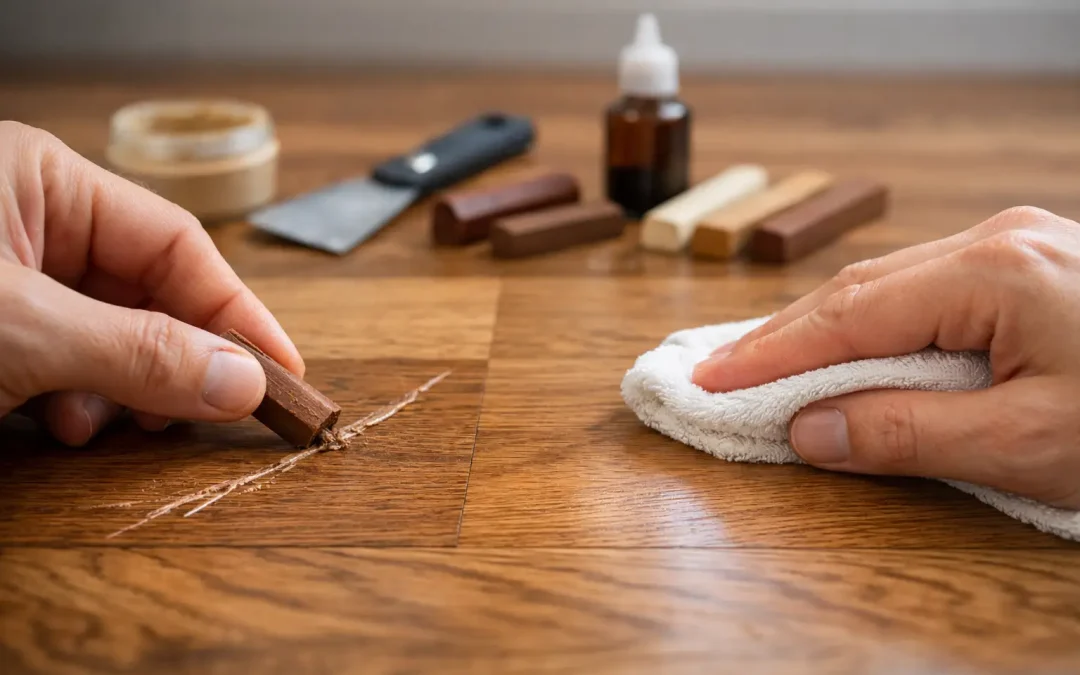
A wood touch-up marker can be effective when a narrow scratch has exposed a small amount of color but has not damaged a large section of finish. Select a shade that is slightly lighter than you think you need. A dark marker applied too heavily can make the repair stand out more than the scratch.
Apply color sparingly, wipe away excess immediately, and evaluate it from several angles. Wood grain naturally varies from board to board, so a repair that looks good from above may still show from the side in bright daylight. Markers are best for isolated scratches, not widespread wear across a hallway, kitchen, or living room.
Crayons and putty sticks can fill tiny chips or narrow gouges, but they also have limits. They do not recreate the strength of a professional finish, and they can collect dirt over time. These products are useful as a short-term visual improvement when the damage is small and the surrounding finish is still in good condition.
Why sanding a single scratch can backfire
It is tempting to sand out a visible scratch, especially when it is concentrated in one spot. This is one of the most common ways a minor issue becomes a noticeable repair. Sanding removes material around the scratch, and it can leave a dull area, a low spot, or an uneven sheen if the floor is not blended and refinished correctly.
Engineered wood requires even more care. Its top layer of real wood, called the wear layer, may be too thin for aggressive sanding. Some engineered floors can be professionally refinished, while others can only tolerate limited restoration. The construction, age, and previous refinishing history all matter.
Solid hardwood generally offers more restoration options, but that does not mean every scratch needs a full sanding project. A professional assessment can determine whether the floor is a candidate for a screen and recoat, localized repair, or full refinishing. The right scope preserves as much original wood as possible while producing an even appearance.
Signs the floor needs more than a spot repair
A single scratch can often be addressed locally. When scratches appear throughout the room, the real issue may be finish wear rather than isolated damage. Worn traffic lanes, dullness near entrances, areas that absorb moisture quickly, and a rough feel underfoot can all indicate that the protective coat is failing.
Water damage changes the decision as well. Dark stains, raised grain, cupped boards, buckling, or separation between planks should be inspected before cosmetic work begins. Covering these symptoms with stain or filler does not address moisture in the wood or subfloor.
Pet scratches are another situation where the overall pattern matters. A few marks near a doorway may be manageable with touch-up work. Repeated claw marks across several rooms may call for refinishing and a more durable protective finish. The goal is not just to improve what is visible today, but to give the floor better resistance to the traffic it receives.
Professional restoration delivers a more consistent result
Professional wood floor restoration is especially valuable when color matching, sheen matching, or finish compatibility is uncertain. A restoration specialist can inspect the wood, determine the existing finish, assess whether the damage is in the coating or the wood, and recommend the least invasive repair that will hold up.
For floors with widespread light scratching but no deep damage, a maintenance coat or recoat may restore a more even sheen without taking the floor down to bare wood. For deeper wear, sanding and refinishing can remove damage, refresh the color, and apply a new protective finish. The best option depends on the floor’s condition, not simply how old it is.
Natural Surface Restoration helps homeowners throughout Gainesville and surrounding North Central Florida communities evaluate worn wood floors before replacement becomes the default answer. In many cases, a carefully planned restoration can bring back the warmth and character of the existing floor while extending its useful life.
How to prevent new scratches after repair
Once a repair is complete, a few practical habits make a major difference. Place felt pads under chairs, tables, and movable furniture, then check and replace them when they collect grit. Use entry mats at exterior doors, but choose breathable mats that do not trap moisture against the wood.
Keep pet nails trimmed, and lift furniture instead of dragging it. A soft broom or vacuum made for hard floors removes the fine grit that acts like sandpaper under shoes and furniture. For routine cleaning, use only the amount of moisture needed and dry up spills promptly.
Humidity control matters in Florida homes. Wood naturally expands and contracts as indoor moisture levels change. Keeping the home reasonably stable can reduce seasonal movement and help protect the finish from stress over time. If you notice new gaps, cupping, or recurring finish problems, address the moisture conditions rather than repeatedly touching up the surface.
A well-repaired wood floor should not look patched from across the room. It should look cared for. If a scratch has become a daily distraction, an experienced evaluation can give you a clear path forward – whether that means a simple touch-up, protective recoating, or a fuller restoration designed to preserve the floor you already love.