
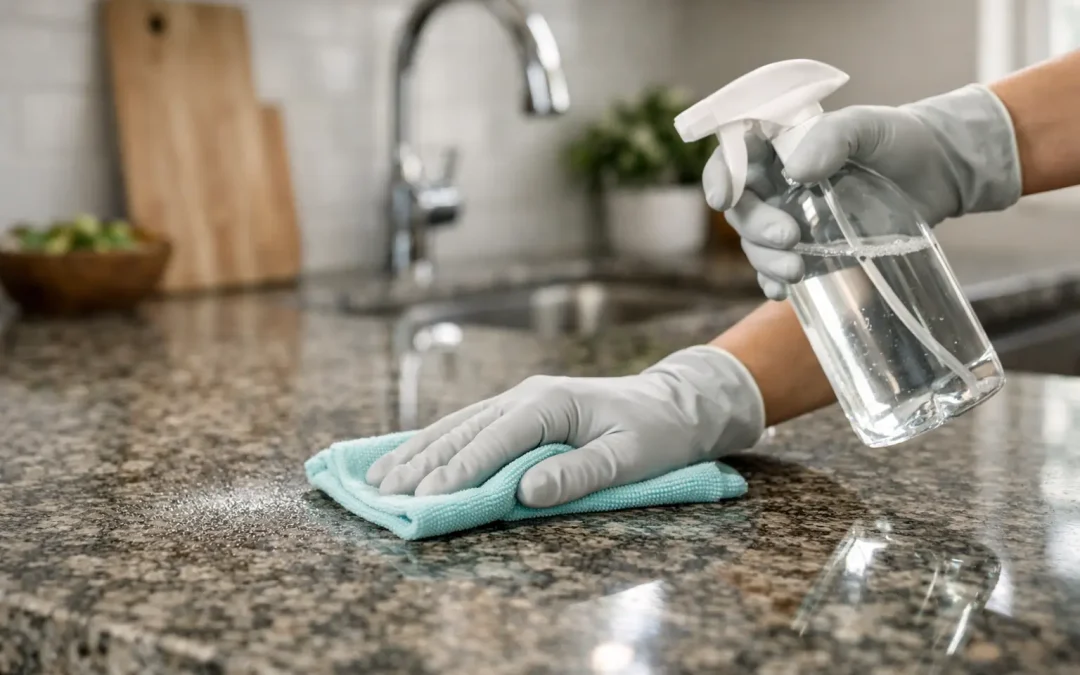
A granite countertop can look nearly indestructible, right up until a harsh cleaner leaves it cloudy, streaky, or stripped of its protective sealer. Learning how to clean granite safely is less about buying a cabinet full of specialty products and more about avoiding a few common mistakes. With the right daily routine, granite stays clean, polished-looking, and easier to protect for years.
How to Clean Granite Safely Every Day
For routine cleaning, start with a soft microfiber cloth dampened with warm water. Add a small amount of pH-neutral stone cleaner or mild dish soap when the surface has food residue, cooking grease, or fingerprints. Wipe the countertop, then go back over it with a clean, damp cloth to remove any soap film. Finish by drying the granite with a separate microfiber towel.
Drying matters more than many homeowners realize. Water left behind can create streaks, especially on dark granite, and hard-water minerals can leave a hazy appearance over time. A dry towel also makes it easier to spot spills, dull areas, or damage to the finish before the problem becomes more difficult to correct.
For a quick cleanup after preparing meals, plain water and a clean microfiber cloth are often enough. Dish soap is useful, but using too much of it too often can leave a residue that makes the stone look dull. If your countertop seems clean but never looks clear or glossy, leftover cleaner may be the reason.
Clean Spills Before They Have Time to Soak In
Granite is a natural stone, and even dense granite is not completely nonporous. Most granite countertops are sealed to slow absorption, but a sealer is not a force field. Wine, cooking oil, coffee, juice, tomato sauce, and greasy food spills should be wiped up promptly.
Blot a spill rather than scrubbing it across the countertop. Scrubbing can spread the material into a larger area or push it toward seams and edges. Use a damp cloth with a little mild dish soap, rinse the area with a clean cloth, and dry it thoroughly.
Acidic foods deserve extra attention. Lemon juice, vinegar, and certain sauces can affect the sealer and leave a residue behind. Granite is generally more acid-resistant than marble, but repeated exposure to acids can still take a toll on its appearance and protection.
Products That Can Damage Granite
The safest approach is to read the cleaner label before it reaches the countertop. A product may be suitable for tile, glass, or stainless steel while being the wrong choice for natural stone.
Avoid these products on granite:
- Vinegar, lemon juice, and other acidic cleaners
- Bleach, ammonia, and disinfectants not labeled safe for natural stone
- Abrasive powders, scouring pads, and rough scrub sponges
- Oven cleaner, bathroom cleaner, and degreasing products meant for heavy-duty use
- Wax-based polishes that can create buildup or a temporary shine that attracts residue
Harsh chemicals can weaken the sealer, dull the finish, or cause uneven-looking areas. Abrasives may leave fine scratches that are hard to see at first but become obvious under kitchen lighting. Granite is tough, but its polished surface and protective treatment still need thoughtful care.
If you want to disinfect after handling raw meat, clean the spill first. Then use a stone-safe disinfecting product according to its label instructions. Do not assume that a stronger cleaner is a better cleaner. The best product is one that handles the job without compromising the stone or its sealer.
What to Do About Sticky Residue and Grease
Dried food, adhesive residue, and grease around the cooktop often need more than a damp cloth. Begin with a pH-neutral stone cleaner or a small amount of mild dish soap mixed with warm water. Let the damp cloth sit over the residue briefly, then wipe gently.
For a stubborn spot, use a plastic scraper held at a low angle. Never use a knife, razor blade, or metal scraper on a polished granite countertop. Metal can scratch the surface, chip an edge, or catch on a seam.
A greasy film near the range may also be a sign that the countertop is receiving too much soap during routine cleaning. Wash the area lightly, wipe again with clean water, and dry it. Reaching for stronger chemicals can create more trouble than the original grease.
Removing a Stain From Granite
Not every dark mark is a stain. Sometimes it is surface residue, a wet spot, or an area where the sealer has worn down. A true stain usually remains after the granite is completely dry and ordinary cleaning has not changed it.
Oil-based stains often look darker than the surrounding stone. Organic stains from coffee, tea, fruit, or food can leave brown or pinkish discoloration. Rust, ink, and dye stains require different treatment, which is why identifying the likely source matters.
Avoid experimenting with random household chemicals. A stain removal method that works for one material can damage another, and an aggressive treatment may lighten the stone or affect the finish around the spot. If a stain is deep, widespread, or near a seam, professional assessment is usually the safer choice.
Check Whether Your Granite Needs Sealing
Granite sealer wears gradually, not all at once. When the protection is working well, liquids stay near the surface long enough to be wiped away. When it has weakened, water or oil may darken the stone more quickly.
A simple water test can provide a useful clue. Place a few drops of water on a clean, dry area of the countertop and watch it for several minutes. If the water beads and remains on the surface, the protection is likely still performing well. If the granite darkens quickly, it may be time to have the surface evaluated and resealed.
This test is not a perfect diagnosis. Some granite varieties naturally absorb more readily than others, while some dense slabs need less frequent sealing. Countertops around sinks and cooktops also experience heavier use than less active sections. The goal is not to seal on a fixed calendar schedule, but to maintain the level of protection your specific stone needs.
Habits That Keep Granite Looking Its Best
Use cutting boards for food preparation and trivets or hot pads for hot cookware. Granite handles heat better than many countertop materials, but sudden temperature changes, heavy pans, and repeated heat exposure can still put stress on the stone, its seams, or its finish.
Keep bottles of cooking oil, soap dispensers, and small appliances from sitting in the same spot for months without being moved and cleaned underneath. Moisture and residue can build up around these items, especially near the sink. A quick wipe under them during regular cleaning helps prevent rings and dull patches.
Also pay attention to countertop edges. They receive more contact from belt buckles, chairs, cookware, and daily traffic than the flat surface does. Clean them gently and avoid hanging damp dishcloths over the edge, where moisture can collect along the underside.
When Professional Granite Care Makes Sense
If your granite is cloudy, visibly stained, rough to the touch, or no longer repels water, cleaning alone may not restore the result you want. The issue could be cleaner buildup, worn sealer, surface damage, or a stain that has moved below the surface. Each calls for a different solution.
Natural Surface Restoration helps homeowners throughout North Central Florida evaluate granite properly, clean it with stone-appropriate methods, and restore protection where needed. Professional care is especially worthwhile before listing a home, after a kitchen renovation, or when repeated DIY cleaning has not brought back the countertop’s original appearance.
Treat granite as the lasting natural surface it is: clean spills early, use mild products, dry the surface after washing, and address changes in appearance before they become permanent-looking problems.