
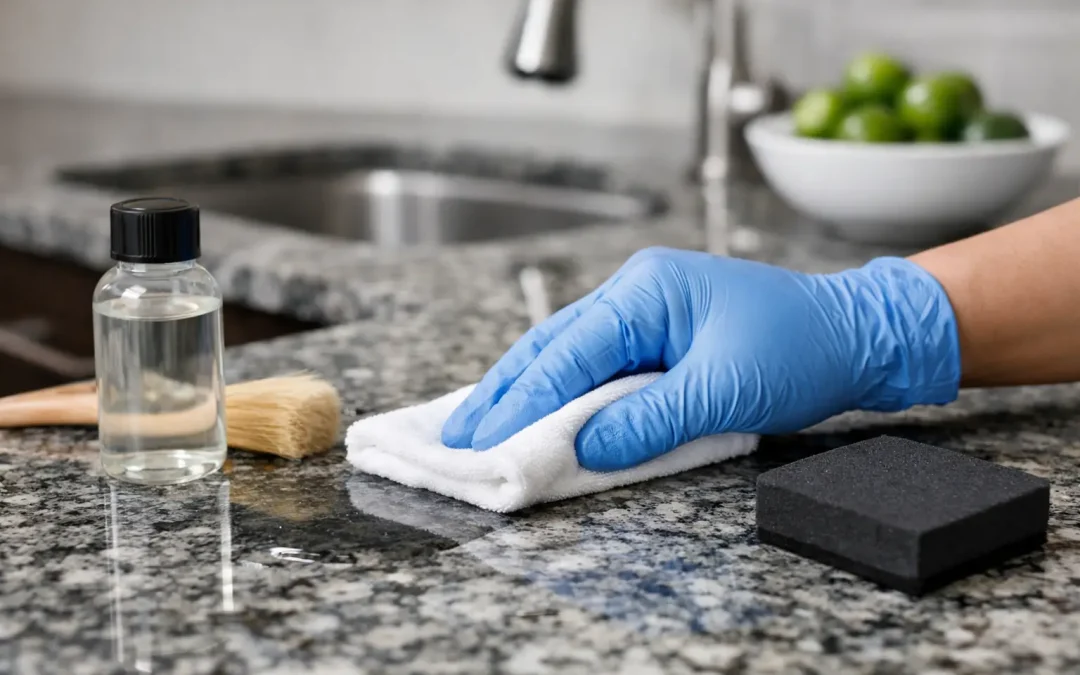
A granite countertop can look solid enough to handle anything, right up until oil darkens a spot near the cooktop or water leaves a shadow around the sink. That is usually when homeowners start asking how often seal granite countertops should really happen. The honest answer is not every countertop follows the same schedule.
Granite is durable, but it is still a natural stone. Some slabs are dense and resist moisture well. Others are more porous and absorb liquids faster, which means they need more frequent protection. Add in daily use, cleaning habits, and Florida humidity, and the timing can vary from one home to the next.
How often to seal granite countertops in most homes
For many homes, granite countertops need sealing about every 1 to 3 years. That is a practical range, not a rule set in stone. A heavily used kitchen island with frequent cooking, spills, and wipe-downs may need attention sooner than a guest bathroom vanity that sees very little traffic.
The type of granite matters too. Lighter granites and more porous slabs often need sealing more often than darker, denser varieties, though color alone is not a reliable test. The finish also plays a role. Honed granite can sometimes show moisture differently than polished granite, even when both are properly sealed.
If your countertops were installed recently, do not assume they are fully protected forever. Many new tops are sealed at installation, but the quality of that application and the product used can vary. Some sealers last years. Others wear down much faster in real household conditions.
The easiest way to tell if granite needs sealing
The simplest check is a water test. Place a few drops of water on the surface in an area that is clean and dry, then wait about 10 to 15 minutes. If the water beads up and stays near the surface, the sealer is likely still doing its job. If the stone darkens under the water or absorbs it quickly, it is probably time to reseal.
You can do the same kind of check with a drop of cooking oil in a less visible spot, since oil penetration is a common problem in kitchens. If oil darkens the stone quickly, protection is wearing thin.
This matters because sealers are not there to make granite stain-proof. They are there to slow absorption and give you time to wipe up spills before they become stains. Once that buffer is gone, everyday messes can become much harder to remove.
Signs your granite countertops may need to be resealed
Sometimes the countertop tells you before any test does. Darkening around the sink, stains that seem to grab faster, and water marks that linger longer than they used to are all clues. If the surface starts looking uneven after routine cleaning, especially in high-use areas, the sealer may be wearing off in patches.
A dull look does not always mean the granite needs sealing. That is where homeowners can get tripped up. Dullness can also come from soap film, residue from improper cleaners, etching on stone that is not actually granite, or wear in the finish itself. Sealing helps with absorption. It does not fix surface damage, restore shine, or remove existing stains.
That is one reason professional evaluation can save time and frustration. A countertop may need cleaning and sealing, but it may also need stain treatment or surface restoration first. Applying sealer over a problem does not solve the problem.
What affects how often granite needs sealing
Usage is the biggest factor. A family kitchen where meals are prepared every day will wear through protection faster than a low-use space. Areas around the sink, coffee station, and stove usually need the most attention because they see repeated moisture, oils, and acidic foods.
Cleaning products also matter. Harsh cleaners, vinegar, bleach mixtures, and acidic solutions can break down sealer over time and create other issues on natural stone. A pH-neutral stone cleaner is usually the safer choice for routine care.
The quality of the previous sealing job matters just as much. If the wrong product was used, if excess sealer was left on the surface, or if the countertop was sealed without thorough cleaning first, the result may not last the way it should. Good sealing is not just about applying a product. It is about proper prep, correct dwell time, and removing residue so the surface looks right and performs well.
Why over-sealing granite is not better
Some homeowners assume that if sealing is good, sealing more often must be better. In practice, that is not always true. Granite that is already well protected may not absorb additional sealer properly. Over-application can leave haze, streaks, or a sticky residue if the product is not handled correctly.
There is also no benefit in sealing on a fixed calendar without checking the stone first. If your granite still repels moisture well, it may not need another coat yet. The goal is protection based on condition, not unnecessary product buildup.
DIY sealing vs professional sealing
Homeowners can buy granite sealer and handle basic maintenance themselves, but results depend on choosing the right product and applying it correctly. The countertop has to be fully clean and dry. The sealer needs enough time to penetrate, and any excess has to be buffed off before it dries on the surface.
That sounds simple, but this is where mistakes happen. A countertop may have embedded oils, residue, or old buildup that prevents even absorption. The wrong sealer can change the appearance of the stone or fail prematurely. In some cases, people reseal because they think the granite looks tired, when the real issue is that it needs deep cleaning, stain removal, or polishing.
Professional service is often the better choice when the stone has visible staining, inconsistent absorption, dull traffic areas, or years of neglected maintenance. A specialist can tell whether the granite actually needs sealing, how porous it is, and whether there is a larger restoration issue affecting the surface.
Granite care in Gainesville and North Central Florida homes
Florida homes put surfaces through a little extra. Moisture in the air, busy kitchens, and open floor plans that keep counters in constant use can all affect how granite performs over time. If your home sees a lot of cooking, entertaining, or seasonal occupancy changes, your sealing schedule may not look exactly like a national average.
That is why local experience matters. A company that works with natural stone in Gainesville and surrounding communities sees the common patterns – what happens around sink cutouts, which surfaces get stained most often, and when a countertop needs more than another quick coat of sealer. Natural Surface Restoration works with homeowners who want to protect stone the right way, not just cover up wear and hope for the best.
A realistic sealing schedule to follow
If you want a practical approach, test your granite once or twice a year instead of guessing. In many homes, that is enough to catch changes before staining becomes a bigger issue. If the surface still repels water and oil, leave it alone. If it absorbs quickly, schedule cleaning and sealing before damage sets in.
For heavily used kitchens, yearly evaluation makes sense. For lower-use spaces, every couple of years may be enough. The key is to base the timing on the stone’s condition and your household habits, not a one-size-fits-all recommendation.
And if you are seeing stains, dark spots, haze, or a finish that just does not look right, treat that as a sign to have it looked at rather than just buying another bottle of sealer. Granite lasts a long time when it is cared for correctly, but protection works best when it is paired with proper cleaning and surface-specific maintenance.
A good granite countertop should be easy to live with, not something you have to second-guess every time water splashes near the sink. When you know what to watch for and seal based on the stone’s actual condition, you protect the surface, preserve the look, and avoid bigger restoration issues later.