
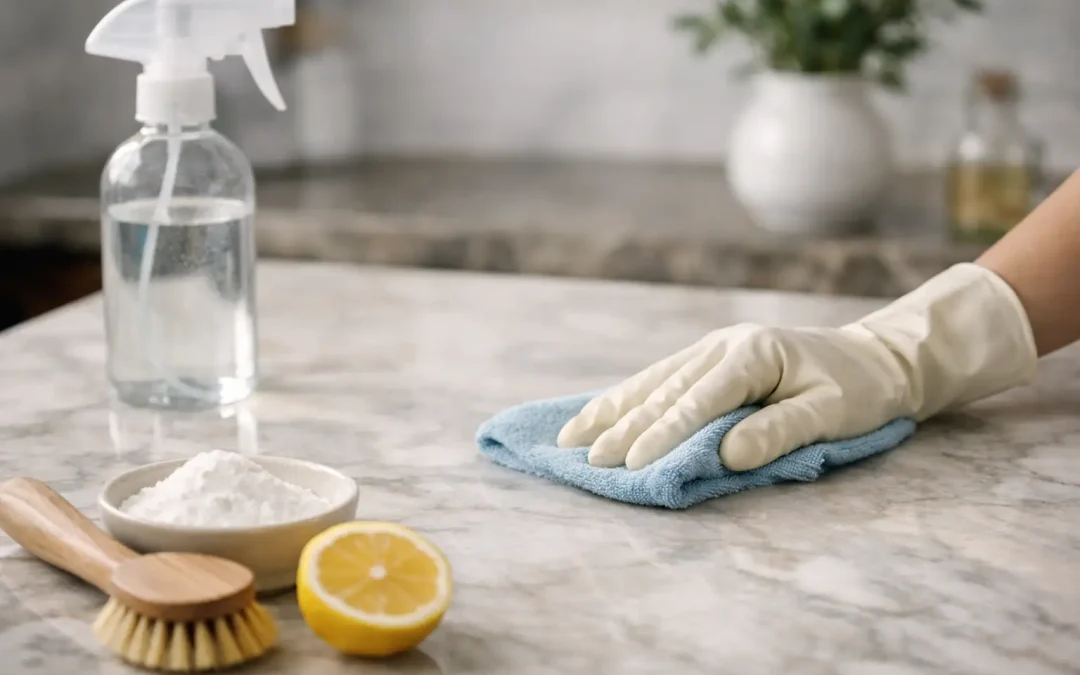
A marble vanity can look cloudy after one wrong cleaner, while a marble floor may slowly lose its reflection in the busiest part of the room. Knowing how to clean dull marble starts with recognizing that dullness is not always dirt. On marble, the cause may be surface residue, mineral deposits, fine scratches, worn sealer, or chemical etching. Each calls for a different response.
The good news is that many marble surfaces can look better with careful cleaning and better daily habits. The caution is that aggressive scrubbing, acidic products, and all-purpose cleaners can turn a manageable problem into permanent damage. Start gently, assess the finish, and leave true polishing work to a marble restoration specialist when needed.
Why Marble Looks Dull
Marble is a calcium-based natural stone. That is what gives it its classic character, but it also makes it reactive. Acids can dissolve a tiny amount of the surface, leaving a pale, cloudy, or rough-looking mark called an etch. Lemon juice, vinegar, wine, soft drinks, tomato sauce, and many bathroom cleaners can cause etching quickly.
Not every dull area is etched, though. A film from soap, hard water, floor cleaner, or cleaning products can flatten the stone’s appearance without damaging it. In Gainesville and throughout North Central Florida, hard-water residue is a common concern on marble showers, bathroom counters, and other surfaces exposed to repeated water use.
Fine scratches can also scatter light and make polished marble appear hazy. Floors often develop this wear in traffic lanes, near exterior doors, and beneath dining chairs. If the shine is missing only in frequently used areas, surface wear is more likely than a simple cleaning issue.
How to Clean Dull Marble Safely
Before using any product, remove dust and grit. On a floor, use a clean, dry microfiber mop or a vacuum made for hard surfaces with the beater bar turned off. On a countertop or vanity, wipe away loose debris with a soft microfiber cloth. Grit is abrasive, and rubbing it across marble can create more scratching.
Next, use warm water and a pH-neutral cleaner specifically labeled safe for natural stone. Mix and apply it according to the label directions. A lightly damp microfiber cloth or mop is usually enough. Marble does not need to be soaked, and standing water can leave mineral residue or work into seams.
Work in small sections, especially on floors. Wipe the surface with the cleaning solution, then follow with a separate cloth dampened with clean water to remove leftover cleaner. Dry the marble immediately with a fresh microfiber towel. Drying matters because it prevents water spots and makes it easier to see whether the dullness was caused by residue.
For a small countertop or vanity, a simple method works well: clean with a stone-safe product, wipe with clean water, and buff dry with a microfiber cloth using light pressure. Do not use a circular scrubbing motion with an abrasive pad. If the surface still looks cloudy after it is clean and dry, stop before escalating to stronger products. The issue may be etching or worn polish rather than soil.
What Not to Use on Marble
Some common household products are safe on ceramic tile or glass but not on marble. Avoid the following:
- Vinegar, lemon juice, and other acidic DIY cleaners
- Bleach, ammonia, and harsh disinfectants unless a stone-care professional specifically recommends them
- Bathroom cleaners formulated to remove lime, rust, or soap scum
- Abrasive powders, scouring pads, steel wool, and stiff brushes
- Generic all-purpose cleaners that do not state they are safe for natural stone
A product can be marketed as “natural” and still be too acidic for marble. When in doubt, do not test it on a visible area. Use a stone-safe cleaner or ask for professional guidance.
Tell the Difference Between Dirt, Etching, and Wear
A quick visual check can help you decide what cleaning can realistically accomplish. Residue often looks like an even film or streaking and may improve after a proper stone-safe wash and dry. Hard-water spots may feel slightly raised or look crusty around faucets and shower fixtures.
Etching usually looks duller or lighter than the surrounding polished marble. It may have the outline of a spill, ring, splash, or drips. The area can feel smoother, rougher, or simply different when you run a fingertip over it. Unlike a stain, an etch changes the surface finish itself, so a cleaner cannot restore the shine.
Wear and fine scratching tend to appear across larger, high-use sections. A polished floor may still look glossy along the edges of the room but hazy in the center. This is a restoration issue. The marble may need honing to remove damage and polishing to bring back an even finish.
Sealer is another source of confusion. Sealer helps reduce how quickly marble absorbs liquids, but it does not stop etching and does not create shine. Applying more sealer to etched or dull marble will not correct the appearance. In some cases, excess or improperly applied sealer can leave its own hazy residue.
Treating Small Buildup Without Damaging the Stone
If cleaning removes most of the dullness but leaves a localized water spot or soap film, use patience instead of force. Repeat the stone-safe cleaning process, allowing the cleaner a short dwell time only if its directions permit it. Keep the area wet enough to work, but never let cleaner dry on the stone.
For marble in a shower, improve the conditions that create buildup. Squeegee or towel-dry walls and ledges after use, keep bath products from sitting directly on the stone, and clean routinely before soap film becomes heavy. A gentle weekly cleaning is easier on marble than occasional deep scrubbing.
For kitchen counters, wipe spills promptly, especially citrus, wine, coffee, sauces, and cooking oils. Use coasters under drinks and trivets under hot cookware. These habits will not make marble indestructible, but they greatly reduce the chance of new etches and stains.
When Dull Marble Needs Professional Polishing
Professional restoration is the right next step when the marble is clean but remains cloudy, etched, scratched, unevenly shiny, or visibly worn. Trying to polish marble with a consumer scratch remover or a random polishing powder can produce uneven gloss, swirl marks, or a more noticeable spot than the original damage.
The proper restoration process depends on the stone and finish. A technician may use honing to level etches and scratches, then mechanically polish the marble to match the desired sheen. Honed marble requires a different approach from high-polish marble, and a floor with broad traffic wear needs different equipment than a small vanity top.
Natural Surface Restoration evaluates the condition of the marble before recommending cleaning, honing, polishing, sealing, or a combination of services. That diagnosis is valuable because replacing marble is expensive, while the right restoration work can extend the surface’s useful life and restore the look that made you choose it in the first place.
Keep the Finish Looking Better Longer
Once dull marble has been cleaned or restored, protect the result with simple routines. Dust-mop marble floors regularly so grit is not ground into the finish. Place mats at exterior entries and felt pads beneath furniture that moves. Use a pH-neutral stone cleaner rather than reaching for whatever is under the sink.
On counters and vanities, keep a soft microfiber cloth nearby for quick spill cleanup. On shower marble, dry the surface after use and make sure ventilation is adequate. If your marble has been sealed, follow the maintenance guidance for that particular sealer instead of automatically resealing on a schedule.
Marble will always have a little more personality and maintenance demand than manufactured surfaces. That is part of its appeal. Treat dullness as a clue rather than something to scrub away, and the right care can preserve its depth, color, and natural elegance for years to come.