
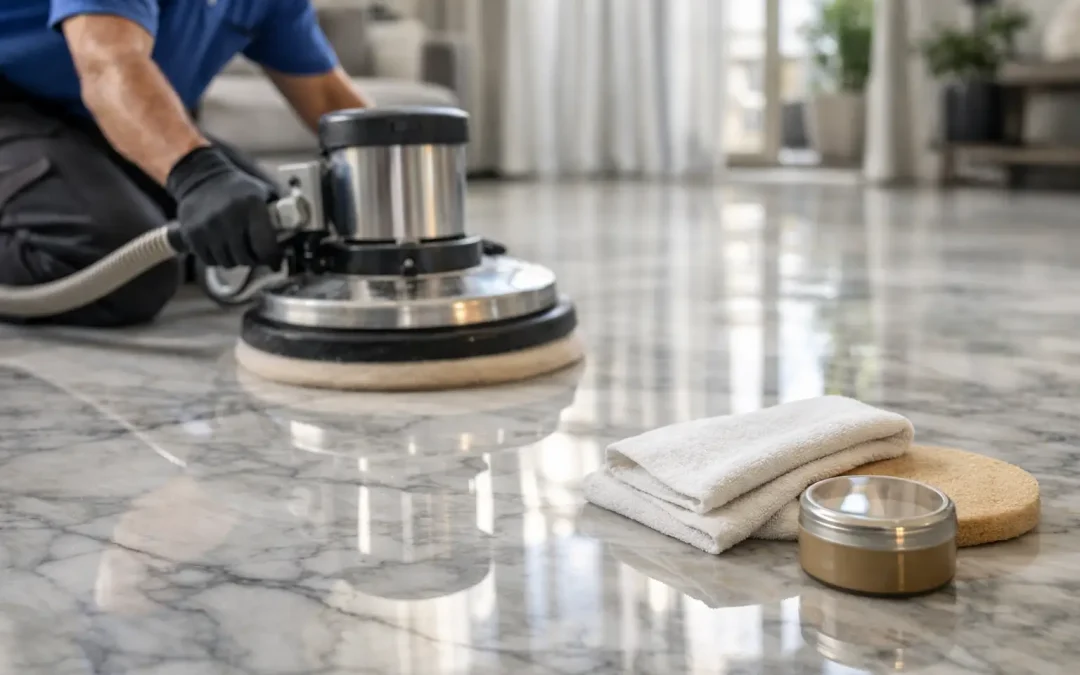
A marble floor can make a room look clean, bright, and high-end – until dull traffic patterns, etch marks, and cloudy spots start showing up. If you are wondering how to polish marble floors, the first thing to know is that true polishing depends on what caused the floor to lose its shine. Dirt, soap buildup, scratching, and acid etching do not all respond to the same fix.
That matters because marble is softer and more reactive than many homeowners expect. A product that seems harmless on ceramic tile or vinyl can leave marble looking worse. In homes across Gainesville and surrounding areas, we often see floors that are not actually dirty anymore – they are worn, etched, or mechanically scratched, which calls for a different approach than routine cleaning.
How to polish marble floors without causing damage
The safest place to start is with diagnosis, not products. Marble loses its finish in a few common ways. Surface soil and residue can make it look dull, but acidic spills from juice, vinegar, or common bathroom products can chemically etch the stone. Foot traffic can also wear the finish down over time, especially in kitchens, hallways, and entryways.
If the floor looks hazy in patches, has light rings or spot marks, or feels smooth but still appears dull after cleaning, polishing alone may not be enough. In that case, the floor may need honing and professional restoration before it can be polished back to a consistent shine. That is the difference many homeowners miss.
Start with a pH-neutral cleaning
Before any polishing step, remove loose grit with a dust mop or vacuum designed for hard surfaces. Grit acts like sandpaper underfoot, and polishing over it can make fine scratching worse.
Next, clean the floor with a pH-neutral stone cleaner and a soft microfiber mop. Avoid vinegar, bleach, lemon-based cleaners, and generic bathroom or kitchen sprays. They can etch marble or leave residue behind. Use only enough cleaner to lift soil, then dry the floor well so you can see the actual condition of the stone.
Sometimes this alone improves the look more than expected. A marble floor with film buildup may seem dull when the stone itself is still in decent shape. But if the shine is still uneven after cleaning, the problem is likely in the stone surface, not on top of it.
What DIY marble polishing can and cannot do
There is a narrow lane where DIY polishing makes sense. If your marble has only minor dullness and no visible etching, deep scratches, lippage, or worn traffic lanes, a marble polishing powder or stone-safe polish may help refresh the finish. The key word is refresh. It will not correct serious damage.
When using a homeowner-grade marble polishing product, always test a small area first. Follow label directions closely, use a soft pad, and keep expectations realistic. Some products can improve gloss on lightly worn stone, but they can also create blotchy results if the floor has mixed wear patterns. A brighter patch in one section often makes the rest of the floor look duller.
This is where trade-offs come in. Spot polishing may feel like a money-saving move, but on larger floors it can leave an uneven appearance. Marble reflects light clearly, so inconsistency shows fast. If the floor has widespread etching, trying to chase shiny spots room by room usually leads to frustration.
Common mistakes homeowners make
The biggest mistake is using the wrong cleaner and calling the result polishing. Cleaning and polishing are different services. Cleaning removes soil. Polishing changes the stone surface to improve reflectivity.
Another common issue is using abrasive pads, scrub brushes, or all-purpose powders meant for tougher materials. Those can leave swirl marks or micro-scratches. Applying topical shine products can also backfire. Some coatings temporarily add gloss, but they may yellow, trap dirt, peel, or create maintenance problems later.
Store-bought solutions also do not address lippage, heavier wear, deep etches, or embedded staining. If your marble floor has multiple issues at once, which is common in lived-in homes, the right process usually involves more than one step.
When professional marble floor polishing is the better option
If you want the floor to look genuinely restored rather than temporarily improved, professional service is often the right move. That is especially true for larger areas, older marble, high-traffic rooms, or floors with etching and visible wear.
Professional marble polishing typically starts with evaluating the finish level and damage pattern. Some floors need honing first to remove light scratches and etch marks. Honing uses progressively finer abrasives to smooth the surface and create a uniform base. After that, the stone is polished to the desired sheen, whether that is a softer satin finish or a higher reflective shine.
That sequence matters. If etching is still present, polishing over it will not make it disappear. It may even make defects stand out more in certain lighting. A trained technician matches the process to the condition of the stone instead of forcing one product to solve every problem.
For homeowners in North Central Florida, another practical factor is time. DIY work on marble can take hours and still leave uncertain results. A professional restoration gives you a clearer path: identify the issue, correct it properly, and protect the floor going forward.
Signs your floor needs restoration, not just polishing
A few signs point to restoration rather than a simple polish. One is widespread dullness in traffic lanes while edges remain shinier. Another is etch marks from spills or bathroom products that look like water spots but do not wipe away. Deep scratches, uneven reflection, and a floor that looks cloudy no matter how clean it is are also strong indicators.
If you see these issues, the stone surface itself has changed. That is not unusual for marble. It just means the solution needs to match the problem.
How to keep polished marble floors looking better longer
Once marble is restored, daily care has a direct impact on how long the finish lasts. Use walk-off mats at exterior doors and felt protectors under furniture. Dust mop often, especially in sandy or high-traffic areas. Small particles are one of the fastest ways to wear down a polished finish.
Clean spills quickly, especially anything acidic like wine, citrus, coffee, or tomato sauce. Even a polished and sealed marble floor can still etch from acid exposure because sealers help with stain resistance, not acid resistance. That is another point homeowners are often not told.
Use only stone-safe cleaners for routine maintenance. More product is not better. Residue buildup can dull appearance and make the floor harder to maintain. It also helps to avoid dragging chairs, planters, or heavy decor across the surface.
Does sealing help after polishing?
Sealing can help protect marble from staining, depending on the type of stone and where it is installed. It is often a smart follow-up step after restoration, especially in kitchens, bathrooms, and active living areas. But sealing does not make marble maintenance-free, and it does not prevent etching from acids.
That is why the best long-term care plan usually includes both protection and realistic upkeep. A sealed floor still needs the right cleaner, quick spill response, and occasional professional attention over time.
The right result is not just more shine
When homeowners ask how to polish marble floors, they are usually asking for something slightly different underneath. Some want more shine. Some want to remove dull spots. Some want the floor to look clean again. Others want the room to feel updated without replacing expensive stone.
The right answer depends on the current condition of the marble and the result you want. In many cases, the goal is not maximum gloss. It is a clean, even, restored finish that looks natural in the home and holds up well with regular use.
That is where expert restoration makes a real difference. A dependable surface specialist can tell you whether your floor needs cleaning, honing, polishing, sealing, or a combination of those services. Natural Surface Restoration works with homeowners in Gainesville and nearby communities who want to bring worn stone back to life without guessing their way through it.
If your marble floor has lost its shine, the most helpful next step is not reaching for the harshest product on the shelf. It is figuring out what the stone is telling you, then choosing a process that restores the surface instead of risking more damage.