
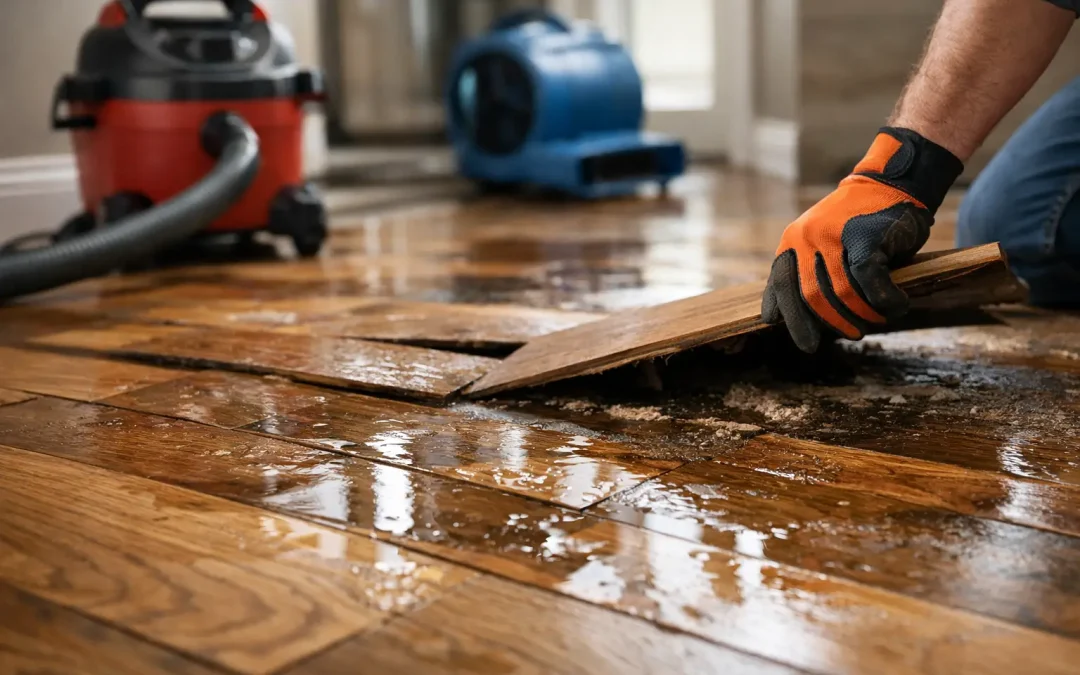
A leaking refrigerator line can leave water damaged flooring looking like a small cosmetic problem one day and a major restoration issue the next. Darkened wood, loose tile, cloudy stone, and lifting floor edges are all signs that moisture has moved beyond the surface. The right response depends on the flooring material, how long the water was present, and whether the moisture reached the subfloor.
For homeowners in Gainesville and across North Central Florida, acting quickly can often preserve a valuable surface. Waiting to see whether a floor dries on its own may allow staining, mold growth, adhesive failure, or permanent warping to take hold.
Start by Stopping the Water Source
Before assessing the floor, stop the leak or shut off the water supply if needed. A supply-line leak, overflowing appliance, roof intrusion, or plumbing backup will continue causing damage until the source is corrected. Move rugs, furniture, and stored items away from the wet area so air can reach the surface.
Use towels, a wet vacuum, or other safe extraction methods to remove standing water. Do not run fans across an area affected by sewage, floodwater, or another contaminated source. Those situations require specialized cleanup before anyone should attempt restoration work.
The first 24 to 48 hours matter most. Even when the visible water is gone, moisture may remain beneath boards, inside grout joints, under tile, or in the wood subfloor.
How Water Damaged Flooring Behaves by Material
Not every floor reacts to water the same way. A surface that looks badly damaged may be restorable, while another that appears mostly dry may have hidden structural issues underneath.
Hardwood and Engineered Wood
Solid hardwood can often be saved when water exposure is limited and drying begins quickly. Common signs include cupping, where board edges rise higher than their centers; crowning, where the center rises; gaps between boards; and dark water stains.
Cupping does not automatically mean replacement is necessary. Wood needs time to dry evenly before sanding or refinishing is considered. Sanding a floor that still holds excess moisture can create additional problems and may leave boards uneven once they finish drying.
Engineered wood requires a more cautious assessment. Its top layer is real wood, but its layered construction can separate when water reaches the core. Minor surface moisture may be manageable, while prolonged saturation can cause irreversible swelling or delamination.
Natural Stone, Marble, Travertine, and Terrazzo
Stone flooring will not warp like wood, but it is not immune to water damage. Water can carry minerals, dirt, rust, soap residue, and contaminants into porous surfaces and grout lines. Marble and travertine may develop dull areas or etching if a leak includes acidic cleaning products. Terrazzo can show staining, cloudy patches, or weakened sealer after repeated moisture exposure.
A professional cleaning, honing, polishing, or sealing process may restore the appearance of the surface when the stone itself remains sound. However, loose tiles, cracked grout, or moisture trapped beneath the installation must be addressed first. Polishing over an active moisture problem only delays the real repair.
Tile and Grout
Ceramic and porcelain tile are generally water-resistant, but the grout and installation system may not be. Water can travel through cracked grout, failed caulk, or open edges around tubs, showers, doorways, and appliances. Once moisture reaches the setting bed or subfloor, tiles may loosen or sound hollow when tapped.
Discolored grout may be a surface-cleaning issue, but dark lines that return after cleaning can point to moisture below. In some cases, targeted tile repair and grout restoration are enough. In others, the affected section must be removed so the substrate can dry and be repaired correctly.
Concrete Floors
Concrete can tolerate water exposure better than many finished floors, yet it is porous and can retain moisture. Stains, efflorescence – a white mineral deposit – and peeling coatings may appear after water intrusion. If moisture vapor continues coming through the slab, a new coating or sealer can fail unless the underlying condition is evaluated first.
Polished concrete may be restored when staining is limited, but flood contamination or substantial cracking changes the scope of work. The key is determining whether the issue is on the surface or coming from below.
Signs Your Floor May Be Repairable
A prompt inspection is the best way to avoid replacing a floor that could have been restored. Floors are often good candidates for repair when the water was clean, exposure was brief, the material is still firmly attached, and drying can be confirmed.
Look for changes in shape, color, texture, and movement. Wood boards that remain flat but show light staining may respond well to restoration. Stone with a dull finish but no cracks or loose sections may be cleaned and refinished. Tile with stained grout but a stable base may need deep cleaning, color sealing, or localized grout repair.
It depends on what is underneath, too. A beautiful floor cannot remain stable over a wet or damaged subfloor. Musty odors, soft spots, recurring discoloration, or widespread loose flooring are reasons to investigate below the finished surface.
When Replacement Is the Safer Choice
Some water damage goes beyond a cosmetic fix. Replacement may be necessary when wood has severe buckling, engineered planks have separated, tile is loose across a broad area, or the subfloor has swollen and lost strength. Flooring exposed to sewage, outdoor floodwater, or long-term hidden leaks may also need more extensive removal because of contamination and mold risk.
Do not assume every warped board or stained tile means the entire room must be replaced. The trade-off is between targeted repairs and the risk of leaving compromised materials in place. A careful assessment can identify whether damage is contained to one section or has spread farther than it first appears.
Avoid These Common Mistakes
Homeowners often make water damage worse while trying to solve it quickly. Heat is a common example. High heat can dry the surface too fast, causing hardwood to crack, cup, or shrink unevenly. It can also set certain stains into stone or grout.
Avoid applying wax, polish, paint, or a new sealer to conceal a water mark before the floor is dry and the cause has been corrected. These products can trap moisture or make later restoration more difficult. Household cleaners are also a poor choice for sensitive stone. Vinegar, acidic products, and abrasive powders can etch marble, travertine, limestone, and some terrazzo finishes.
If a floor has been wet for more than a day, do not rely only on its appearance. Moisture meters and professional inspection methods can help determine whether a floor is dry enough for repair, refinishing, sealing, or normal use.
Restoring the Surface After Drying
Once the source is fixed and the area is properly dry, restoration can address the damage that remains. Hardwood may need board repairs, sanding, staining, and refinishing. Stone may need deep cleaning, stain treatment, honing, polishing, and sealing. Tile and grout may benefit from professional cleaning, repairs, and color sealing that refreshes the room without replacing the tile.
Natural Surface Restoration evaluates the material, the visible damage, and the condition beneath the surface before recommending a path forward. That matters because the best result is not simply a floor that looks better for a few weeks. It is a surface that is stable, properly protected, and ready for daily use.
Protect the Floor From the Next Leak
After restoration, practical prevention goes a long way. Check appliance hoses and refrigerator connections periodically, repair worn caulk around wet areas, use mats near exterior doors, and clean spills before they work into seams or grout. Keep stone and wood finishes maintained with products suited to the material, not all-purpose cleaners that can leave residue or damage protective coatings.
If you notice a new stain, lifting edge, hollow tile, or unexplained change in sheen, treat it as an early warning rather than a minor annoyance. A timely assessment can be the difference between restoring a prized floor and replacing it before its time.