
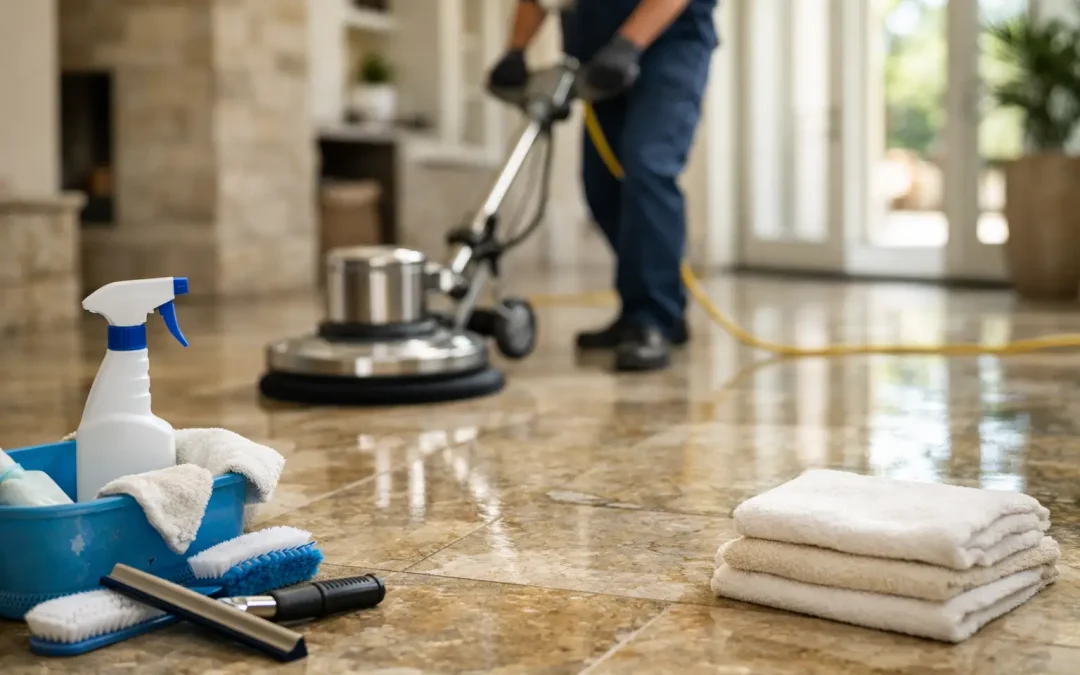
A stone floor can make a room feel solid, clean, and high-end – right up until it starts looking dull, hazy, or permanently dirty around the grout lines. That is usually when homeowners start searching for natural stone floor cleaning, and for good reason. Stone does not respond well to guesswork. The wrong cleaner, the wrong pad, or too much moisture can turn a manageable problem into etching, staining, or surface wear that is much harder to reverse.
What natural stone floor cleaning actually involves
Natural stone floor cleaning is not one service for every floor. Marble, travertine, limestone, slate, and granite each react differently to traffic, spills, and cleaning products. Some stones are dense and less absorbent. Others are more porous and can darken, stain, or develop rough spots if they are cleaned too aggressively or left unprotected.
That is why the first step is always identifying the material and the condition of the finish. A polished marble floor with etching needs a different approach than a textured travertine floor with embedded soil. A slate entry may hold onto grit in its natural clefts, while a limestone bathroom floor may show soap residue and moisture-related staining. Good cleaning starts with the surface itself, not with a one-size-fits-all product.
Why stone floors stop looking clean
Most homeowners are not dealing with a floor that is simply dusty. More often, the issue is buildup. Dirt gets worked into pores and textured areas. Residue from store-bought cleaners leaves a film. Hard water minerals collect near kitchens, baths, and exterior doors. Sealers wear down unevenly, so one part of the floor absorbs stains faster than another.
Over time, the floor can start looking cloudy even after mopping. In polished stone, that haze may be etching from acidic spills or harsh cleaners. In honed or textured stone, it may be embedded soil that regular mopping cannot reach. This is where surface appearance can be misleading. What looks like a cleaning problem may actually be a restoration issue.
Natural stone floor cleaning for different stone types
Marble is one of the most sensitive surfaces in the home. It scratches more easily than many homeowners expect, and acidic products can etch the finish almost immediately. If a marble floor looks dull in traffic lanes or around kitchen and bath areas, the cause is often a mix of residue, wear, and chemical damage rather than simple dirt.
Travertine has its own challenges. Because it is naturally porous and often filled, it can trap soil in pits, grout joints, and low areas of the surface. Standard mopping may clean the top layer while leaving darker buildup behind. If the floor still looks dirty after routine care, deep cleaning may be needed to pull contaminants from the stone and joints.
Limestone tends to show wear in a softer, more muted way. It can lose its even appearance, develop staining, or absorb spills if the protective barrier has broken down. Slate is more forgiving in some settings, but its texture can hold onto grime and make the floor look tired long before the stone itself is worn out. Granite is generally denser, yet it still benefits from proper cleaning and sealing, especially in high-use areas.
The risks of using the wrong cleaner
A common problem is over-the-counter cleaners marketed for “stone” that still leave residue or contain ingredients that are too harsh for certain finishes. Another is using vinegar, bleach, or heavy degreasers. These products may seem effective in the moment, but they can strip sealers, dull the finish, or create uneven coloring.
Steam cleaning is another area where it depends. On some surfaces, homeowners assume steam is a safer chemical-free option. In practice, heat and moisture can stress certain stones, affect fillers, and push contaminants deeper into grout lines if the floor is not handled correctly. The same goes for abrasive brushes and scrub pads. What removes a stain from ceramic tile can permanently scratch softer stone.
When cleaning is enough – and when restoration is the real need
This is where experience matters. Some floors only need professional deep cleaning and resealing. Others need honing, polishing, or stain treatment before they can look right again. If your floor has etch marks, traffic wear, lippage, heavy scratching, or worn-out filler, cleaning alone will only improve part of the problem.
A homeowner may spend weeks trying stronger products, different mops, or internet remedies, only to find that the floor still looks patchy. That is usually a sign the finish itself has changed. In those cases, the right next step is not more aggressive cleaning. It is restoring the stone to an even surface and then protecting it properly.
What professional natural stone floor cleaning should include
A proper service should start with an evaluation of the stone type, finish, wear pattern, and any problem areas such as staining, etching, grout discoloration, or previous product buildup. From there, the cleaning method should be matched to the floor rather than forced onto it.
For some homes, that means low-moisture cleaning with stone-safe solutions that break down residue without damaging the surface. For others, it may involve agitation designed for textured stone, extraction to remove embedded soil, and attention to grout lines that are making the whole floor look older than it is. If the stone is absorbent, sealing may follow to help resist future staining and make routine maintenance easier.
The goal is not just to make the floor look better that day. The goal is to clean it in a way that supports the life of the material. That matters when you are dealing with surfaces that are expensive to replace and often impossible to match once removed.
Why local homeowners often wait too long
Many people live with dull or stained stone for years because they assume replacement is the only real fix, or they worry that restoration will be too disruptive. In reality, professional service is often the more practical choice. A floor that looks worn out may still have plenty of life left if it is cleaned, corrected, and protected the right way.
In Gainesville and surrounding North Central Florida communities, homes deal with a mix of tracked-in grit, humidity, seasonal moisture, and daily traffic that can all affect stone surfaces. Entryways, kitchens, baths, and pool-adjacent areas are especially common trouble spots. Once dirt and moisture start working into a porous surface, ordinary maintenance usually stops being enough.
How to protect your stone after cleaning
Once the floor is professionally cleaned, day-to-day care becomes more effective. The key is using pH-appropriate stone cleaners, soft tools, and a routine that removes grit before it can abrade the finish. Entry mats help. Quick spill cleanup helps more. So does avoiding product layering from waxes, shine boosters, or general-purpose cleaners.
Sealing also matters, but not every stone needs the same treatment or schedule. Some homeowners are told to seal everything constantly, while others go years without protection. The right answer depends on the stone, the finish, and how the space is used. A good evaluation can tell you whether your floor is due for sealing or whether the real issue is wear, not absorbency.
Choosing the right help for natural stone floor cleaning
If you are comparing service providers, look for a company that understands restoration, not just basic floor cleaning. Stone care is a specialty. The company should be able to explain what material you have, what is causing the problem, and whether cleaning, polishing, sealing, or deeper repair is the right path.
That kind of straight answer matters because not every floor needs the most expensive service, and not every dull floor can be fixed with a simple scrub. A dependable specialist will tell you the difference. For homeowners who want to preserve the value and appearance of their surfaces, that clarity is part of the service.
Natural Surface Restoration works with homeowners who want real answers about worn, stained, and aging surfaces – not temporary cosmetic fixes. If your stone floors have lost their original look, the right cleaning process can be the first step toward bringing them back.
A well-cared-for stone floor should not make your home look older than it is. If yours still looks dirty after regular mopping, that is usually the floor telling you it needs more than routine maintenance.