
Travertine floor cleaning usually becomes a priority right after homeowners notice the same pattern – the floor looks dull no matter how often it is mopped, the grout seems permanently dark, and traffic paths start standing out from the rest of the room. That is not just everyday dirt. With travertine, buildup, improper products, worn sealer, and surface wear often stack up over time until the stone loses the clean, natural look that made it appealing in the first place.
Travertine is durable, but it is also a calcium-based natural stone. That matters because the wrong cleaner can damage it. Acidic products, harsh scrubbers, and too much water can all create problems, especially on older floors or stone that has not been professionally maintained in years. A floor may look like it needs stronger chemicals, but many times it needs the opposite – the right process, the right chemistry, and a clear understanding of what condition the stone is actually in.
What travertine floor cleaning really involves
Homeowners often think of cleaning as removing visible dirt. On travertine, the job is more specific. Proper cleaning means lifting embedded soil from the pores, joints, and textured areas without etching the stone or leaving residue behind. It also means identifying whether the issue is simple grime, topical buildup, sealer failure, staining, or wear in the finish.
That distinction matters because not every dull travertine floor is dirty. Some floors are clean but still look flat because the surface has been scratched by grit, stripped by harsh products, or coated with layers of residue from general household cleaners. In those cases, regular mopping will not fix the appearance, and stronger store-bought products can make it worse.
A professional assessment usually starts with the stone’s finish, condition, and exposure. Honed travertine, polished travertine, and tumbled travertine all respond differently to wear and cleaning. Kitchens, entryways, bathrooms, and pool-adjacent spaces also collect very different kinds of soil. Oily residue near cooking areas is not the same as tracked-in sand or soap film, so the cleaning approach has to match the problem.
Why travertine floors lose their clean appearance
Florida homes put a lot on stone floors. Fine sand, moisture, pet traffic, sunscreen residue, hard water minerals, and everyday foot traffic can slowly change the look of travertine even when homeowners stay on top of basic maintenance. Gainesville-area homes also deal with humidity and outdoor debris that get carried inside more often than people realize.
One common issue is residue from the wrong cleaner. Many popular floor cleaners leave behind a film that traps dirt and knocks down the stone’s natural character. Another is dirty grout lines, which can make the whole floor appear older and darker. Then there is sealer wear. When protective sealer has broken down, the stone can absorb spills and soil more easily, making cleaning less effective and staining more likely.
There is also a difference between staining and etching. Stains soak in and discolor the stone. Etching is surface damage caused by acidic substances reacting with the calcium in travertine. Homeowners sometimes try to scrub both problems away with more aggressive products, but etching is not a dirt issue. It is a surface condition that often requires honing or restoration work, not just cleaning.
Safe methods for travertine floor cleaning
The safest approach starts with dry soil removal. Grit acts like sandpaper underfoot, so regular dust mopping or vacuuming with a hard-floor setting helps reduce wear before wet cleaning even begins. After that, travertine should be cleaned with a pH-neutral stone cleaner and minimal water. Saturating the floor can push moisture and loosened soil into grout joints, edges, and porous areas.
Soft tools matter too. Microfiber pads and non-abrasive brushes are effective without scratching the surface. If the floor has textured or filled areas, agitation may be needed, but that should still be controlled and stone-safe. The goal is to suspend and remove soil, not grind it around.
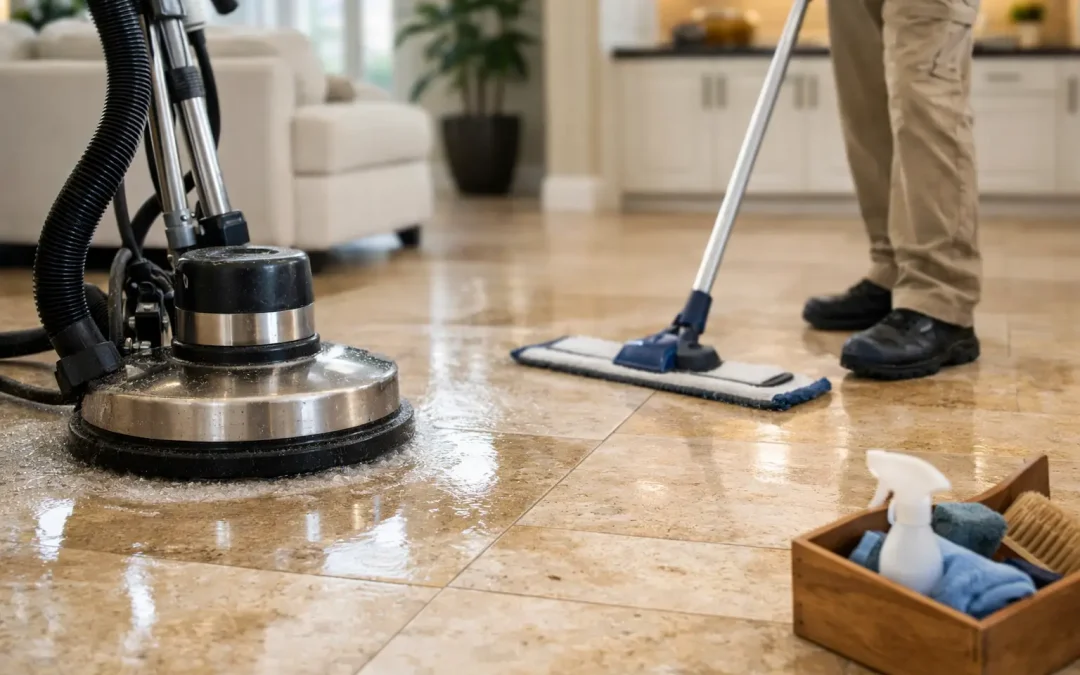
For deeper cleaning, professional equipment can make a major difference. It allows soil to be lifted from pores and grout lines more thoroughly than a mop can manage. On heavily used travertine, that deeper extraction is often what brings back a cleaner, more even appearance. It also helps avoid the cycle of over-mopping, where floors never truly get clean and just accumulate more residue over time.
What to avoid on travertine
Acidic cleaners are at the top of the no-use list. Vinegar, lemon-based products, and many bathroom or tile cleaners can etch travertine quickly. The damage may show up as dull spots, haze, or an uneven finish. Bleach and harsh degreasers can also be too aggressive depending on the floor’s condition and the surrounding grout.
Steam cleaning is another area where the answer depends on the floor. In some situations, heat and moisture can affect fillers, sealers, or vulnerable grout joints. It is not automatically safe just because it is marketed as chemical-free. On older or compromised travertine, the risk may outweigh the benefit.
Abrasive pads, stiff brushes, and powdered scrubbing products should be avoided as well. They can scratch the finish, especially on honed or polished surfaces. Even if the scratches seem minor at first, they catch dirt and make future cleaning harder.
When cleaning is not enough
Some travertine floors need more than routine care. If the stone still looks blotchy, dull, scratched, or worn after proper cleaning, restoration may be the right next step. That can include honing to remove surface damage, polishing to improve clarity, grout cleaning, stain treatment, and sealing to protect the floor after the dirt and residue have been removed.
This is where experience matters. Travertine can have natural voids, filled areas, repaired sections, and varying densities across the same floor. Treating it like standard ceramic tile can lead to uneven results. A trained stone professional knows how to correct the surface without taking away the character of the material.
For homeowners trying to decide whether they need simple service or full restoration, a few signs stand out. If traffic lanes are visibly duller than surrounding areas, if spots remain after cleaning, if grout lines dominate the look of the floor, or if spills darken the stone quickly, the floor may need more than a maintenance visit.
Protecting the floor after cleaning
Once a travertine floor is properly cleaned, protecting that result becomes the next priority. Sealing helps reduce absorption and makes routine maintenance easier, but sealer is not a shield against all damage. It buys time. It does not make travertine immune to acidic spills, abrasive grit, or neglect.
Good maintenance is practical and consistent. Use mats at entrances, clean up spills quickly, and stick with stone-safe products. In busy homes, frequent dry dust removal often does more for appearance than repeated wet mopping. If pets, kids, or outdoor traffic are part of daily life, that simple step goes a long way.
It also helps to set realistic expectations. Travertine is natural stone, so variation is part of its appeal. The goal is not to make it look artificial or overly glossy unless that is the chosen finish. The goal is to restore a clean, even, well-kept appearance and help the surface hold up over time.
Choosing a professional for travertine floor cleaning
If you are hiring out the work, look for a company that understands natural stone specifically, not just general floor cleaning. Travertine needs the right cleaning agents, the right equipment, and the ability to recognize when the floor needs restoration instead of just a surface wash. Before-and-after proof, clear estimates, and local experience all matter.
For homeowners in Gainesville and surrounding North Central Florida communities, that local experience is especially useful. Conditions inside and outside the home affect how stone performs here, and a specialist who regularly works on travertine, marble, granite, terrazzo, tile, and grout can usually spot issues faster and recommend the right service level. Natural Surface Restoration takes that restoration-first approach, helping homeowners improve the look of the stone they already have instead of pushing early replacement.
Travertine floors can last for years and still look excellent, but they respond best to the right care at the right time. If your floor has stopped looking clean no matter what you do, that is usually a sign to stop guessing and have the stone evaluated properly. The right cleaning can change the look of the room, and the right protection can help keep it that way.