
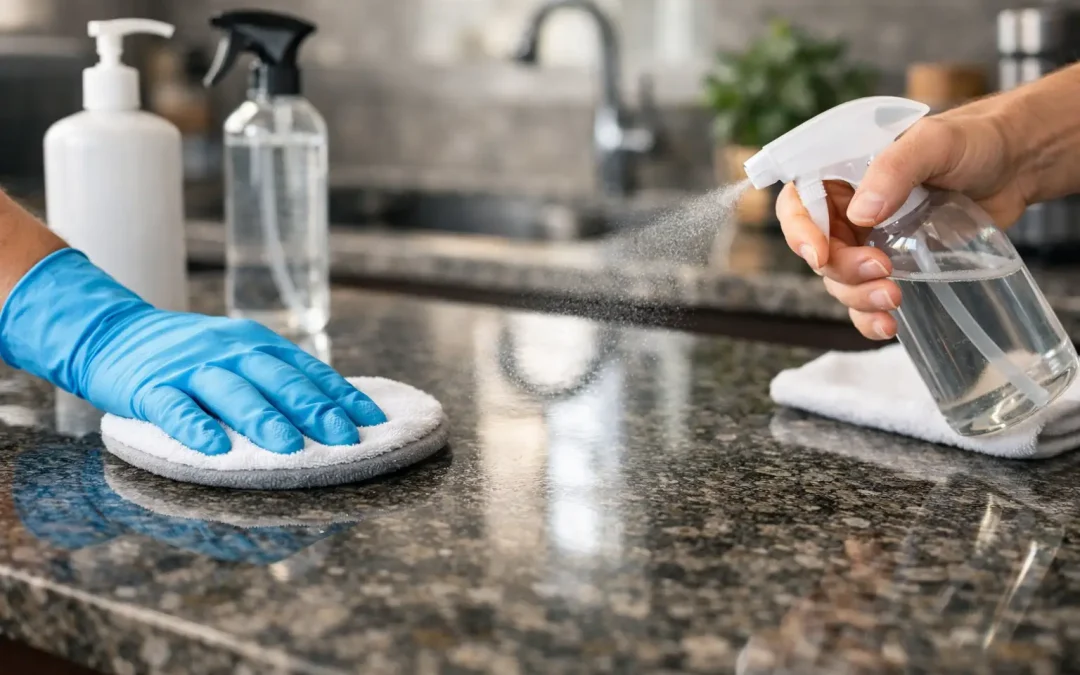
A granite countertop can look flat, cloudy, or streaky even when it is technically clean. If you want to fix dull granite countertops, the first step is figuring out what is actually changing the surface appearance. In many kitchens, the problem is not damaged granite at all. It is a buildup of cleaner residue, cooking oils, minerals, or an aging topical product sitting on top of the stone.
Granite is durable, but it is not maintenance-free. The wrong cleaning habit can gradually mask its natural depth and reflection. A careful diagnosis prevents homeowners from using aggressive products that make the finish worse or create a costly restoration issue.
Why Granite Countertops Start Looking Dull
A polished granite surface should reflect light clearly and show the color and movement of the stone. When that shine disappears, the cause usually falls into one of a few categories.
The most common issue is residue. Dish soap, all-purpose sprays, disinfecting wipes, and some stone cleaners can leave a film behind, especially when used daily without a clean-water rinse. Grease near the cooktop can blend with that residue and create a hazy appearance that does not wipe away easily.
Hard-water minerals are another frequent cause, particularly around faucets and in homes with mineral-heavy water. White or cloudy spots may be deposits on the surface rather than damage in the granite. These deposits need to be removed carefully because aggressive acidic cleaners can harm nearby grout, caulk, metal fixtures, or certain stone components.
Sometimes the problem is wear. Repeated scrubbing with abrasive pads, powdered cleaners, or rough tools can soften the surface’s reflection over time. True dulling from wear is more likely on heavily used kitchen islands, breakfast bars, or countertop edges where people regularly lean, slide items, or prepare food.
Sealer confusion also plays a role. A penetrating granite sealer is designed to reduce absorption and help protect against staining. It does not create the stone’s shine. Applying more sealer will not restore a dull polish, and overapplication can leave a sticky, streaky, or hazy residue.
Start With a Safe Cleaning Test
Before assuming the granite needs polishing, try a controlled cleaning test on a small, less noticeable section. Remove everything from the counter and wipe away loose crumbs and dust with a soft microfiber cloth.
Use a pH-neutral stone cleaner made for natural stone, following the product directions. Avoid saturating seams, caulk lines, and areas around sinks. Work in a small section, then wipe it with a separate cloth dampened only with clean water. Dry the area completely with a fresh microfiber towel.
Look at the surface from several angles after it dries. If the cleaned test area looks clearer and more reflective than the surrounding granite, residue was likely a major part of the problem. Continue cleaning the rest of the countertop in small sections, changing towels as they become dirty.
Do not judge the finish while the stone is wet. Moisture can temporarily make granite look darker and shinier, which hides haze and makes it difficult to see whether the underlying problem has been corrected.
Cleaners and Tools to Avoid
Household shortcuts can be hard on natural stone finishes. Do not use vinegar, lemon juice, bathroom-scale removers, oven cleaner, bleach-based products, ammonia-heavy cleaners, or abrasive scrubbing powders on granite. Steel wool, scouring pads, and rough sponges can also leave fine scratches that reduce clarity.
Granite is generally more acid-resistant than marble, but that does not make it immune to damage from repeated harsh cleaning. Some slabs also contain minerals that react differently than the surrounding stone. A product that seems harmless once may still create problems with ongoing use.
Avoid applying countertop waxes, furniture polish, generic shine sprays, or glossy topical coatings as a quick fix. These can make a counter look better briefly, but they often attract dirt, create uneven shine, and make professional restoration more difficult later.
Check Whether It Is a Sealer Issue or a Finish Issue
A simple water test can help determine whether the granite may need resealing. Place a few drops of water on a clean, dry area and watch them for about 10 to 15 minutes. If the water remains beaded, the sealer is likely still doing its job. If the stone darkens where the water sits, it may be absorbing moisture and could benefit from resealing after it is properly cleaned.
This test does not measure shine. A countertop can need sealer and still have a beautiful polished finish. It can also repel water perfectly while looking dull because of surface residue or physical wear.
If you decide to reseal, make sure the granite is fully clean and dry first. Use a quality penetrating sealer appropriate for granite, apply only as directed, and buff away excess product before it dries. Leaving excess sealer on the surface is one of the main reasons homeowners end up with a cloudy, uneven look.
When Cleaning Will Not Fix Dull Granite Countertops
If proper cleaning does not improve the appearance, the granite may have a finish problem rather than a maintenance problem. Signs include a consistently dull patch in one location, visible fine scratches under direct light, a rougher feel than adjacent areas, or a loss of reflection that remains after the counter is fully clean and dry.
At that point, more household cleaning is unlikely to help. In fact, repeated scrubbing can increase the damage. Granite restoration may involve professional deep cleaning, removal of residues or failed topical products, and mechanical honing and polishing selected for the specific stone and finish.
The right process depends on the granite. Dark polished granite, leathered granite, honed granite, and heavily patterned slabs all respond differently. A repair that produces an attractive gloss on one countertop may look unnatural or uneven on another. Matching the existing finish matters as much as increasing the shine.
Natural Surface Restoration evaluates the stone, the source of dullness, and the surrounding conditions before recommending a restoration approach. For homeowners in Gainesville and across North Central Florida, that means the work can be focused on the actual issue instead of applying a one-size-fits-all product to a high-value surface.
Watch for Damage Around Sinks and Cooktops
Countertop dullness is often most noticeable around sinks, faucets, and cooktops. These areas collect standing water, soap, cooking grease, and cleaner overspray. They may also have deteriorating caulk or grout lines that allow moisture and residue to linger along the stone edge.
Clean these areas gently and dry them after use. If you see a persistent white ring near a faucet, dark staining around a seam, crumbling grout, or a rough patch that will not clean up, have the area assessed before trying a stronger chemical. The issue may involve mineral deposits, moisture intrusion, or a finish that requires restoration rather than another cleaner.
Keep the Restored Finish Looking Better Longer
Once the countertop is clean or professionally restored, simple habits make a meaningful difference. Wipe spills promptly, especially oils, wine, coffee, citrus, and sauces. Use a soft cloth with a pH-neutral stone cleaner for routine care, then dry the surface rather than allowing cleaner or water to air-dry in place.
Use cutting boards instead of preparing food directly on the granite. Granite is hard enough to dull knives, and dragging ceramic dishes, rough cookware, or heavy appliances across the surface can scratch or wear the finish. Trivets are also worthwhile for hot pans, even though granite handles heat better than many countertop materials. Sudden temperature changes can stress seams or create risks near certain areas of the installation.
Do not chase a high-gloss look if your countertop was originally honed or leathered. Those finishes are meant to have a softer sheen and more texture. The goal is a clean, even, protected surface that matches the stone’s intended appearance.
A dull granite counter does not automatically need replacement, and it does not always need a major polishing project. Start with the right cleaning method, avoid products that leave films or scratch the stone, and pay attention to whether the issue is temporary haze or true finish wear. If the surface still looks flat after a careful test, an expert evaluation can help protect the granite and bring back the appearance that made you choose it in the first place.