
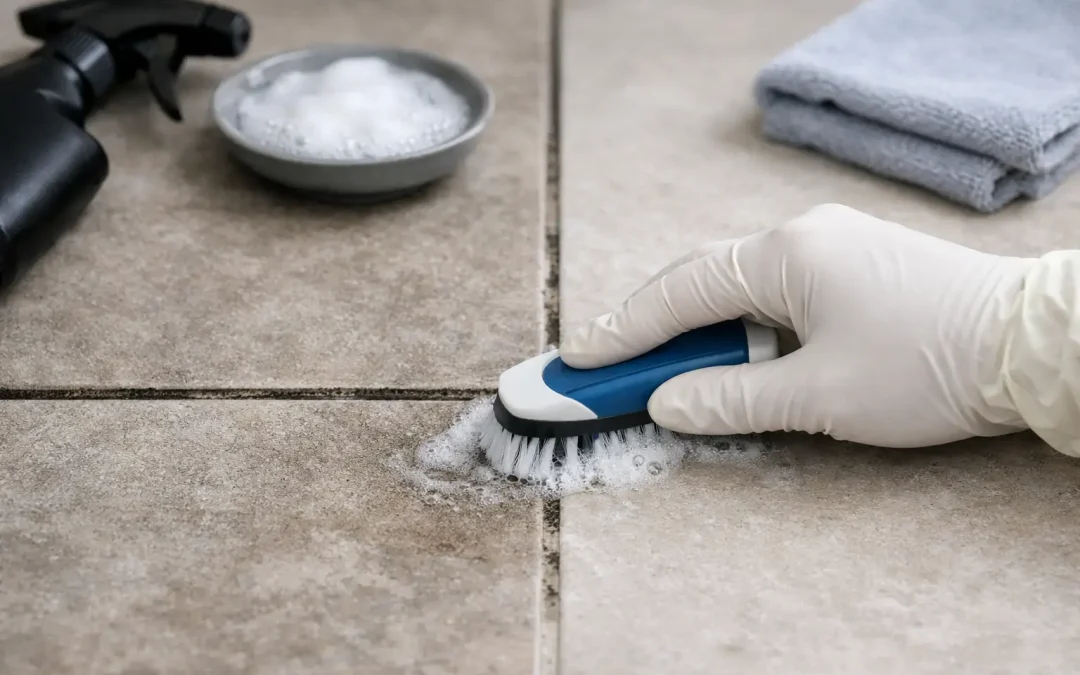
Black grout lines can make an otherwise clean floor look neglected fast. If you are trying to clean blackened tile grout, the real challenge is figuring out what you are seeing – surface soil, mold, embedded oils, old sealers, or permanent staining. The right fix depends on the cause, the tile material, and how far the grout has deteriorated.
In many Gainesville homes, grout darkens gradually in kitchens, showers, laundry rooms, and entryways. Humidity, foot traffic, soap residue, and mopping with the wrong products all play a part. Homeowners often scrub harder, but aggressive scrubbing without the right chemistry can leave grout rougher, more porous, and even harder to keep clean.
Why tile grout turns black
Grout is porous by nature. That means it can absorb moisture, dirt, body oils, cooking residue, and cleaning product buildup over time. On floors, especially light-colored grout, the darkest areas are often the traffic lanes. In showers, blackened grout may be tied more to moisture retention, mildew, or soap film than simple dirt.
The distinction matters. Surface grime usually responds to proper cleaning. Deep staining may lighten but not disappear. Mold and mildew need a different approach than grease in a kitchen. And if the grout is crumbling, recessed, or has lost its original color completely, cleaning may not be enough.
This is where many DIY efforts go sideways. A product that seems strong enough to remove the blackening might also dull tile, weaken grout, or leave behind residue that attracts more soil. Natural stone and specialty tile need extra care, because acidic or harsh alkaline cleaners can create a second problem while you are trying to fix the first.
How to clean blackened tile grout without causing damage
Start with the gentlest effective method. Vacuum or dry sweep first so you are not grinding loose grit into the surface. Then apply a pH-appropriate tile and grout cleaner, let it dwell according to directions, and agitate with a soft to medium grout brush. Most homeowners rush this step. Dwell time does more work than brute force.
Use clean water to rinse thoroughly and remove suspended soil. If dirty solution stays in the grout lines, it can settle back in as it dries. On floors, extracting the slurry with towels or a wet vacuum usually works better than pushing it around with a mop.
If the grout is still dark, that does not always mean the cleaner failed. It may mean the discoloration is below the surface. At that point, repeating the same process five more times usually gives diminishing returns. You may get some improvement, but not the full color recovery you expected.
The cleaners homeowners should be careful with
Bleach is a common first choice, but it is not always the best one. It can lighten certain organic stains, yet it does not reliably remove embedded soil and may not solve the source of recurring darkening. In some cases, it can also weaken grout over time or create uneven color.
Vinegar is another popular option that sounds harmless because it is common in the kitchen. On cement-based grout, repeated acid exposure can slowly break down the surface. If you also have natural stone nearby – such as marble, travertine, or limestone – vinegar is a poor choice because it can etch the stone.
Steam can help in some situations, but it depends on the grout condition and the tile assembly. On sound, well-installed surfaces, steam may loosen buildup. On older or compromised grout, too much heat and moisture can expose weak areas. That is why one-size-fits-all cleaning advice tends to fail.
When DIY cleaning works well
If the blackened look is mostly from recent dirt buildup, light mildew, or residue from improper mopping, a careful cleaning can improve the floor significantly. Newer grout in decent condition often responds well, especially if the original color is not too light and the darkening has not been there for years.
Bathrooms can also improve with better ventilation and maintenance after cleaning. If moisture is the main driver, restoring the grout appearance is only half the job. Keeping the area drier helps prevent the discoloration from returning as quickly.
The best DIY results usually happen when the issue is caught early. Once the grout has years of embedded staining or has absorbed oils and contaminants deeply, cleaning alone becomes less predictable.
When professional grout cleaning makes more sense
If you have scrubbed repeatedly and the grout still looks black, professional service can save time and prevent damage. High-quality grout cleaning is not just about stronger chemicals. It is about using the right solution, controlled agitation, and effective extraction to remove contamination from the pores rather than spreading it around.
This matters even more if your tile is installed next to sensitive materials like natural stone, polished marble, travertine, or sealed surfaces that can react badly to the wrong cleaner. A trained surface restoration company can identify what the grout can handle and whether cleaning, sealing, color sealing, or repair is the better path.
In many homes, the real value is not only a cleaner look. It is extending the life of the floor and avoiding premature replacement. Grout that is properly cleaned and protected is easier to maintain and less likely to keep trapping soil at the same rate.
Clean blackened tile grout or recolor it?
Sometimes homeowners expect cleaning to restore grout to its original color when the color is simply gone. If the grout has permanent staining, patchy discoloration, or wear from years of harsh cleaning, color sealing may be the better solution.
Color sealing does two jobs at once. It refreshes the appearance of the grout and creates a more uniform, protected surface that resists future staining better than raw porous grout. This can be especially useful on high-traffic kitchen and entry floors where white or light beige grout has turned uneven and blotchy.
There is a trade-off, though. Color sealing is not a shortcut for loose or failing grout. If the joints are damaged, they need to be stabilized or repaired first. The finish is only as good as the condition underneath.
What Gainesville-area homeowners should watch for
North Central Florida homes deal with a mix of humidity, tracked-in soil, and moisture-heavy bathrooms. That climate can make grout problems show up faster, particularly in shower floors, mudrooms, and main living areas with textured tile. If the blackening comes back quickly after cleaning, there may be an underlying moisture, ventilation, or residue problem worth addressing.
It is also common for homeowners to inherit older tile floors with years of product buildup from waxy cleaners or mop-and-shine products. Those coatings can trap dirt and create a dark, muddy look in grout lines. Removing that buildup takes a different process than standard weekly cleaning.
For homeowners who want a clear answer without guesswork, a local estimate is often the fastest way to tell whether the grout needs deep cleaning, sealing, recoloring, or more involved restoration. Companies that work across multiple surfaces can also spot when the tile itself, nearby stone, or transitions need a different approach.
How to keep grout from turning black again
Once grout is restored, maintenance matters. Use a neutral cleaner instead of harsh homemade mixes or heavy soap-based products. Rinse floors well, and avoid leaving dirty mop water behind. In bathrooms, reduce standing moisture with ventilation and routine drying where possible.
Sealing can help, but it is not a force field. It slows absorption and buys you more time to clean spills and residue before they sink in. On some floors, especially those with recurring discoloration, color sealing offers better long-term control than a standard clear sealer.
Periodic professional cleaning also makes sense for busy households. It is easier and more cost-effective to maintain grout before it reaches the point of deep black staining than to try to reverse years of neglect all at once.
If your tile still looks dirty after you clean the surface, the grout may be telling a different story. In many cases, the best result comes from treating the grout like part of the floor system, not an afterthought. For homeowners who want the floor to look clean again and stay that way, the right restoration plan is usually more effective than another round of guesswork.