
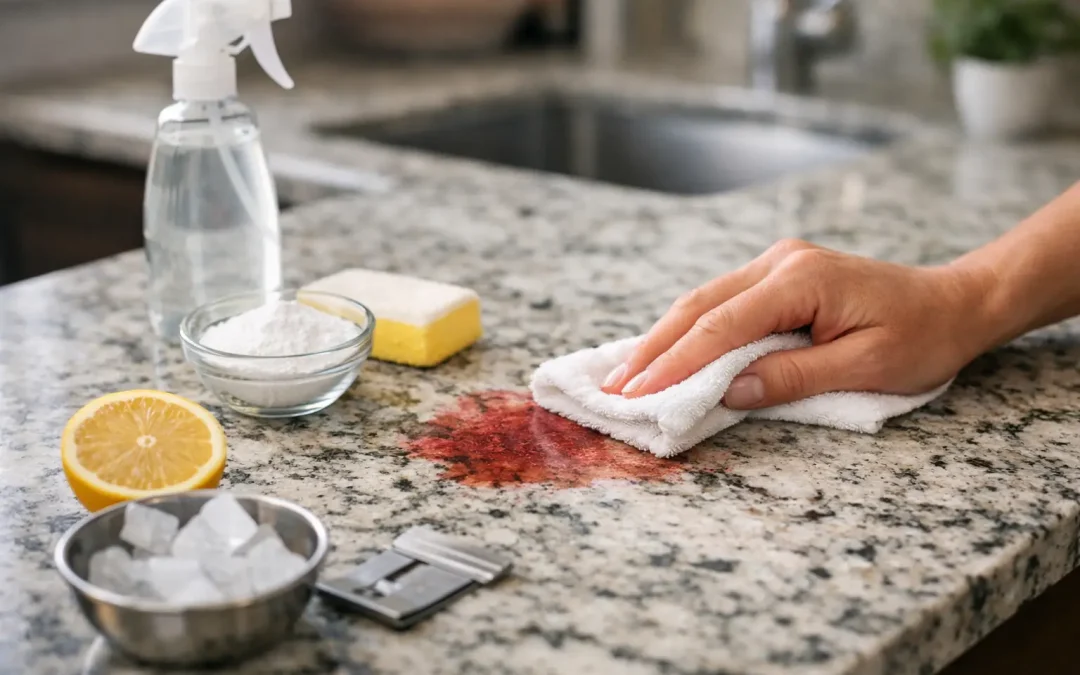
A dark ring near the sink or an oil spot beside the cooktop can make an otherwise beautiful kitchen look neglected fast. Granite countertop stain removal is often possible, but the right fix depends on what caused the stain, how long it has been there, and whether the stone was properly sealed to begin with.
Granite is durable, but it is not stain-proof. Many homeowners assume that because granite is hard, spills cannot soak in. In reality, natural stone has pores, and some granites absorb more than others. That is why the same red wine spill might wipe right off one countertop and leave a shadow on another.
If you are looking at a stain on your granite, the first step is not scrubbing harder. It is figuring out what you are dealing with. A stain, an etch mark, and surface buildup can look similar from a distance, but they do not respond to the same treatment.
What granite stains usually come from
Most countertop stains fall into a few common categories. Oil-based stains often come from cooking grease, cosmetics, lotions, or food prep. These tend to darken the stone because oil penetrates below the surface. Organic stains come from coffee, tea, wine, fruit, or leaves from flowers set on the counter. Rust stains can appear when metal containers, cans, or damp tools sit in one place too long.
There are also water marks and soap film that homeowners mistake for stains. Around sinks, faucets, and soap dispensers, you may be seeing mineral buildup instead of a true absorbed stain. That matters because a poultice may help with a real stain, while buildup often needs a different cleaner and a careful hand.
Then there is discoloration caused by sealer failure or improper cleaning products. If a countertop has been treated with the wrong product, the issue may be on top of the stone rather than in it. That is one reason stain removal on granite is not always a simple DIY job.
Granite countertop stain removal starts with identification
Before you try any stain remover, look at the color and location. A dark spot near the stove is often oil. A brown or yellow mark under a soap bottle may be a mix of moisture and product residue. A pinkish or rusty outline under a metal canister points toward oxidation.
Touch matters too. If the area feels rough or dull instead of smooth and polished, the problem may be damage to the finish rather than a stain. Granite is more resistant to etching than marble, but polished surfaces can still lose their shine from harsh chemicals or abrasives. If the spot changes the reflectivity of the stone, cleaning alone may not restore it.
This is where many homeowners lose time and sometimes make the problem worse. They use bleach on an oil stain, vinegar on mineral buildup, or abrasive pads on polished stone. The result is a countertop that is still discolored and now also scratched or dulled.
What to do first when you notice a stain
Start simple. Blot any fresh spill right away instead of wiping it around. Clean the area with a pH-neutral stone cleaner or a small amount of mild dish soap and water, then dry it fully with a soft cloth. If the mark remains after the surface is clean and dry, you are likely dealing with a stain that has penetrated the stone or a finish issue that needs closer evaluation.
Do not reach for acidic cleaners, bathroom sprays, degreasers, or powdered scrub products. These are common sources of countertop damage. Even if they seem to lighten a stain at first, they can affect the polish or sealer and create a larger repair issue.
If the stain is light and recent, you may be able to remove it with a poultice. This is a paste designed to draw staining material out of the stone as it dries. The exact formula depends on the stain type, which is why identification comes first.
How poultice treatment works for granite countertop stain removal
A poultice is not just a cleaner spread over the surface. It is meant to pull the stain up from the pores of the granite. For many oil and organic stains, this is the most effective non-invasive method.
The paste is applied over the stained area, covered, and left in place long enough to dry properly. As it dries, it can lift the staining material toward the surface. Sometimes one application works. Older or deeper stains may need multiple treatments.
This is also where patience matters. Homeowners often remove the poultice too early, use the wrong ingredients, or expect a deep stain to vanish overnight. Some stains lighten gradually over several rounds. Others improve only partially because the stone remained exposed too long or the stain has chemically changed the material.
When DIY stain removal makes sense
DIY can be reasonable if the stain is small, the stone is otherwise in good condition, and you are confident about the cause. A fresh oil spot from cooking or a coffee mark caught early may respond well to proper treatment. If you are using stone-safe products and avoiding aggressive scrubbing, the risk is lower.
But there are limits. If the stain covers a large area, sits near a seam, appears around the sink cutout, or has been there for months, there is more room for error. The same is true if the countertop already looks dull, uneven, or patchy from older cleaning attempts. In those cases, stain removal may need to be paired with professional deep cleaning, polishing, or resealing to get the surface looking right again.
When to call a professional
Professional service is the smarter move when the stain source is unclear, the discoloration keeps returning, or the finish has been affected. A trained stone restoration specialist can tell the difference between absorption, surface residue, sealer problems, and physical damage. That saves guesswork.
It also matters when the countertop is a focal point of the kitchen. High-end granite deserves more than trial-and-error cleaning. Proper restoration protects the investment and helps avoid replacement costs that are far higher than corrective service.
For homeowners in Gainesville and surrounding North Central Florida communities, local experience matters too. Heat, humidity, hard water, and everyday kitchen use all affect how natural stone performs over time. A company that works regularly with granite, marble, terrazzo, tile, and other hard surfaces in area homes will usually spot issues faster and recommend the right next step with more confidence.
Preventing future granite stains
The best stain removal plan is still prevention. Granite should be cleaned with stone-safe products and wiped dry around sinks, soap dispensers, and prep areas. Oil, wine, citrus, and strongly pigmented foods should not sit on the surface. Trays under oils and toiletries can help in kitchens and bath areas alike.
Sealing is another big part of protection, but it is not a shield against neglect. A quality sealer slows absorption. It does not give spills permission to sit. Some granites need sealing more often than others, and some dense stones need very little. If water darkens the surface instead of beading briefly before evaporating, it may be time to evaluate the sealer.
A professional inspection can be useful when you are not sure whether the issue is staining, wear, or loss of protection. In many cases, restoring the surface and sealing it correctly gives homeowners a fresh start and makes daily maintenance much easier.
Why stain removal is only part of the picture
A stained countertop often points to a larger maintenance problem. Maybe the stone was never sealed properly. Maybe harsh cleaners have worn down the finish. Maybe years of residue around the sink are masking the true condition of the granite. Removing the visible spot helps, but long-term results usually come from correcting the underlying issue.
That is where a restoration-focused approach stands out. Instead of treating the symptom alone, the goal is to bring the stone back to a clean, attractive, protected condition. Natural Surface Restoration works with homeowners who want to preserve the surfaces they have invested in rather than replace them early.
If your granite countertop still looks stained after basic cleaning, or if you are not sure what caused the discoloration, it is worth getting an expert opinion before experimenting further. The right treatment can often save the stone, restore the appearance, and help keep the problem from coming back.