
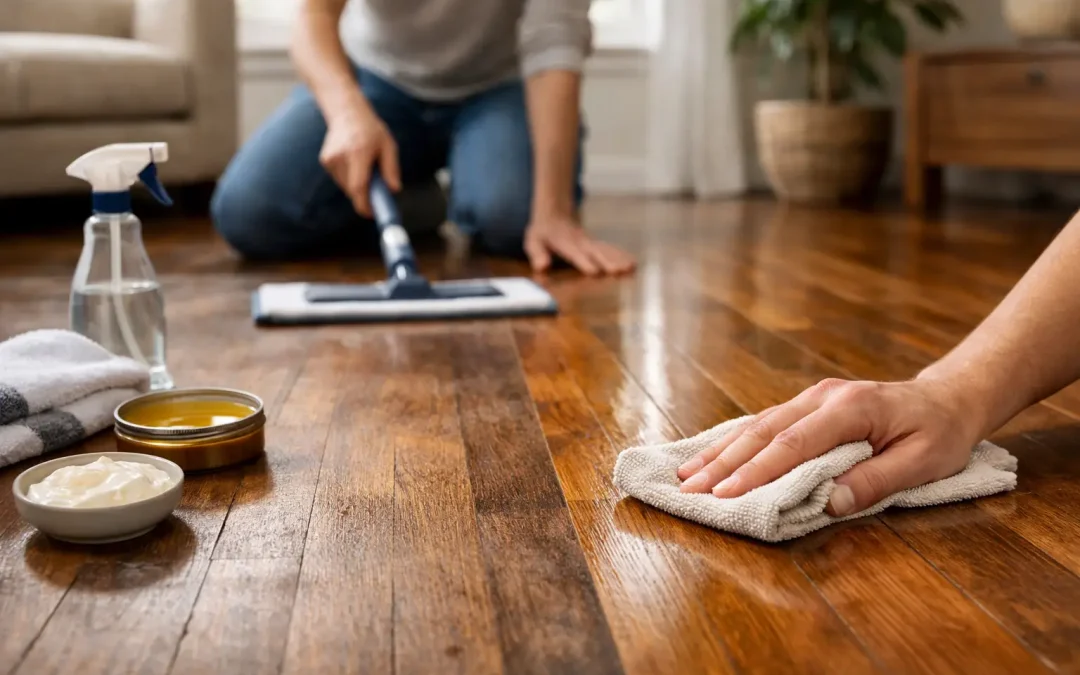
Scratches by the hallway, dull traffic lanes in the living room, and a floor that used to look warm and rich but now looks tired – that is usually when homeowners start searching for how to restore wood floors without refinishing. The good news is that many wood floors do not need a full sand-down to look dramatically better. If the finish is worn, dirty, lightly scratched, or losing its luster, restoration can often bring back a cleaner, richer appearance with far less disruption than full refinishing.
For many homes in Gainesville and surrounding North Central Florida communities, the real issue is not that the wood itself has failed. It is that the protective layer on top has collected embedded soil, light surface damage, and uneven wear. When that is the case, the right cleaning, polishing, screening, or recoating approach can improve the look of the floor and help protect it from further damage.
How to restore wood floors without refinishing starts with the right diagnosis
This is where many homeowners go wrong. They assume every dull floor needs sanding, or they try a store-bought product that leaves behind buildup and makes professional restoration harder later.
Before choosing any method, look at what kind of problem you actually have. If your floor has cloudy residue, minor scuffs, fading in traffic areas, and a finish that looks tired but still present, restoration without refinishing is often realistic. If you see deep gouges, black staining in the wood, widespread cupping, or bare wood exposed across large areas, that usually points to a more intensive repair or refinishing process.
A simple test can help. Put a few drops of water on a worn-looking section. If the water beads for several minutes, the finish is still offering protection. If it quickly darkens the area or soaks in, the finish may be too far gone in that spot for a simple recoat alone.
It also matters what type of floor you have. Solid hardwood, engineered wood, factory-finished planks, and older waxed floors all respond differently. Some can be screened and recoated successfully. Others need specialized products or a different restoration plan. That is why a professional evaluation is often the fastest way to avoid wasting time and money.
Start with deep cleaning, not more product
A surprising number of wood floors look worn when they are actually coated with residue. Dirt, oils from bare feet, pet traffic, mopping products, and off-the-shelf shine enhancers can leave a film that dulls the surface. In humid Florida conditions, that buildup can cling even more stubbornly.
Professional deep cleaning removes embedded grime without saturating the wood. That is an important distinction. Wood floors do not respond well to excess water, steam cleaning, or harsh chemicals. Too much moisture can seep into seams and contribute to swelling, movement, or finish failure.
A proper cleaning process uses wood-safe solutions, controlled moisture, and agitation methods that lift residue instead of spreading it around. Once the buildup is gone, some floors immediately look several years younger. Color becomes clearer, the finish reflects light more evenly, and minor scratches become less obvious because they are no longer hidden under grime.
If your floor still looks dull after cleaning, that does not mean the effort failed. It means you can now clearly see the condition of the finish and choose the next step based on the real issue.
Buffing and polishing can restore clarity and shine
If the finish is intact but worn-looking, buffing or polishing may be enough to revive the floor. This step is about improving the appearance of the existing finish, not cutting down to bare wood.
Buffing smooths out minor surface abrasions and helps even the sheen. A wood floor polish or restorative treatment can then enhance clarity and reduce the flat, tired look that develops over time. This can be especially effective in formal living spaces, bedrooms, and other areas with moderate wear.
That said, polishing is not the right answer for every floor. If there is product buildup already present, polishing over it can make the finish look worse. If the finish is breaking down or peeling, polish will not fix the underlying problem. And if a homeowner applies the wrong type of product, it can interfere with future recoating.
This is where experience matters. A restoration-focused approach looks at compatibility, condition, and long-term protection, not just immediate shine.
When a screen and recoat makes more sense
One of the best answers to how to restore wood floors without refinishing is a screen and recoat. This process lightly abrades the existing finish and applies a new protective topcoat. It does not involve sanding the floor down to raw wood, so it is far less invasive than full refinishing.
For floors with widespread light scratches, dullness, and finish wear, a recoat can make a major visual difference. It refreshes the protective surface, improves uniformity, and helps extend the life of the floor before full refinishing becomes necessary.
The catch is that not every floor is a candidate. If the floor has been treated with wax, acrylic polishes, or certain cleaners, the new coating may not bond properly until those residues are removed. If damage reaches into the wood itself, a recoat may improve the look but will not erase the deeper problem.
Still, when the floor qualifies, this is often the sweet spot between cleaning alone and full refinishing. Homeowners get a fresher appearance and renewed protection without the dust, expense, and disruption of sanding the entire floor.
Spot repairs can help if damage is localized
Not all worn wood floors need wall-to-wall treatment. Sometimes the biggest eyesores are a few damaged boards near an entry, pet scratches in one corner, or a stained section under a plant.
Localized repair can improve the overall appearance without refinishing the entire room. Depending on the floor and finish, this may involve blending out a small area, replacing individual boards, addressing surface scratches, or correcting isolated staining. The goal is to make the damage less visible and restore a more consistent look across the floor.
There are trade-offs. Spot work is not always invisible, especially on older floors with sun fading or natural color variation. But in many homes, reducing the contrast between damaged and undamaged areas is enough to make the floor look cared for again.
What not to do when restoring wood floors
The biggest mistakes usually come from trying to force a quick fix. Steam mops, oil soaps, vinegar mixtures, waxes, and heavy shine products are common examples. Some may give a temporary glow, but they can create residue, soften finishes, or complicate future restoration.
Another common mistake is waiting too long. Once the finish wears through completely and the wood is exposed, restoration options become more limited. Dirt and moisture can then work directly into the grain, leading to staining and deeper damage that a non-refinishing approach cannot correct.
It is also smart to be cautious with DIY scratch repair kits. On a small hidden mark, they may help. On a larger visible area, they often leave uneven color and an obvious patch.
How to keep restored wood floors looking better longer
Once the floor has been cleaned, polished, or recoated, maintenance matters. Use walk-off mats at exterior doors, felt pads under furniture, and a wood-floor-safe cleaner with no residue. Keep pet nails trimmed and wipe up spills quickly.
In Florida, humidity control also helps. Wood naturally responds to moisture in the air, and stable indoor conditions can reduce unnecessary movement and stress on the finish. Regular maintenance cleaning prevents abrasive grit from acting like sandpaper under foot traffic.
The real value of restoration is not just improving appearance today. It is buying more life from the floor and delaying the need for full refinishing or replacement.
When professional wood floor restoration is the better call
If you are unsure whether your floor needs cleaning, buffing, recoating, repair, or full refinishing, that uncertainty is a good reason to bring in a specialist. The wrong product or process can lock in problems, while the right one can restore the floor with far less cost and disruption than homeowners expect.
A professional can identify the finish type, test for product residue, assess wear patterns, and recommend the least aggressive option that will still produce a meaningful result. That is usually the smartest path for homeowners who want to protect the value of their floors rather than gamble on trial and error.
At Natural Surface Restoration, that restoration-first mindset is exactly the point. Not every tired floor needs to be sanded down. Many just need the right treatment, applied correctly, to bring back a cleaner, richer, more protected surface.
If your wood floors look worn but you are not ready for full refinishing, start by finding out what condition they are really in. A floor that seems past its prime may still have plenty of life left with the right restoration approach.