
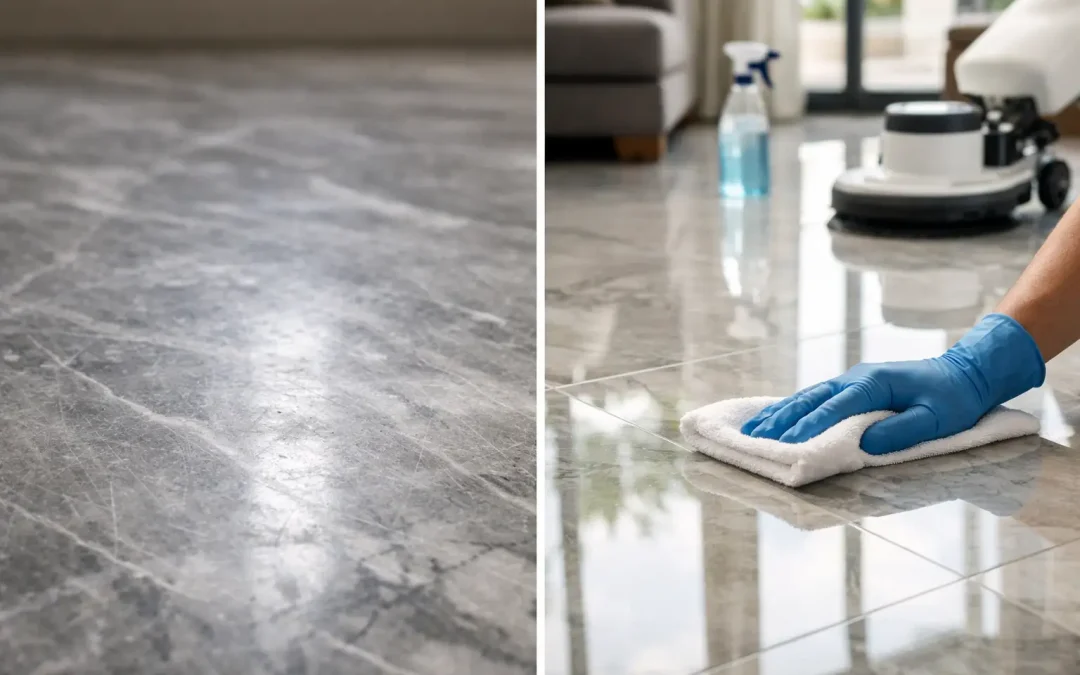
A marble floor can look polished and elegant one year, then appear cloudy, flat, or worn the next. If you are asking, “why is marble floor dull,” the answer is usually not that the stone has reached the end of its life. Marble is a durable natural material, but its polished finish is sensitive to everyday use, improper cleaning products, moisture, and abrasion.
The good news is that most dull marble can be restored. The right solution depends on what changed the surface in the first place. A floor that looks hazy from residue needs a different approach than a floor with acid etching, traffic wear, or scratches. Identifying the cause prevents more damage and helps protect the investment you made in your home.
Why Is Marble Floor Dull? The Most Common Causes
Acid etching has damaged the polished finish
Etching is one of the most common reasons marble loses its shine. Marble contains calcium carbonate, which reacts with acids. Lemon juice, vinegar, wine, fruit drinks, toilet bowl cleaners, acidic tile cleaners, and some bathroom products can leave dull spots or rings where they contact the stone.
Etching is often mistaken for a stain, but the two problems are different. A stain changes the color of the marble because something has absorbed into it. Etching physically alters the surface, leaving it rougher and less reflective. On a polished floor, it may look like a pale, cloudy mark that becomes more visible when light hits it.
A cleaner will not remove etched areas because the stone itself needs to be refinished. Light etching may be corrected with professional polishing. Deeper etching may require honing first to level the affected area before the shine is rebuilt.
Foot traffic has worn down the surface
Entryways, kitchens, hallways, and areas near exterior doors take the most abuse. Fine sand, grit, and soil on shoes act like sandpaper underfoot. Over time, that abrasion creates tiny scratches across the marble’s surface. Individually, those scratches can be hard to see. Together, they scatter light and make the floor look dull.
This type of wear is especially common in North Central Florida homes where sand and outdoor debris are easily tracked inside. The finish may look noticeably brighter under furniture or along baseboards because those areas have not experienced the same daily traffic.
Regular dust mopping helps, but once the surface is scratched and worn, cleaning alone will not bring back the original reflection. Professional honing and polishing can remove or reduce the wear pattern and restore a more even finish.
Residue is creating a cloudy film
Sometimes the marble is still in good condition beneath the haze. The problem is a film left behind by cleaning products, hard-water minerals, soap residue, or wax-based products. This is particularly common when homeowners use all-purpose cleaners, oil soaps, mop-and-shine products, or too much stone cleaner.
Marble does not need a heavy coating to look clean. In fact, products marketed to add shine can leave buildup that attracts more dirt and makes the floor appear streaky. A surface may look better immediately after mopping, then become cloudy again as the product dries.
Residue can often be addressed through proper deep cleaning and removal of the existing film. However, a cloudy appearance can also hide etching or abrasion underneath, so the floor should be evaluated before choosing a cleaning method.
An old coating or sealer is failing
Marble sealers are designed to reduce absorption and help protect against staining. They are not usually meant to create a glossy topcoat. If a topical coating, wax, or finish has been applied to the marble, it can eventually yellow, peel, scuff, or turn hazy.
This can be confusing because homeowners may believe the marble itself has become dull. In reality, the problem may be the aging material sitting on top of the stone. Removing failed coatings requires care. Aggressive stripping chemicals, especially acidic products, can damage marble further.
A professional can determine whether the floor needs coating removal, deep cleaning, honing, polishing, sealing, or a combination of these services. The correct sequence matters because sealing over buildup or damage only locks in the problem.
Moisture and mineral deposits are affecting the finish
Marble in bathrooms, near showers, or around exterior entries can develop dullness from moisture exposure. Hard water leaves mineral deposits, while repeated wetting and drying can contribute to soap scum and residue. In some cases, moisture moving through the stone or grout can create a darker or uneven appearance.
Not every moisture issue is cosmetic. If marble remains dark, develops white powdery deposits, or shows recurring haze after cleaning, there may be an underlying moisture condition that should be addressed before restoration. Polishing a floor without correcting the source can lead to repeated problems.
Dull Marble Is Not Always Dirty Marble
This is the key distinction homeowners need to make. Dirt sits on top of the surface. Etching, scratches, and traffic wear change the surface itself. No amount of routine mopping will restore a polished finish that has been chemically etched or mechanically worn down.
A simple visual check can offer clues. If the marble looks dull across the entire room, product residue or general traffic wear may be involved. If there are isolated spots near a kitchen island, vanity, or dining area, etching is more likely. If the floor appears brighter in protected areas and duller in walking paths, abrasion is usually the cause.
The finish you want also matters. Some marble floors are intended to have a honed, low-sheen appearance rather than a mirror-like polish. A honed floor can still look clean and refined, but it will not reflect light the same way polished marble does. Restoration should match the look of the original installation and the practical needs of the room.
What Not to Use on a Dull Marble Floor
When marble looks dull, it is tempting to try a stronger cleaner or a store-bought shine product. That can make the situation worse. Avoid vinegar, lemon-based cleaners, bleach, acidic bathroom cleaners, abrasive powders, and scrub pads. These products can etch, scratch, or discolor the stone.
Do not use waxes or acrylic floor finishes to hide dullness unless the floor was specifically designed for that type of coating. On natural marble, these products often create uneven shine, buildup, and a maintenance cycle that becomes harder to correct over time.
For routine care, use a soft dust mop or vacuum designed for hard floors, followed by a damp microfiber mop and a cleaner labeled safe for natural stone. Use minimal water and dry any standing moisture promptly. Mats at exterior doors and felt pads beneath furniture also reduce the scratching that causes a polished surface to lose clarity.
How Professional Marble Restoration Brings Back Shine
Professional marble restoration starts with diagnosing the floor rather than applying a one-size-fits-all cleaner. The surface is inspected for etching, scratches, residue, lippage between tiles, stains, cracked grout, and previous coatings. From there, the restoration process can be matched to the condition of the stone.
For worn or etched marble, the process may include honing with specialized abrasives to remove surface damage and level the finish. The stone is then polished to bring back the desired sheen. If the floor has buildup, residue removal may be completed before refinishing so the true condition of the marble is visible.
After the marble has been restored, an appropriate penetrating sealer can be applied where needed. Sealing does not make marble acid-proof or scratch-proof, but it can provide more time to clean up spills before they absorb into the stone. Ongoing maintenance then becomes simpler and more effective.
Natural Surface Restoration helps homeowners restore marble floors without the cost and disruption of replacement. Whether the issue is dull traffic lanes, cloudy buildup, etched spots, or an uneven finish, the goal is to bring the stone back to a clean, consistent appearance and help it stay that way.
When It Is Time to Have Marble Evaluated
Consider a professional evaluation when your marble stays dull after proper cleaning, has visible etch marks, feels rough in certain areas, or shows a clear difference between traffic paths and protected sections. It is also worth getting help before trying harsh cleaners or DIY polishing products, especially on a large floor where inconsistent results can be difficult to reverse.
A restored marble floor should look like stone again, not like it is covered by a temporary coating. With the right diagnosis, careful refinishing, and practical maintenance, even a tired-looking floor can regain the depth, clarity, and lasting beauty that made marble worth choosing in the first place.