
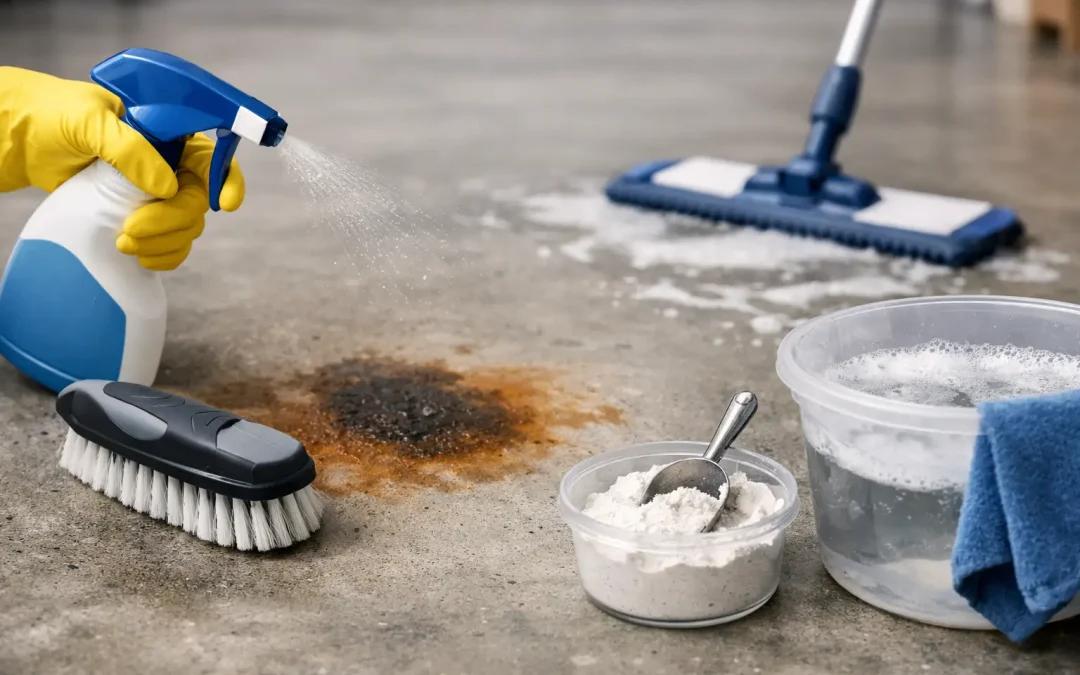
A concrete floor can look nearly indestructible until oil, rust, fertilizer, paint, or a dark mystery spot settles into its pores. The key to remove concrete floor stains successfully is identifying what caused the discoloration before choosing a cleaner. Using the wrong product can set the stain deeper, bleach the surrounding concrete, or damage a decorative finish.
Concrete is porous, even when it appears smooth. That means liquids can move below the surface rather than sitting on top where they are easy to wipe away. In garages, patios, workshops, pool areas, and interior concrete floors, fast action and the right cleaning method make a noticeable difference.
Start by Identifying the Concrete Stain
A stain’s color, texture, and location offer useful clues. A dark, greasy mark below a parked vehicle is usually oil or automotive fluid. Orange-brown spots near metal furniture, irrigation equipment, or stored tools are often rust. White, chalky residue may be mineral buildup or efflorescence caused by moisture moving through the slab.
Common concrete stains include:
- Oil, grease, transmission fluid, and other automotive leaks
- Rust from metal furniture, tools, sprinkler systems, or fertilizer
- Organic stains from leaves, mildew, soil, or pet accidents
- Paint, adhesive, or tire marks
- Mineral deposits and white efflorescence
A clean water test can also help. Sprinkle a small amount of water over the stained area. If it darkens immediately and absorbs quickly, the concrete is open and porous. If water beads up, a sealer or coating may be present. That distinction matters because some cleaners can dull, strip, or discolor sealed, polished, stained, or coated concrete.
How to Remove Concrete Floor Stains by Type
Begin with the least aggressive method that fits the stain. Always test a small, inconspicuous spot first, especially on colored, polished, stamped, or sealed concrete. Wear gloves and eye protection, keep children and pets away from the work area, and provide ventilation for enclosed garages or rooms.
Oil and grease stains
For a fresh oil spill, cover the area with an absorbent material such as clay-based cat litter, baking soda, or an oil-absorbent product. Let it sit long enough to pull up the liquid, then sweep it away. Avoid scrubbing immediately, which can spread oil across more of the floor.
For an older stain, apply a concrete-safe degreaser according to its label directions. Work it into the area with a stiff nylon brush, let it dwell as directed, then rinse thoroughly. Repeat as needed. A pressure washer can help on unfinished exterior slabs, but it may not be appropriate for interior floors, polished concrete, weak concrete, or surfaces with failing sealer.
Deep oil stains often need a poultice treatment. A poultice combines an absorbent material with a suitable solvent or cleaner to draw contaminants up from below the surface. This process takes time, and the stain may lighten over multiple applications rather than disappear after one attempt.
Rust and fertilizer stains
Rust removers made for masonry or concrete can be effective, but this is an area where homeowners should be cautious. Many acidic products react with concrete itself. They may etch the surface, leave a lighter ring, expose aggregate, or create a rough patch that collects dirt later.
Use a concrete-specific rust remover rather than a general metal rust product. Apply only to the affected area, follow the dwell time carefully, and rinse well. If fertilizer has caused orange spots or widespread staining, spot cleaning may leave uneven color. Professional evaluation is often the better choice for decorative concrete or a large visible patio.
Organic stains, mildew, and leaf marks
Leaves, mulch, mildew, and moisture can leave brown, black, or green discoloration. Start with a pH-neutral cleaner and water. If the mark remains, a concrete-safe oxygen-based cleaner may help lift organic staining without the harshness of stronger chemicals.
Chlorine bleach is often used for mildew, but it has limits. It can brighten the surface temporarily without reaching the source of the problem, and runoff can harm nearby landscaping. Never mix bleach with other cleaners. If recurring mildew is the issue, address shade, drainage, standing water, or poor airflow along with cleaning the slab.
Paint, glue, and tire marks
Paint removal depends on whether the paint is latex, oil-based, spray paint, or an old coating that has bonded to the concrete. Start by gently scraping loose material with a plastic scraper. A concrete-safe paint remover may be needed for what remains, but test first because removers can affect existing sealers and decorative color.
Tire marks are frequently caused by plasticizers in hot tires transferring onto a sealed garage floor or coating. A mild degreaser may remove light transfer. Aggressive solvents can soften or haze a coating, so do not assume stronger is better. When tire marks keep returning, the floor may need a more durable protective system rather than repeated spot cleaning.
White powder and mineral deposits
White residue is commonly efflorescence, which occurs when moisture carries salts through concrete and leaves deposits behind as it evaporates. Brush away loose material first. A mild cleaner may improve the appearance, but the lasting solution depends on controlling the moisture source.
If efflorescence returns after cleaning, look for water intrusion, drainage problems, cracks, excessive humidity, or moisture vapor coming through the slab. Sealing over active moisture can trap the problem and lead to cloudy sealer, peeling, or further discoloration.
What Not to Use on Concrete Floors
Muriatic acid is sometimes promoted as a quick way to clean concrete, but it is rarely the right first move for a homeowner. Acid can remove surface paste, permanently change texture, damage adjacent materials, and create an uneven appearance. It also presents serious handling and fume risks.
Avoid wire brushes on finished or polished concrete, as well as high-pressure washing at close range. Both can scar the surface. Household cleaners containing vinegar, ammonia, or strong solvents may be acceptable in limited situations, but they are not universal solutions. The finish of the floor matters as much as the stain itself.
When Cleaning Alone Will Not Restore the Floor
A stain can be gone while the concrete still looks uneven. This happens when the contamination has changed the color of the slab, when cleaning removes old dirt around one spot, or when a topical sealer has yellowed, worn away, or reacted with a chemical.
Polished concrete, stained concrete, and decorative floors need an especially careful approach. Their appearance comes from a specific surface profile, color treatment, densifier, sealer, or polish level. Spot treatment may solve the contamination but leave a visible difference in sheen or color.
Natural Surface Restoration can assess stained, dull, worn, or uneven concrete floors and recommend the right path, whether that means professional deep cleaning, polishing, refinishing, sealing, or a targeted restoration process. For homeowners in Gainesville and across North Central Florida, a clear assessment helps avoid spending money on cleaners that cannot correct the underlying issue.
Keep New Stains From Setting In
The best protection is to clean spills promptly, use mats under vehicles or equipment that may leak, and avoid leaving wet planters or metal furniture in one place for long periods. Sweep grit regularly, because tracked-in sand can wear away protective finishes and make the surface harder to clean.
A properly selected sealer or concrete protection system can reduce absorption and make routine cleanup easier. It is not permanent, though. Sealers wear differently depending on foot traffic, sun exposure, moisture, cleaning habits, and whether the floor is indoors, outdoors, or in a working garage.
If a stain has survived repeated cleaning attempts, stop before stronger chemicals create a larger repair. A careful diagnosis protects the concrete you already have and gives the floor its best chance to look clean, even, and well cared for again.