
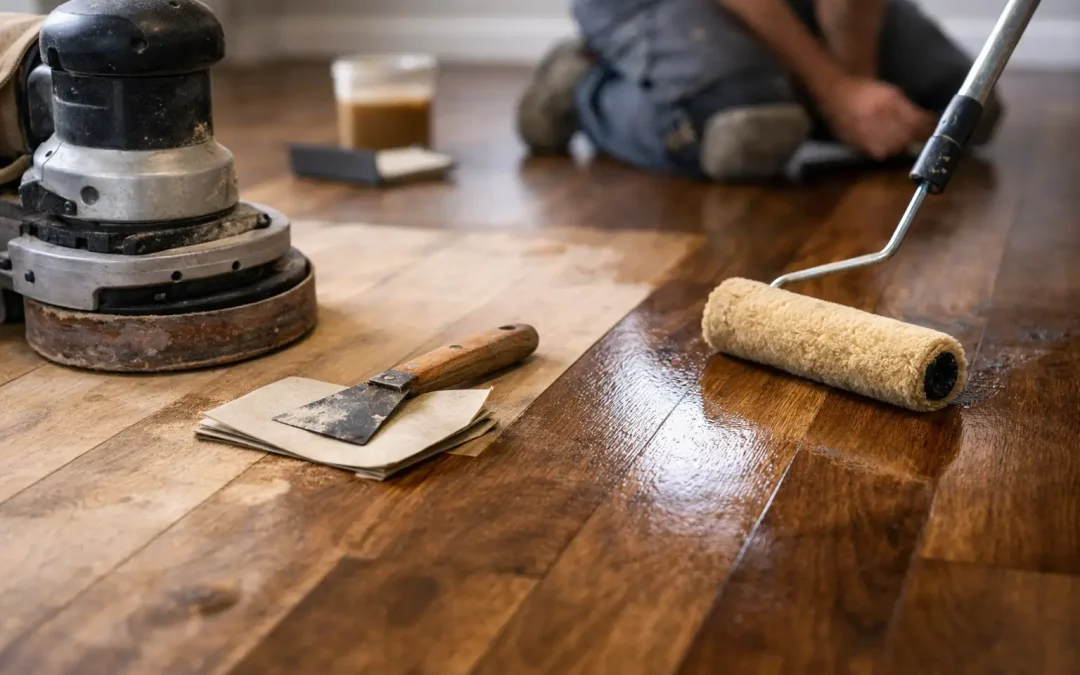
That worn path between the kitchen and living room usually tells the story first. The finish looks dull, light scratches catch the sunlight, and a floor that once looked warm and rich starts to feel tired. Many homeowners ask the same question at that point – can you refinish engineered wood floors, or is replacement the only real option?
The short answer is yes, sometimes. Engineered wood can often be refinished, but not every floor should be sanded, and not every floor can handle the same restoration process as solid hardwood. The right answer depends on the thickness of the real wood veneer, the condition of the boards, the type of damage, and how aggressively the floor would need to be cut down to look right again.
When you can refinish engineered wood floors
Engineered wood flooring is made with a real hardwood wear layer on top of a layered core. That top layer is what matters most. If it is thick enough, the floor may be lightly sanded and refinished to remove surface wear, improve color consistency, and restore a cleaner, more even appearance.
In many homes, the floor does not need deep sanding. It may only need a controlled refinishing process to remove finish failure, reduce shallow scratching, and apply a new protective coat. That is often good news for homeowners because a lighter restoration approach can preserve more of the wear layer.
The challenge is that engineered wood varies a lot from one product to another. Some floors have a generous top veneer that allows for refinishing. Others have such a thin surface that sanding can cut through the hardwood and expose the core beneath it. Once that happens, the damage is permanent.
That is why identification comes before action. A floor may look like traditional hardwood, but the structure underneath determines what can be done safely.
What determines whether refinishing is possible
Wear layer thickness
This is the biggest factor. A thicker wear layer gives more room for sanding and correction. A thinner one limits the options. If a floor has already been refinished once before, that margin gets even smaller.
Homeowners often do not know the original product specs, especially in older homes or homes purchased from a previous owner. In those cases, the floor needs to be evaluated carefully before anyone starts sanding.
Type and depth of damage
Light surface scratches, worn finish, mild discoloration, and general dullness are very different from deep gouges, pet stains, water damage, board movement, or delamination. Some problems are finish-level issues. Others go deeper into the wood or affect the floor structure itself.
If the damage is mostly in the finish, refinishing may be a strong option. If the floor has swelling, separation, or severe moisture-related damage, replacement of affected areas may make more sense.
Board condition and stability
Even if the veneer is thick enough, the boards need to be stable. Loose planks, edge lifting, and soft spots can point to moisture problems or substrate issues. Refinishing a floor without addressing those underlying conditions usually leads to disappointing results.
Previous coatings and repairs
Some engineered floors have factory-finished surfaces that behave differently than site-finished wood. Others may have been coated with maintenance products that interfere with adhesion. Spot repairs and color-matched board replacements can also affect how uniform the final finish will look.
Signs your engineered wood floor may be a good candidate
If your floor has lost its shine, shows moderate traffic wear, or has shallow scratches that have not cut deeply into the wood, restoration may be possible. Floors that still feel solid underfoot and do not show signs of major water intrusion are usually better candidates.
Another encouraging sign is when the issue is concentrated in the finish rather than the wood itself. A floor can look tired without being beyond repair. In many Gainesville-area homes, especially where everyday wear builds up over time, refinishing can be a cost-effective way to extend the life of the floor without a full replacement project.
When refinishing engineered wood floors is not the best move
There are times when sanding is too risky or simply will not solve the real problem. If the veneer is too thin, refinishing can do more harm than good. If the boards are cupping from moisture or separating at the edges, the floor may need repair or replacement before appearance can even be addressed.
Severe pet stains are another common issue. If staining has soaked below the surface layer, sanding may not fully remove it. The same goes for black water stains and repeated moisture exposure. In those situations, isolated board replacement or partial replacement may offer a better outcome.
There is also the issue of expectations. If a floor has widespread damage, a patchwork of old repairs, and uneven fading, refinishing may improve it without making it look brand new. That does not mean it is the wrong choice, but it does mean the plan should match the condition of the material.
Why engineered wood needs a careful approach
Less room for error
Solid hardwood allows more sanding depth. Engineered wood does not. That means equipment, technique, and judgment matter even more. An overly aggressive pass can permanently damage the surface.
Factory finishes can be tough
Many engineered floors come with durable factory-applied finishes, often with aluminum oxide or similar additives. Those coatings are built to resist wear, but they can also be more difficult to abrade properly during restoration.
Color change is not always simple
Some homeowners ask for a different stain color during refinishing. With engineered wood, that depends on species, wear layer thickness, and how evenly the floor can be sanded. Sometimes a clear protective finish is the safer choice. Sometimes a color adjustment is possible. It depends on the floor.
Professional evaluation matters more than DIY confidence
Engineered wood is one of those surfaces that can fool homeowners into thinking every hardwood process applies the same way. It does not. A rental sander and a weekend plan can turn a restorable floor into a replacement project fast.
A proper assessment looks at plank construction, damage patterns, finish condition, moisture concerns, and how much material is available to work with. It also helps identify whether the floor needs full refinishing, a lighter restoration approach, board repair, or protective recoating instead.
For homeowners who want to preserve the floor rather than gamble with it, that step is worth it.
What homeowners in Gainesville should keep in mind
Florida homes bring their own set of conditions. Humidity, seasonal moisture changes, tracked-in grit, and active households all affect wood floors over time. Engineered wood performs well in many homes because of its layered construction, but it is still a real wood surface on top. It can scratch, wear down, and react when moisture problems go unchecked.
That makes early intervention important. A floor with finish wear is usually easier to restore than one that has been exposed too long after the protective layer breaks down. Once water, dirt, and daily abrasion get into the wood surface, the options narrow.
Homeowners across Gainesville and surrounding communities often wait until the floor looks seriously worn before calling. In many cases, the better move is to have it evaluated when the first clear signs of finish failure appear.
The goal is restoration, not guesswork
When homeowners hear that engineered wood can be refinished, they sometimes assume that means every floor qualifies. It does not. The better question is whether your specific floor can be restored safely and whether refinishing is the best path for the condition it is in.
That is where an experienced surface restoration specialist can make a real difference. Natural Surface Restoration works with homeowners who want to protect the surfaces they already have, avoid unnecessary replacement, and get clear answers about what is possible.
A good floor does not always need to be torn out because it looks worn. Sometimes it needs the right restoration plan, applied with care and restraint. If your engineered wood floors are losing their finish, showing wear, or making you question whether they can be saved, the smartest next step is to have them evaluated before more damage sets in.
The best results usually come from acting early, when the floor still has something worth preserving.