
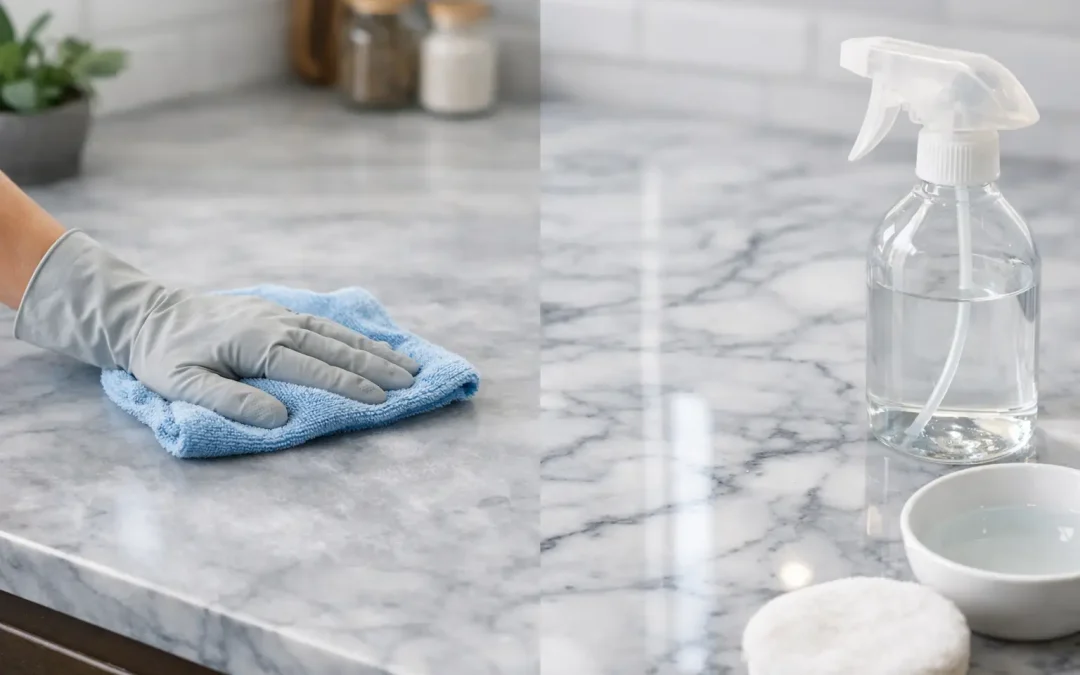
That cloudy film on marble usually shows up after cleaning, sealing, or a spill cleanup that seemed harmless at the time. If you need to remove haze from marble, the first step is figuring out what the haze actually is. Marble can turn dull for several different reasons, and the right fix depends on whether you are dealing with residue on the surface, light etching, or wear in the stone itself.
For homeowners in Gainesville and nearby areas, this matters because marble is one of the easier natural stones to damage with the wrong product. A quick DIY attempt can improve the look for a day, then leave the floor or countertop streaky, patchy, or even more dull than before. The good news is that haze can often be corrected. The key is using the right method for the actual problem.
What causes haze on marble?
Marble haze is not always the same thing. Sometimes it is a true residue sitting on top of the stone. Other times, the surface has been chemically altered or mechanically worn down, which means cleaning alone will not restore the shine.
A common cause is cleaner buildup. Stone-safe products can still leave a film if they are overused or not rinsed well, and general household cleaners are even more likely to create a cloudy layer. Hard water minerals can also dry on the surface and leave a pale, dull cast, especially around sinks, showers, and bathroom vanities.
Another common issue is sealer residue. If too much sealer is applied, or if it is not buffed off correctly, it can dry unevenly and leave a haze that looks like the marble has lost its polish. This tends to show up in broad, cloudy patches rather than isolated spots.
Then there is etching. Marble contains calcium carbonate, so acidic products like vinegar, lemon juice, bathroom sprays, and some soap residues can react with the stone. That reaction leaves a dull mark that many homeowners describe as haze. In reality, the polished finish has been eaten away in that area. No amount of wiping will bring back that shine.
Foot traffic and abrasion can create a similar look on floors. Fine grit gets tracked in, the finish gradually wears down, and the marble starts looking flat and cloudy in walk paths. That is less about residue and more about surface damage.
How to tell if you can remove haze from marble with cleaning
Before reaching for more product, do a simple test. Wipe a small area with a damp microfiber cloth and dry it immediately with a second clean cloth. If the haze improves for a moment but comes back as it dries, you may have residue or mineral deposits. If it never changes, the marble is more likely etched or worn.
Look at the pattern too. Random streaks, smears, or a broad film often point to residue. Ring marks near drinks, dull spots near faucets, and splatter-shaped marks on vanity tops usually suggest etching. On floors, a path of dullness where people walk most often is a sign of wear.
This step matters because cleaning residue and polishing stone are two different jobs. If the problem is in the finish itself, stronger cleaners will not solve it.
Safe first steps to remove haze from marble
Start with the least aggressive option. Use warm water and a pH-neutral stone cleaner, applied with a soft microfiber cloth or mop. Work in a small section, then rinse with clean water and dry thoroughly. Sometimes that alone removes leftover cleaner film or light residue.
If the haze appeared after sealing, the surface may have excess sealer on it. In some cases, reapplying a small amount of the same sealer to the hazy area and immediately buffing it off can loosen the residue. This is a narrow fix, though, and it depends on the product used. If you are not sure what was applied, it is better not to experiment across the whole surface.
For hard water film, a marble-safe product made specifically for natural stone is the safest choice. This is where homeowners often run into trouble, because standard bathroom scale removers are usually acidic. They may remove mineral deposits, but they also etch marble in the process.
Avoid scrub pads, powdered abrasives, vinegar, bleach mixes, and high-alkaline degreasers. Even if they seem to cut through the haze, they can leave the marble with a larger dull area that now needs polishing.
When haze is really etching or dull marble
If the marble still looks cloudy after careful cleaning, the surface likely needs polishing rather than washing. This is especially common on kitchen countertops, bathroom vanities, entry floors, and shower thresholds where marble sees regular contact with water, cleaners, and acidic products.
Light etching can sometimes be improved with a marble polishing powder or specialty marble polish, but this is where results start to depend on the finish, the color of the stone, and the extent of the damage. A polished white marble top may respond differently than a darker marble floor with traffic wear. Spot treating one section can also create an uneven appearance if the surrounding marble has a different level of gloss.
That is why homeowners often get halfway through a DIY fix and realize the hazy area is gone, but now the repaired section looks brighter than everything around it. The problem changed, but it did not disappear.
Why marble haze on floors often needs professional restoration
Floor marble is a different situation than a small vanity top. On a floor, haze often means the finish has worn unevenly across a larger area. That calls for machine polishing or honing to restore a consistent appearance.
Professional restoration does more than clean the surface. It corrects the finish at the stone level, blending dull sections with the surrounding area so the floor looks uniform again. If there are scratches, etch marks, or embedded soil in grout lines nearby, those issues can often be addressed during the same service.
This matters for homeowners who want the marble to look restored rather than temporarily improved. A residue problem can be cleaned. A finish problem needs refinishing.
What not to do when marble looks cloudy
The biggest mistake is using products meant for ceramic tile, glass, or general bathroom cleaning. Marble is softer and more reactive than many homeowners realize. Acidic sprays, disinfecting wipes, and heavy-duty soap scum removers can all leave permanent dull marks.
Another mistake is applying more sealer when the stone already looks hazy. Sealer is meant to protect against absorption, not create shine. If haze is caused by residue or etching, adding more sealer usually makes the appearance worse or more uneven.
It is also easy to over-polish one small spot. That can leave a bright patch in the middle of a larger dull area, especially on polished marble floors. The fix then becomes a larger restoration project so the finish matches from section to section.
When to call a marble restoration specialist
If you have cleaned the marble carefully and the haze is still there, it is time for a more accurate diagnosis. The same is true if the surface feels smooth but looks dull, if the haze keeps returning after cleaning, or if you notice etch marks, scratches, or traffic patterns.
A specialist can tell whether the issue is residue, sealer buildup, mineral deposits, etching, or wear. That saves time and helps prevent the trial-and-error approach that often causes more damage. In many cases, professional marble polishing costs far less than replacing a countertop or living with a floor that always looks dirty no matter how often it is cleaned.
For homeowners in Gainesville and surrounding communities, working with a local restoration company also means getting service that matches the stone condition, the finish type, and the way the surface is used in the home. Natural Surface Restoration works with marble and other premium surfaces every day, which is important when the goal is not just to clean the stone, but to bring back a finish that looks right and lasts.
Keeping haze from coming back
Once the marble is corrected, maintenance becomes much simpler. Use a pH-neutral cleaner made for natural stone, wipe spills quickly, and keep acidic products far away from the surface. On floors, regular dust mopping helps reduce grit that can slowly wear down the finish.
It also helps to avoid overusing products. More cleaner does not mean a better result. On marble, it often means more residue to remove later. If the stone needs sealing, make sure it is done correctly and only when appropriate for that material and finish.
Marble does not need guesswork. When haze is caught early, the solution may be straightforward. When it is really etching or wear, the right restoration can make the stone look clean, clear, and polished again – and that is usually the point where homeowners remember why they chose marble in the first place.