
Terrazzo can look tough enough to take anything, but the moment it starts holding stains or losing its shine, the problem usually comes down to protection. If you are wondering how to seal terrazzo floors, the short answer is this: clean them thoroughly, repair any issues first, choose the right sealer, and apply it with care. The longer answer matters, because a rushed sealing job can leave you with hazy residue, uneven protection, or a floor that still looks worn.
For homeowners in Gainesville and surrounding areas, terrazzo is often one of the most durable and valuable surfaces in the home. It can last for decades, but only if the surface is properly maintained. Sealing is part of that protection. It does not fix deep damage on its own, and it does not replace polishing or restoration when the floor is already heavily worn. What it does is help protect the surface from moisture, spills, and day-to-day soil that can work its way into the stone and cementitious matrix.
Why sealing terrazzo matters
Terrazzo is made from chips of marble, quartz, granite, or glass set into a binder and then ground smooth. Even when it looks dense and polished, the surface can still be porous enough to absorb liquids. That is where sealing helps.
A good sealer reduces staining and makes routine cleaning easier. It can also help preserve the appearance of the floor by limiting the amount of dirt and residue that gets embedded over time. In busy areas like kitchens, hallways, entryways, and living spaces, that extra layer of protection can make a noticeable difference.
Still, sealing has limits. It does not make terrazzo stain-proof, scratch-proof, or maintenance-free. Oil, acidic spills, and gritty debris can still cause problems if they sit too long. The sealer is there to improve resistance, not make the floor indestructible.
How to tell if your terrazzo floor needs sealing
Some terrazzo floors are obviously due for sealing because they look dull, patchy, or harder to clean. Others are less obvious. A simple water test can help. If a few drops of water darken the floor or soak in instead of beading on the surface, the terrazzo may be ready for a fresh sealer.
You may also notice that spills leave marks more quickly than they used to, or that the floor seems to grab onto dirt even after mopping. In older homes, especially, terrazzo may have gone years without proper care. If the floor has etching, heavy wear, scratches, or old coating buildup, sealing alone is probably not the full answer.
How to seal terrazzo floors step by step
The most important part of sealing terrazzo happens before the sealer ever touches the floor. Preparation determines whether the final result looks clean and even or disappointing and short-lived.
Start with a deep, residue-free cleaning
The floor needs to be fully clean before sealing. That means more than a quick mop. Dirt, grease, old wax, and cleaning product residue can interfere with sealer bonding and create a blotchy finish.
Use a pH-neutral cleaner made for stone or terrazzo. Avoid harsh acidic or alkaline cleaners unless you know exactly what is already on the surface and how the terrazzo will react. If there is old wax or topical coating buildup, it may need to be professionally stripped before sealing. That is especially true if the floor looks yellowed, uneven, or cloudy.
After cleaning, rinse well and let the floor dry completely. Moisture trapped in the surface can weaken the seal or create a hazy appearance.
Repair damage before sealing
A sealer is not a cover-up product. If the terrazzo has cracks, pits, holes, edge damage, or worn sections, those issues should be addressed first. Otherwise, the sealer will simply lock in the current condition.
This is where many homeowners run into trouble. A floor that needs honing, polishing, patching, or stain treatment will not be restored by sealing alone. If your terrazzo has visible damage or a dull, uneven finish, restoration before sealing usually gives the best long-term result.
Choose the right sealer
There is no one-size-fits-all answer here. In many homes, an impregnating sealer is the best choice because it penetrates the surface and helps repel moisture and stains without creating a heavy film on top. This is often preferred for natural-looking terrazzo finishes.
Topical sealers or finish coatings can sometimes be used to add gloss and surface protection, but they come with more maintenance. They may scratch, wear unevenly, or require stripping and reapplication down the line. In some cases, a homeowner wants that added shine. In others, it creates more upkeep than the floor needs.
The right choice depends on the type of terrazzo, the condition of the floor, the level of gloss you want, and how the space is used. Bathrooms, kitchens, and high-traffic living areas can all place different demands on the surface.
Apply the sealer evenly
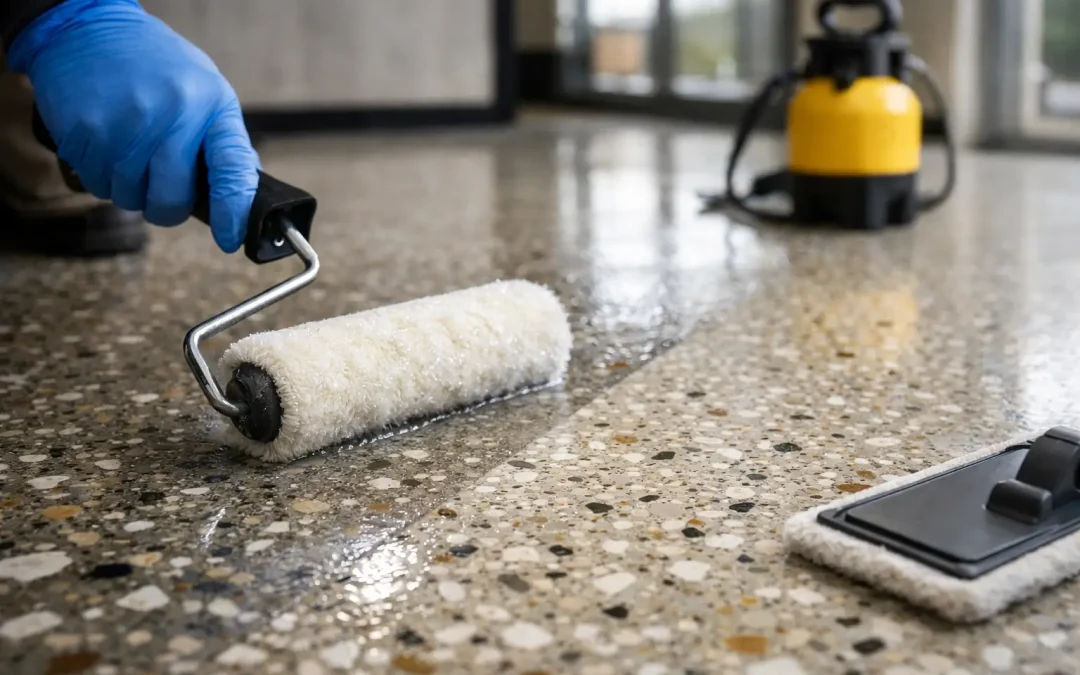
Once the floor is clean, dry, and ready, apply the sealer according to the product directions. In general, this means using a clean applicator, microfiber pad, or lambswool applicator to spread thin, even coats. More sealer is not better. Heavy application can leave streaks, sticky residue, or uneven curing.
Work in manageable sections and avoid letting the sealer puddle. If the product calls for buffing off excess after a certain dwell time, follow that timing carefully. If a second coat is needed, wait for the recommended interval before applying it.
Terrazzo responds best when the sealer is applied with consistency. Uneven coverage is one of the main reasons floors end up with dull spots or visible overlap marks.
Allow proper curing time
This part gets overlooked often. Even if the floor feels dry to the touch, that does not mean the sealer has fully cured. Keep foot traffic light for the recommended period, and avoid wet cleaning until curing is complete.
In Florida homes, humidity can affect drying and cure times. A product may take longer to fully set than expected, especially in spaces with limited airflow. Rushing furniture back into place or washing the floor too soon can reduce the effectiveness of the sealer.
Common mistakes when sealing terrazzo
The most common mistake is sealing a dirty floor. The second is using the wrong product. Homeowners sometimes apply generic floor finish or a high-gloss coating that is not appropriate for terrazzo, then wonder why the floor turns cloudy or starts peeling.
Another issue is skipping restoration when the surface clearly needs more than protection. If terrazzo is etched, scratched, or stained below the surface, sealing will not bring back the original look. It may even make defects stand out more.
There is also the maintenance question. Once the floor is sealed, use pH-neutral cleaners and avoid harsh chemicals. Repeated use of the wrong cleaner can break down the sealer and leave the surface looking tired much sooner than expected.
When DIY works and when to call a pro
If your terrazzo is in good shape, free of coating buildup, and only needs fresh protection, sealing may be a manageable DIY project. The key is patience, proper cleaning, and using a sealer made for terrazzo or natural stone surfaces.
But if the floor is dull, scratched, stained, uneven, or has old finish residue, professional help usually pays off. A proper assessment can tell you whether the floor needs stripping, honing, polishing, stain treatment, or crack repair before sealing. That is the difference between a temporary improvement and a result that actually lasts.
For many homeowners, the bigger value is not just getting sealer on the floor. It is getting the surface back to a clean, even, polished condition first, then protecting that restored finish the right way. That is where an experienced terrazzo restoration company can save time, prevent mistakes, and improve the final appearance.
How often terrazzo floors should be resealed
It depends on the type of sealer, the traffic level, and how the floor is maintained. Some homes may need resealing every one to three years, while others can go longer. Entryways, kitchens, and other active areas tend to wear faster than low-traffic rooms.
Instead of following a rigid calendar, watch the floor. If water stops beading, spills start darkening the surface, or routine cleaning gets harder, it may be time to reseal. A professional inspection can help you avoid resealing too early or waiting too long.
At Natural Surface Restoration, we see this often with older terrazzo floors across Gainesville and North Central Florida. Homeowners assume the floor is worn out, when it really needs the right combination of restoration and protection.
If you want terrazzo to keep its clean, polished look, sealing should be treated as part of the floor’s care plan, not a one-time fix. Done correctly, it helps preserve the surface you already have and keeps replacement off the table a lot longer.