
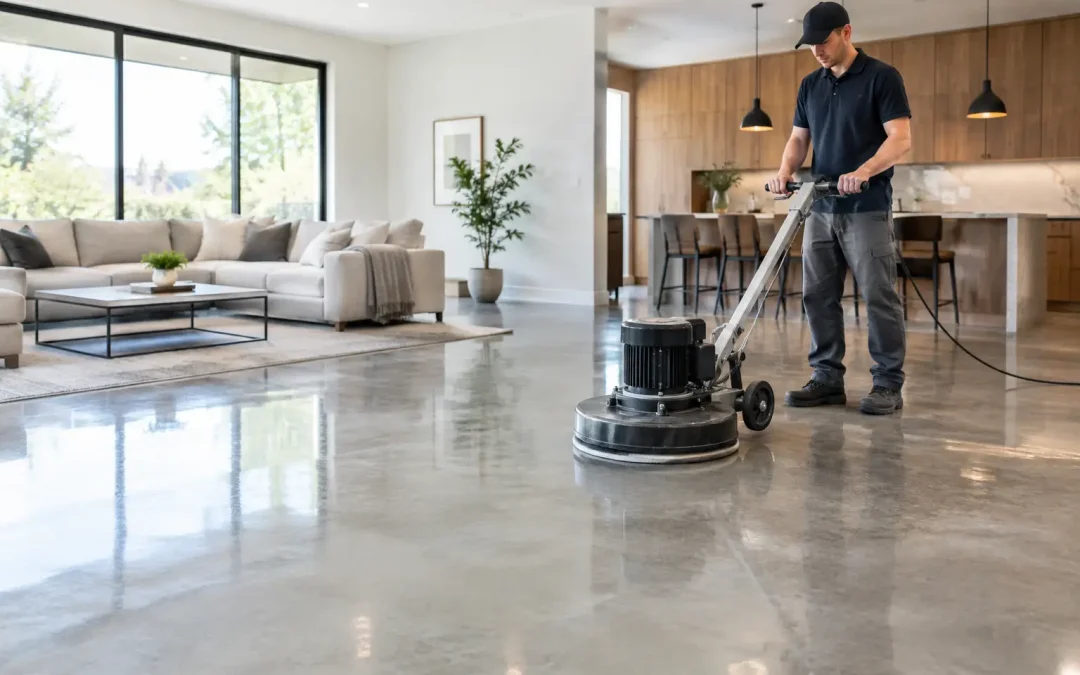
A dull garage slab can make an otherwise well-kept home feel unfinished. The same goes for a stained patio, a worn basement floor, or interior concrete hidden beneath old flooring. Homeowners often ask, is concrete polishing worth it when they see the dust, discoloration, and surface wear that accumulate over time. The answer depends on the slab’s condition, where it is located, and what you expect from the finished floor. For the right concrete surface, polishing can be a practical investment that improves appearance, simplifies maintenance, and avoids the cost and disruption of replacement.
Is Concrete Polishing Worth It? Start With the Slab
Concrete polishing is not simply applying a shiny coating over an existing floor. It is a mechanical process that refines the concrete itself. The surface is ground with professional equipment, repaired as needed, hardened with a densifier, and polished through progressively finer stages. The result can range from a low-sheen, satin appearance to a more reflective finish.
That distinction matters because a polished concrete floor is not dependent on a thick top layer that may peel or wear away. When the slab is sound and prepared correctly, the finished surface becomes denser, smoother, and easier to clean. It is especially appealing in garages, covered patios, utility rooms, workshops, basements, and modern interior spaces where homeowners want a clean, durable look.
The condition of the existing slab is the first question. Concrete with light wear, minor staining, and a generally level surface is often an excellent polishing candidate. A slab with widespread moisture issues, severe spalling, major movement, or extensive patching may need repairs or may be better suited to another restoration approach. Polishing can improve a floor dramatically, but it cannot erase structural problems beneath the surface.
What You Gain From a Polished Concrete Floor
The biggest benefit is durability. Concrete is already a hard material, but an untreated surface can remain porous and dusty. Professional polishing densifies the concrete, helping it resist abrasion and making the floor less likely to release fine dust into the room. This is useful in garages and work areas, where tires, tools, lawn equipment, and foot traffic take a daily toll.
Maintenance is another strong reason homeowners choose polishing. A smooth, refined floor does not have grout lines, seams, or textured coating edges that trap dirt. Regular sweeping and occasional damp mopping are typically enough to keep it presentable. In homes with pets, children, or frequent garage traffic, that easier cleanup can matter as much as the visual upgrade.
Polished concrete also gives homeowners design flexibility without adding a separate flooring material. The natural variation in the slab can be part of the appeal. Some floors show a subtle, consistent finish, while others reveal aggregate and more visual movement after grinding. Color can also be introduced through stains or dyes when the project calls for a more customized look.
For many homeowners, the long-term value comes from keeping a usable slab in service rather than covering it with a material that may need replacement sooner. The floor becomes a finished surface rather than a base waiting for carpet, tile, vinyl, or another overlay.
A better fit for some spaces than others
Polishing tends to make the most sense in dry, enclosed spaces and in areas where durability and easy cleaning are priorities. Garages are a common choice because the treatment can make a plain slab look more intentional while standing up well to everyday use. Interior concrete floors can also work beautifully in contemporary homes, additions, and converted spaces.
Outdoor concrete deserves a more careful conversation. A highly polished finish can become slippery when wet, particularly around pool areas, entryways, or uncovered patios. In those locations, a lower-sheen finish, a different texture, or a protective treatment designed for exterior exposure may be the better choice. The goal is not simply to create shine. It is to choose a finish that works safely and holds up in its environment.
The Trade-Offs Homeowners Should Understand
Polished concrete is durable, but it is not indestructible. Heavy impacts can chip concrete, and sharp or abrasive materials can leave marks. Oil, fertilizer, rust, and acidic spills should still be cleaned promptly, especially in garages. A polished floor reduces porosity, but it does not make careless use irrelevant.
Cracks are another point to consider honestly. Small cracks can often be repaired and blended into the finished floor, but they may remain visible. This is normal with concrete. Unlike tile or carpet, polished concrete does not conceal the slab’s history. Some homeowners appreciate that natural, industrial character; others prefer a uniform look that hides imperfections.
The amount of preparation can also affect the overall project value. Old adhesive, paint, failed coatings, carpet backing, and thick surface contaminants may need to be removed before polishing begins. If the slab requires substantial repair or leveling, the cost can rise. That does not automatically make polishing a poor decision, but it does mean the estimate should reflect the real work involved rather than an idealized square-foot price.
There is also a style question. A polished concrete floor has a distinct appearance. It can feel clean, modern, and high-end, but it will not mimic warm hardwood or patterned natural stone. Homeowners who want softness underfoot in bedrooms or a traditional decorative finish in a formal living area may prefer another flooring solution. Concrete polishing is worth it when its strengths match the space, not when it is forced into every room.
Comparing Polishing With Coatings and Replacement
A coating can be the right answer for some concrete floors, especially when the homeowner wants a solid color, decorative flakes, or a surface designed to hide numerous visual flaws. Coatings create a new layer over the slab, which can produce a very different appearance from polished concrete. Their performance depends heavily on preparation, moisture conditions, and the quality of the coating system.
Polishing, by comparison, works with the concrete already in place. It may cost more upfront than a basic paint or do-it-yourself coating, but it can offer stronger long-term value because there is no thick surface film to peel. It is also usually less disruptive and less expensive than removing and replacing a sound slab.
Replacement is generally justified when concrete has severe structural damage, major drainage failures, extensive deterioration, or movement that restoration cannot correct. If the foundation is sound and the problem is mostly cosmetic, replacement may be more than the floor needs. A careful assessment can prevent homeowners from paying to tear out concrete that could be restored.
How to Decide if the Investment Makes Sense
Ask what is frustrating you about the floor now. If it constantly looks dirty, creates dust, absorbs stains, or makes an otherwise finished area look neglected, polishing can solve meaningful day-to-day problems. If your main concern is a deep crack, standing water, or crumbling concrete, repairs and moisture management must come first.
It also helps to think beyond the first week after the work is complete. A floor that is easier to clean and less likely to need frequent touch-ups has value over years of use. That is particularly true for homeowners who plan to stay in their property, maintain a workshop or garage, or want to improve a high-traffic part of the home without installing a more delicate finish.
The right finish level matters, too. High gloss is not always the best choice. A lower sheen can be more forgiving of dust and tire marks while still looking refined. An experienced surface restoration assessment should account for lighting, traffic, moisture exposure, existing damage, and the look you want from the space.
Natural Surface Restoration helps North Central Florida homeowners evaluate whether their concrete can be polished successfully, what preparation it needs, and which finish will make practical sense for the way the space is used. Before committing to replacement or a coating, have the slab evaluated for what it can become. A worn concrete floor may not need to be covered up – it may simply need the right restoration plan.