
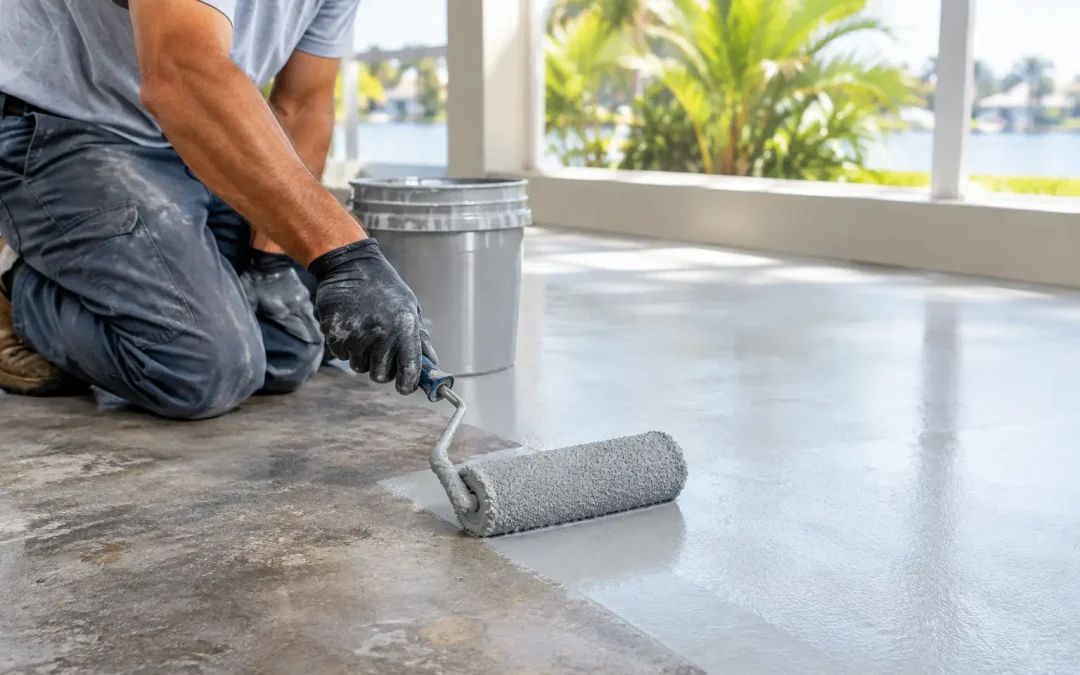
A concrete floor can look permanently worn long before it has reached the end of its useful life. Oil spots in the garage, faded patios, rough texture, old paint failure, and surface stains can make an otherwise solid slab feel like a replacement project. Concrete resurfacing gives homeowners another option: renewing the visible surface when the concrete beneath it is still structurally sound.
For homes in Gainesville and across North Central Florida, the right approach depends on more than appearance. Heat, rain, humidity, pool traffic, and everyday use all affect how a concrete surface performs. A proper evaluation separates cosmetic wear from moisture issues, movement, and damage that need a different repair.
What Concrete Resurfacing Actually Does
Concrete resurfacing is the process of preparing an existing concrete slab and applying or refining a new wear surface to improve its appearance, texture, and performance. Depending on the condition of the concrete and the finish a homeowner wants, the work may involve cleaning, repair, grinding, patching, a resurfacing material, polishing, staining, or protective sealing.
It is not the same as simply coating a floor. Paint and many quick coatings can cover discoloration for a while, but they may peel when the slab was not prepared correctly or when moisture pressure is present. Resurfacing starts with the condition of the concrete itself. The goal is to create a clean, stable surface that can accept the selected finish and hold up to the way the area is used.
That distinction matters in garages, entryways, patios, lanais, utility rooms, and interior concrete floors. Each space has different demands. A garage needs resistance to tire traffic, spills, and abrasion. A patio needs a finish that suits outdoor exposure and feels appropriate underfoot. An interior floor may benefit most from a refined, low-maintenance polished concrete look.
When Concrete Resurfacing Is a Good Fit
The best candidates have surface-level problems rather than serious structural failure. If the slab is stable and the flaws are concentrated near the top layer, restoration can often provide a major visual improvement without the cost and disruption of removal and replacement.
Common reasons homeowners consider concrete resurfacing include worn or uneven color, minor pitting, surface scaling, old coating residue, light cracking, stains, and a dull finish that no longer fits the rest of the home. A surface can also be functional but difficult to clean because it has become rough, porous, or unevenly worn.
Hairline cracks do not automatically rule out resurfacing. They do, however, need to be evaluated and repaired correctly. Concrete naturally moves with temperature changes and settling, so a repaired crack may remain a point of movement over time. The honest answer is not that every crack will disappear forever. It is that the repair and finish should be chosen with realistic expectations about the slab’s condition.
Resurfacing is usually not the right first step when concrete is badly heaved, deeply fractured, crumbling throughout, or affected by an active drainage problem. If water is repeatedly getting beneath or through the slab, any finish placed on top may fail prematurely. In those cases, correcting the underlying cause protects the investment better than applying a cosmetic fix.
A closer look at moisture and drainage
Florida’s wet climate makes moisture assessment especially valuable. Concrete is porous, and slabs can hold or transmit moisture even when the top looks dry. Signs such as whitening, blistering coatings, persistent damp areas, or repeated finish failure deserve attention before a new surface is installed.
Outdoor areas also need proper drainage. Standing water can leave mineral deposits, encourage staining, and shorten the life of some finishes. Resurfacing can improve a worn surface, but it cannot solve a slope or water-management problem by itself.
The Preparation Work Determines the Result
A good-looking concrete floor is built on careful preparation. This is the step homeowners rarely see after the project is finished, but it has the greatest effect on adhesion, uniformity, and durability.
The process generally begins with a close inspection of the slab. The surface is then cleaned to remove soil, oils, old sealers, paint, and contaminants that could interfere with the new finish. Mechanical methods such as grinding may be used to open the concrete, level worn areas, or remove failing material. Cracks, pits, and small damaged sections are repaired before the chosen finish is applied.
This work is also why do-it-yourself resurfacing kits can be unpredictable. A product may look simple on the label, but the result depends on surface profile, cleaning, moisture conditions, repair materials, mixing, weather, and cure time. Skipping preparation can lead to visible patch lines, poor bonding, uneven sheen, or early peeling.
At Natural Surface Restoration, the focus is on restoring and protecting hard surfaces based on what the material needs, not forcing every floor into the same solution. That begins with identifying whether the concrete can be renewed effectively and what finish will make sense for the space.
Choosing the Right Finish for the Space
Concrete resurfacing is not one look. The finish should support how the area is used, how much maintenance the homeowner wants, and the style of the surrounding home.
A polished or mechanically refined concrete surface can be an excellent choice for certain interior spaces and garages. It can create a clean, contemporary appearance while reducing the dusty, rough feel of unfinished concrete. The level of sheen can range from a subtle satin look to a more reflective finish, depending on the slab and the homeowner’s preference.
For patios, pool-adjacent areas, and walkways, texture is often as important as color. A finish that looks attractive but becomes slick when wet is not a good trade-off. In these locations, traction, drainage, sun exposure, and ease of cleaning should guide the decision.
Color can also change the character of a concrete surface, but it should be chosen with practical use in mind. Very light colors can show dirt and leaf stains outdoors. Extremely dark finishes can make dust, pet hair, and mineral residue more noticeable. A sample area or clear discussion of the expected variation helps prevent surprises, especially on older concrete with existing patches or color differences.
What to Expect After Resurfacing
The finished surface needs time to cure before normal use. The specific timeline depends on the materials and finish selected, as well as temperature and humidity. Rushing furniture, vehicles, rugs, or heavy traffic onto a new surface can leave marks or interfere with proper curing.
Once the floor or patio is ready, routine care is straightforward but still matters. Sweep away abrasive grit, clean spills promptly, and use products suited to the finish. Harsh acids, strong degreasers, and abrasive scrubbers can dull or damage protective layers. Outdoor surfaces benefit from regular rinsing and attention to leaves, mulch, fertilizer, and standing water that may leave stains.
Sealers and protective treatments are not always permanent. Their service life depends on traffic, sunlight, cleaning habits, and exposure to moisture. A garage floor used daily will not age the same way as an interior room with light foot traffic. Planning for periodic maintenance is part of preserving the finish rather than waiting for the surface to look neglected again.
Repair, Resurface, or Replace?
Replacement is sometimes necessary, but it should not be the automatic answer to a stained or tired-looking slab. Demolition is noisy, disruptive, and often far more expensive than restoring concrete that still has a sound base. On the other hand, resurfacing a slab with major movement or widespread deterioration can waste money.
The practical question is simple: is the problem primarily at the surface, or is the concrete failing below it? A professional assessment can clarify the difference and help you compare the likely lifespan, appearance, and maintenance needs of each option.
If your concrete has lost its clean, finished appearance, start with an estimate before deciding it needs to be torn out. Clear photos, visible wear patterns, and an on-site review can point to the most sensible path – one that improves the space now and gives the surface the protection it needs for the years ahead.