
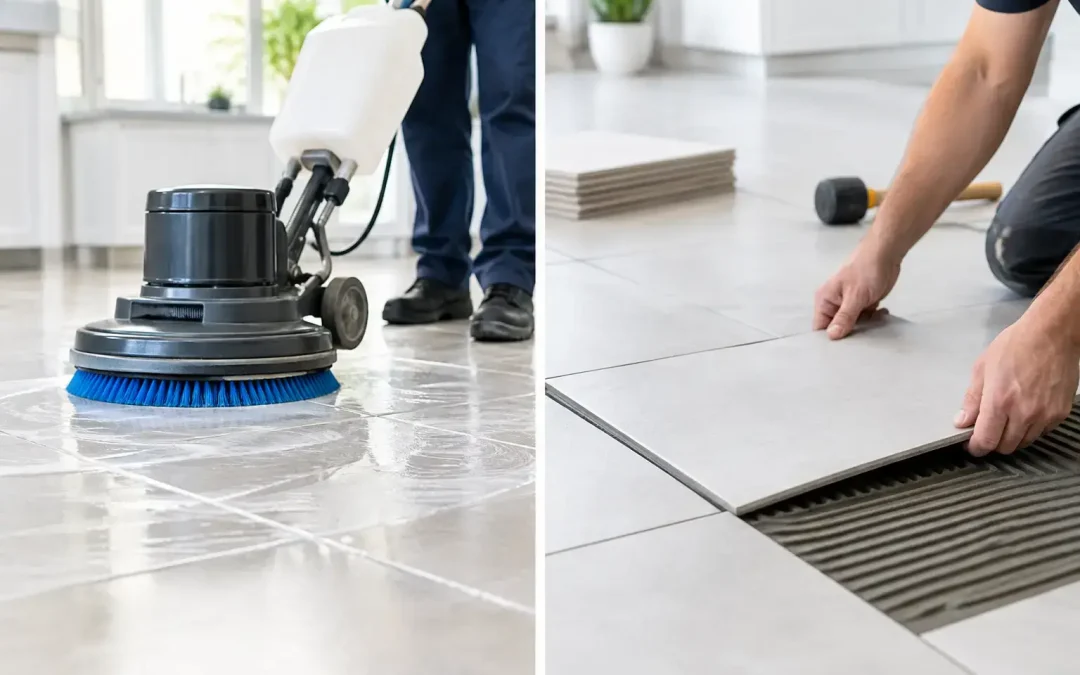
A kitchen floor can look far beyond saving when the grout has turned dark, the tile has lost its clean finish, and years of Florida humidity, foot traffic, and spills have settled into every line. Before planning a disruptive remodel, consider professional tile cleaning versus replacement. In many homes, the tile itself is still structurally sound. The problem is embedded soil, stained grout, failed sealer, or surface buildup that ordinary mopping cannot remove.
The right choice depends on the actual condition of the floor or wall, not simply how dirty it looks. Cleaning can dramatically improve a sound installation. Replacement makes more sense when damage reaches below the surface or the tile system is failing.
Professional Tile Cleaning Versus Replacement: The Main Difference
Professional tile and grout cleaning restores what is already in place. Specialized equipment, cleaning solutions, agitation, extraction, and grout treatment remove contaminants that collect in porous grout and textured tile. When appropriate, color sealing can give grout joints a consistent, renewed appearance while adding a protective barrier against future stains.
Replacement removes the existing tile, grout, and often portions of the setting material beneath it. It can solve serious installation failures and gives homeowners the opportunity to change the design, but it also introduces demolition, dust, material selection, installation scheduling, and a longer period of disruption.
Cleaning is usually the more practical route when the tile is intact and the concern is appearance. Replacement is the more permanent answer when there is physical damage, movement, moisture-related failure, or a design change you genuinely want.
When Cleaning Is the Better Investment
Tile is durable by design. Ceramic and porcelain can often outlast their grout’s appearance by many years. A floor that looks permanently dirty may simply have grout that has absorbed oils, cleaning residue, soil, or spills. Bathrooms may have soap film, mildew staining, mineral deposits, and discoloration around shower edges. Kitchens commonly develop grease and traffic staining, especially near cooktops, sinks, and exterior doors.
Professional cleaning is a strong option when tile is firmly bonded, mostly free of cracks, and level across the surface. It is also a sensible choice if the room’s layout and tile style still work for your home. Restoring a floor you already like avoids replacing a material that has plenty of useful life left.
Grout color sealing can be especially valuable for older installations. Rather than accepting uneven grout color after cleaning, a color seal can refresh the joints in a uniform shade. It can also make routine cleaning easier because the treated grout is less likely to absorb new stains. This is not a shortcut for failing grout, but it is an effective improvement for grout that is sound yet visually tired.
Cleaning is often less invasive as well. There is no tear-out, no need to move through a construction zone for days, and no concern about matching new tile to adjoining surfaces. For homeowners preparing to sell, updating a rental property, or improving a home without committing to a remodel, restoration can deliver a noticeable return for a fraction of the disruption.
Signs Replacement Is Necessary
Cleaning cannot fix a tile installation that is coming apart. Cracked tiles, loose tiles, hollow-sounding areas, missing grout, and shifting floors all point to concerns beneath the surface. Repeated cracks in the same area may indicate subfloor movement or an installation issue that needs to be corrected before new finishes are installed.
Water damage changes the equation quickly. In showers, deteriorated grout and caulk may allow moisture behind tile. In kitchens or laundry rooms, leaks can affect the substrate below a floor. If tiles are loose, grout is repeatedly crumbling, or there are signs of moisture damage, a cleaning service should not be used as a way to hide a larger problem.
Replacement can also be the right decision when the tile is technically functional but no longer suits the home. A dated color, an impractical layout, or a wall-to-wall floor pattern you dislike will not become a different design after cleaning. Restoration improves the existing surface. It does not change its size, style, or installation pattern.
The Cost Question Is Bigger Than the Initial Price
Replacement usually costs more because it involves more than new tile. Old material must be removed and disposed of, the substrate may need repair or leveling, new tile and grout must be selected, and installation labor must be completed. Door clearances, transitions to adjoining flooring, baseboards, toilets, appliances, and cabinets can all affect the final scope.
Professional cleaning has a lower initial cost in most cases, but it should be chosen for the right reason. If your tile has widespread cracks or a moisture problem, paying to clean it first may only delay the work that truly needs to be done. A clear assessment helps prevent spending money twice.
The most useful comparison is not simply cleaning price versus replacement price. Consider the remaining life of the current tile, the condition of the grout, the disruption your household can tolerate, and whether you would be happy keeping the present design for several more years. If the surface is solid and you like it, cleaning and sealing can be an efficient long-term maintenance decision.
What a Professional Assessment Should Look For
A reliable assessment begins with the surface itself. The question is not, “Can this be made cleaner?” Nearly every tile floor can be made cleaner. The better question is, “What is causing the appearance problem, and is the installation still sound?”
A surface care specialist should look for cracked or loose tile, worn or missing grout, efflorescence, staining patterns, caulk failure, moisture concerns, and areas with heavy buildup. They should also identify the tile type. Textured porcelain, glazed ceramic, quarry tile, and natural stone require different cleaning methods. Using an overly harsh product or abrasive process can damage certain surfaces, dull finishes, or create problems that are harder to correct later.
For grout, expectations matter. Deep cleaning can remove a great deal of soil, but permanent staining, previous chemical damage, and uneven aging may remain visible. In those situations, color sealing can produce a much more consistent finished look than cleaning alone. A good recommendation explains that difference upfront rather than promising every floor will look brand new.
Protecting Results After Cleaning
Once tile and grout have been restored, everyday care determines how long the improvement lasts. Skip heavy waxes and oily cleaners that leave a film and attract dirt. Use a neutral cleaner suited to the surface, rinse when needed, and address spills before they sit in grout joints.
Entry mats help limit abrasive dirt from being tracked onto tile floors. In bathrooms, regular ventilation and quick attention to standing water can reduce buildup near showers and tubs. If grout has been color sealed, follow the maintenance guidance provided for that treatment rather than assuming any household cleaner is appropriate.
Professional cleaning is not meant to replace regular care. It gives homeowners a clean baseline that makes routine maintenance more effective and lets the true condition of the tile show through.
Choose the Fix That Matches the Problem
If your tile is secure, your grout is stained, and the room still fits your style, restoration is often the smart first move. It preserves a durable existing surface, reduces disruption, and can make a dramatic difference in kitchens, bathrooms, entryways, and living areas.
If tile is cracked, loose, water-damaged, or simply no longer belongs in your home, replacement may be the better investment. The key is not to let surface dirt make the decision for you. Have the condition of the installation evaluated, then choose the option that protects both your home and your budget.
For homeowners in Gainesville and across North Central Florida, Natural Surface Restoration can assess whether professional cleaning, grout color sealing, or replacement planning is the most sensible next step for your tile.