
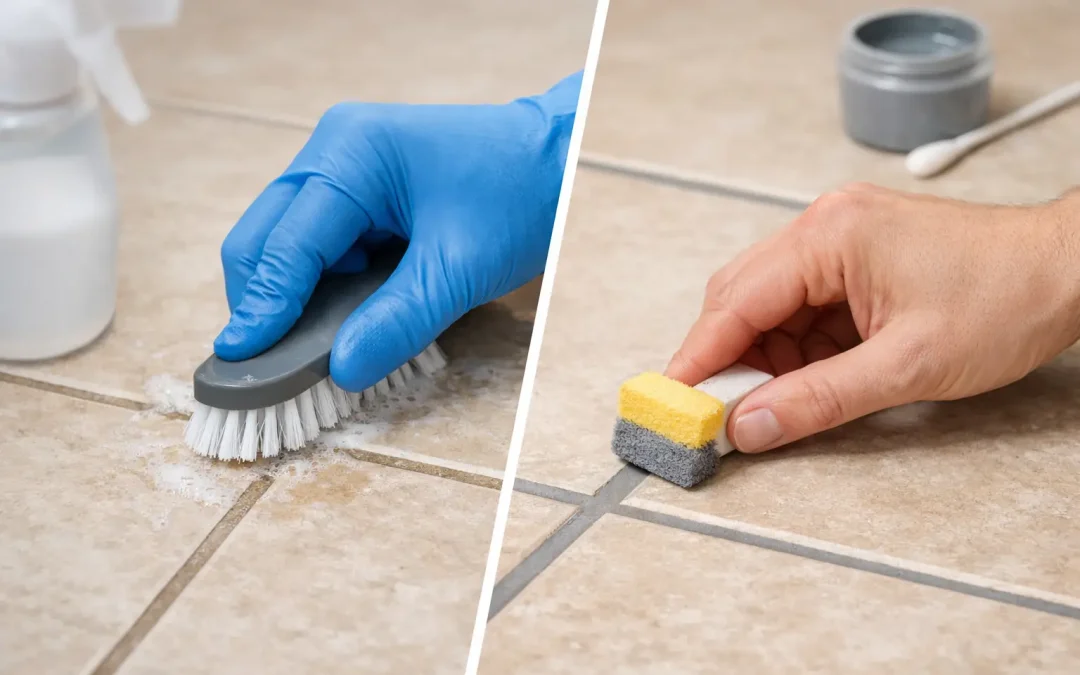
If your tile still looks tired after mopping, the grout is usually the reason. When homeowners start comparing grout cleaning vs recoloring, they are often trying to solve one of two problems: grout that is dirty, or grout that no longer looks uniform even after it is cleaned.
Those are not always the same issue. Grout can hold ground-in soil, soap residue, mildew staining, hard water buildup, and old sealers that make floors and showers look older than they are. In other cases, the grout is simply past the point where cleaning alone can bring back an even, fresh appearance. Knowing which condition you have is what saves time, money, and frustration.
Grout cleaning vs recoloring: what is the difference?
Grout cleaning removes contaminants from the surface and pores of the grout. The goal is to lift dirt, staining, residue, and buildup so the grout returns as close as possible to its actual color. On a tile floor, that can brighten the entire room without replacing a single tile.
Grout recoloring is different. It changes or restores the visible color of the grout lines using a professional colorant. This is usually done after the grout has been properly cleaned and prepared. Recoloring does more than freshen the look – it can hide permanent discoloration, correct blotchy grout, and create a more consistent appearance across the floor or shower.
In simple terms, cleaning reveals what is there. Recoloring improves what is there.
When grout cleaning is the right fix
If the grout is structurally sound and the main problem is embedded dirt, cleaning is often the right first step. This is common in kitchens, bathrooms, entryways, and living areas where traffic slowly darkens the grout lines. Many homeowners assume the grout has changed color permanently, only to find that professional cleaning removes years of buildup.
This matters because grout is porous. It grabs hold of grime in a way tile usually does not. Standard household mopping often spreads dirty water across the surface and leaves the grout looking dull or darker over time. In showers, soap film, body oils, and moisture create a different kind of staining, but the result is the same – grout lines that make clean tile look dirty.
Cleaning is usually the better option when the original grout color is still acceptable and you simply want the floor or shower to look clean again. It is also a sensible starting point if you are not sure whether the discoloration is surface-level or permanent. A professional evaluation can usually tell the difference quickly.
There is one trade-off. Cleaning can only remove what can be removed. If the grout has deep-set staining, bleach damage, patchy old repairs, or uneven coloration from age and wear, even strong professional cleaning may improve the look without fully correcting it.
When recoloring makes more sense
Recoloring is often the better answer when the grout is clean but still looks bad. That sounds simple, but it is a very common situation. Homeowners pay for cleaning, see some improvement, and then realize the grout still looks blotchy, permanently stained, or faded in traffic lanes.
This is where recoloring can make a big visual difference. A professional colorant creates uniform grout lines, which helps the entire tile installation look newer and sharper. It can restore the original grout shade or change it to a different color for a cleaner, more updated look.
Recoloring is especially useful when grout has:
- permanent staining from spills, mildew, or hard water
- uneven color from previous cleaning attempts or aging
- discoloration from old sealers or harsh chemicals
- mismatched repairs in small areas
- grout lines that make otherwise good tile look worn out
Another advantage is predictability. Cleaning results can vary depending on the type and age of the staining. Recoloring gives a more controlled finished appearance. For homeowners who care about a consistent look, that can be the deciding factor.
Why DIY results often fall short
A lot of grout problems look simple until you start scrubbing. Store-bought cleaners may help with light soil, but heavy staining and embedded grime usually require stronger methods, proper dwell time, agitation, extraction, and surface-safe chemistry. The wrong product can also damage nearby stone, strip sealers unevenly, or leave residue behind.
Recoloring is even less forgiving. If the grout is not thoroughly cleaned and prepared first, the colorant may not bond correctly. If the application is rushed, the grout lines can look messy or uneven. What should make the tile look refreshed can end up drawing more attention to the flaws.
That is one reason many homeowners choose professional tile and grout service instead of trying to guess which approach will work. The issue is not just applying a product. It is identifying the condition of the grout, choosing the right correction, and getting a finish that looks intentional.
The condition of the grout matters more than the room
People often ask whether grout cleaning vs recoloring depends on whether the surface is in a kitchen, bathroom, or shower. The location matters, but the grout condition matters more.
For example, a kitchen floor may only need a deep cleaning if the grout is dark from foot traffic and cooking residue. A bathroom floor with similar-looking discoloration may actually need recoloring because cleaning has already been attempted several times and the grout color is no longer consistent. In a shower, mildew staining and mineral deposits may respond to cleaning in one home and require recoloring in another.
The right recommendation comes from how the grout responds, not just where it is installed.
What homeowners in Gainesville should watch for
In North Central Florida homes, moisture and regular use can take a toll on grout. Bathrooms and showers may deal with humidity-related staining, while entryways and main living areas collect red dirt, dust, and tracked-in grime. Over time, these conditions can make grout lines stand out for the wrong reason.
If you are seeing darkened grout along walkways, uneven color around the toilet or vanity, or shower grout that still looks dingy after cleaning, it may be time to have it professionally assessed. In many homes, the tile itself is still in good shape. The grout is just dragging down the whole surface.
That is why restoration makes sense. Instead of jumping to replacement, homeowners can often improve the appearance dramatically through the right grout service. For many floors and showers, that is the most practical path.
How professionals decide between cleaning and recoloring
A good recommendation should be based on what the grout can realistically do. If cleaning will restore the appearance, that should be the first option. If the grout has permanent discoloration or visual inconsistency that cleaning cannot solve, recoloring is the better value.
In some cases, the answer is both. The grout may need deep cleaning first, followed by recoloring for a uniform finish. That is often the best route when the goal is not just cleaner grout, but grout that makes the whole tile installation look refreshed.
Professionals also look at whether the grout is intact. If it is cracked, missing, crumbling, or failing in wet areas, repair may need to happen before cleaning or recoloring. Cosmetic improvement only works if the grout is still serviceable.
Which option lasts longer?
That depends on use, maintenance, and the original condition of the grout. A professional cleaning can make a major difference, but grout that sees heavy traffic or frequent moisture will still need routine care. Recoloring can provide a longer-lasting visual reset because it creates a more even, renewed finish, especially when paired with proper maintenance.
Neither option is magic if the surface is neglected afterward. The real benefit comes from restoring the grout correctly and then protecting that result with better upkeep.
The better question is not which is cheaper
Homeowners often start by asking whether cleaning or recoloring costs less. Cleaning is usually the simpler service, but price alone misses the point. If cleaning cannot deliver the look you want, it is not really the better value. If recoloring is unnecessary because the grout just needs professional cleaning, then paying for color change does not make sense either.
The better question is which service solves the actual problem.
For homeowners who want their tile to look clean, bright, and cared for again, the right answer usually comes down to the condition of the grout lines and the finished appearance they want to see. If you are not sure which one your floor or shower needs, a hands-on evaluation is the fastest way to stop guessing and start restoring what is already there. Natural Surface Restoration helps homeowners across Gainesville and nearby communities do exactly that – with clear recommendations and results you can actually see.