
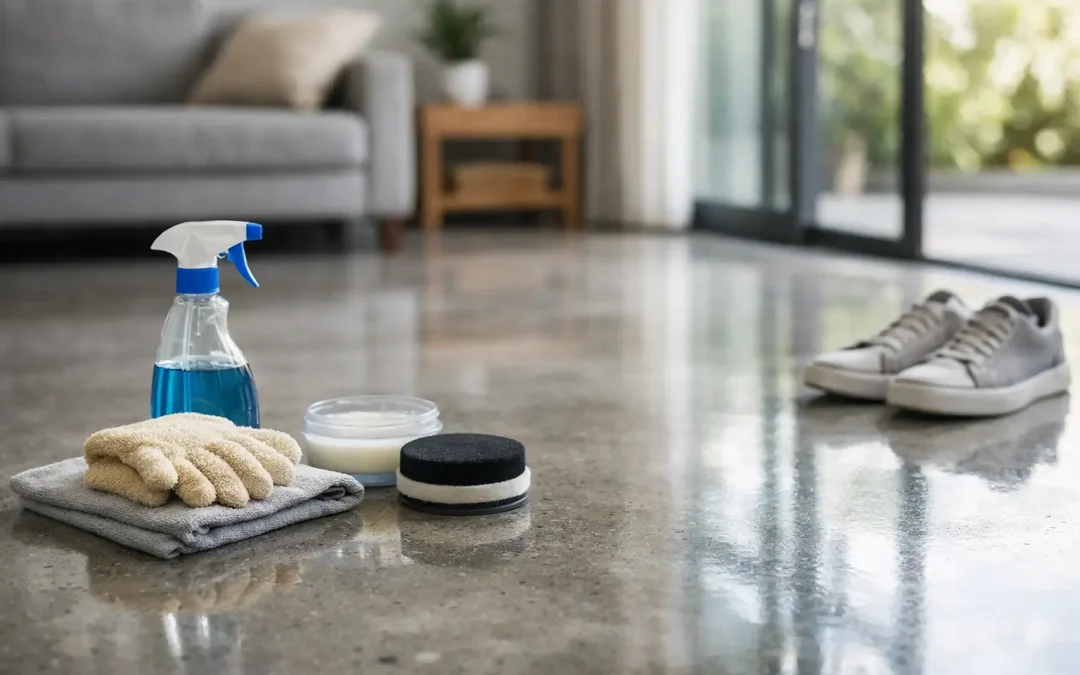
Polished concrete earns its clean, modern look through a carefully refined surface, not through a thick coating sitting on top of the floor. That is why knowing how to protect polished concrete matters. The wrong cleaner, neglected spills, or an unnecessary coating can dull the sheen and make routine care harder than it needs to be.
For homeowners, polished concrete is a practical choice for living rooms, kitchens, patios, and other high-traffic areas. It handles daily use well, but it is not maintenance-free. Protection comes from matching your cleaning habits, entryway control, and sealer decisions to the finish already on the floor.
Start by Knowing What Type of Polish You Have
Not every shiny concrete floor has the same protection. Mechanically polished concrete is ground, densified, and refined with progressively finer abrasives. Its sheen is part of the concrete itself. A polished concrete floor may also have a penetrating stain guard applied to improve resistance to oil, food, and other contaminants.
By contrast, some floors are coated with a topical sealer or wax-like guard that creates shine on the surface. These systems can look similar at first, but they require different maintenance. A topical coating can scratch, wear, peel, or turn cloudy. A mechanically polished floor is less likely to peel because the finish is built into the slab, although it can still become stained, etched, or visibly worn.
If you are unsure which surface you have, avoid experimenting with harsh cleaners or store-bought sealers. A small mistake can leave uneven gloss or a residue that attracts dirt. Natural Surface Restoration can evaluate the finish and recommend care that preserves the floor rather than changing its appearance.
How to Protect Polished Concrete From Daily Wear
The most effective protection is simple: keep abrasive grit off the floor. Fine sand, driveway dust, pet debris, and tracked-in soil act like sandpaper under shoes and chair legs. Over time, they can soften the clarity of a polished finish, especially near exterior doors, kitchens, and busy walkways.
Use quality walk-off mats at entrances, both outside and inside where practical. Choose mats with a non-staining backing and clean them regularly. A dirty mat eventually becomes another source of grit. In North Central Florida, frequent rain and sandy soil can make this step especially worthwhile.
Dry dust mop or sweep the floor often enough to prevent buildup. In a busy household, that may mean several times a week. Use a clean microfiber dust mop rather than a stiff broom that can push grit across the surface. Vacuuming is also helpful when the vacuum has soft wheels and a hard-floor setting without an aggressive beater bar.
Furniture protection matters as well. Add clean felt pads to chair legs, stools, tables, and movable furnishings. Replace pads when they become worn or collect sand. Avoid dragging furniture across the floor, even for a short distance. Use sliders or lift heavier pieces whenever possible.
Clean Without Leaving a Film
A polished concrete floor does not need strong chemical cleaners to look good. In fact, many common household products create the problems homeowners are trying to prevent. Soap-heavy cleaners, oil soaps, waxes, acrylic floor finishes, and products marketed for extra shine can leave a film behind. That film collects dirt, makes the floor look hazy, and may create uneven traction.
For regular damp cleaning, use a neutral-pH cleaner made for polished concrete or hard surfaces, diluted exactly as directed. Apply it with a clean microfiber mop and use only enough solution to clean the floor. Standing water is unnecessary and can carry contaminants into joints, edges, and more porous areas.
Rinse or change mop water frequently. Mopping with dirty water redistributes soil instead of removing it. If the floor looks dull shortly after cleaning, residue may be the issue rather than a lack of polish.
Avoid acidic cleaners, vinegar, citrus-based products, bleach, ammonia, and heavy degreasers unless a surface professional has confirmed they are appropriate for your specific floor. Acidic products can react with concrete and weaken the clarity of the finish. Strong alkaline products can also disrupt protective treatments and leave the surface looking flat.
Deal With Spills Quickly
Polished concrete resists spills better than unfinished concrete, but resistance is not the same as complete stain-proofing. Cooking oil, wine, coffee, pet accidents, plant fertilizer, automotive fluids, and colored drinks should be cleaned up promptly.
Blot liquid spills first instead of spreading them. Then clean the area with a neutral cleaner and a soft cloth or microfiber pad. For oily spills, use a concrete-safe degreasing product only if needed, and test it in a less visible area first. Do not scrub with steel wool, abrasive powders, or rough pads. Those materials can create a noticeably dull spot in a glossy floor.
Use the Right Sealer or Stain Guard
A penetrating stain guard is often the best protection for mechanically polished concrete. Rather than creating a heavy film, it helps reduce the absorption of liquids while allowing the polished look to remain visible. This is particularly useful in kitchens, dining areas, mudrooms, garages, and entertainment spaces where spills are more likely.
The right product and reapplication schedule depend on the density of the concrete, the level of polish, foot traffic, and how the room is used. A light-use guest room may need far less attention than an active kitchen with pets and children. Exterior polished concrete also faces moisture, UV exposure, and debris that can change the maintenance plan.
Do not assume that adding more sealer will provide better protection. An incompatible topical sealer can make a mechanically polished floor look plastic-like, become slippery when wet, or wear unevenly. It can also make future restoration more involved. Professional testing and product selection are worth it when the goal is long-term appearance, not a temporary shine.
Control Moisture, Especially Near Doors and Patios
Concrete is durable, but moisture still deserves attention. Water tracked in from rain can carry grit and contaminants across the floor. Indoor plants, pet bowls, and entry areas are common sources of recurring moisture marks. Use protective trays beneath plants, place absorbent mats near doors, and wipe standing water promptly.
For patios, pool-adjacent areas, or other exterior concrete, the approach changes. Outdoor surfaces need protection that accounts for weather exposure and slip resistance. A high-gloss finish may not be the best choice where water is common. Safety, drainage, and the intended use of the space should guide the finish and protective treatment.
Watch for Early Signs That Protection Is Fading
A well-maintained polished floor should clean easily and reflect light evenly. When protection starts to decline, homeowners often notice that the floor soils faster, water no longer beads or sits on the surface as it once did, or certain traffic lanes look less clear than surrounding areas.
Other warning signs include darkened spots near doorways, stubborn stains that return after cleaning, a hazy appearance, or small scratches around chairs and work areas. These do not always mean the concrete needs replacement or a full refinishing project. In many cases, professional deep cleaning, stain removal, guard reapplication, or targeted polishing can restore the floor’s appearance and protective performance.
Avoid Quick Fixes That Create Bigger Problems
When a polished concrete floor loses some of its shine, it is tempting to apply wax, mop-on shine products, or a glossy coating from a home improvement store. These products may give a short-term visual lift, but they often change how the floor cleans and wears. Dirt can become trapped in the film, and high-traffic sections may turn patchy.
Another common mistake is using a pressure washer indoors, aggressive scrub equipment, or highly concentrated chemicals to remove a stain. Concrete responds best to a measured approach based on the contaminant and finish type. What removes grease may not be appropriate for mineral deposits, rust, pet staining, or residue from old cleaning products.
A polished concrete floor should look refined without becoming delicate. With grit control, neutral cleaning, prompt spill response, and the right protective treatment, it can remain one of the most durable and attractive surfaces in the home. If your floor is staining, hazing, or losing its even sheen, a professional assessment can help you protect what is already there instead of covering up the problem.