
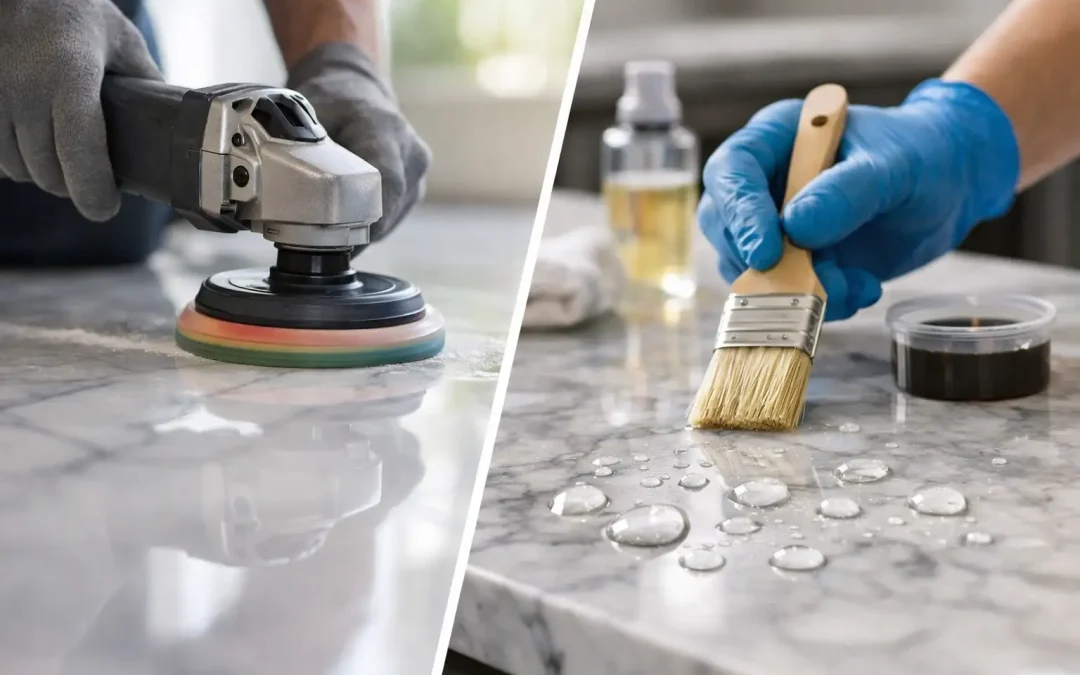
A cloudy marble vanity top, a dull foyer floor, or rings around a bathroom sink can make an otherwise well-kept home look worn. Marble polishing versus marble sealing is not an either-or choice in every case, but the two services do very different jobs. Knowing which problem you have is the first step toward restoring the stone correctly instead of applying a product that only hides the issue.
Marble Polishing Versus Marble Sealing: The Core Difference
Polishing restores the marble’s finish. Sealing helps protect the marble from absorbing liquids and oils. One corrects visible surface damage; the other reduces the risk of certain stains getting into the stone.
That difference matters because marble can look dull for reasons a sealer cannot fix. Likewise, a freshly polished surface can still be vulnerable to spills if it is not properly protected. Homeowners often call for sealing when they are really dealing with etching, or call for polishing when the main concern is a dark stain. The right service depends on what the stone is showing you.
Marble is a calcium-based natural stone. It is beautiful, but it reacts to acidic materials such as lemon juice, vinegar, wine, many cleaners, and some personal-care products. It also has natural pores that can take in moisture and oils. Those two characteristics create different types of damage, and each calls for a different solution.
What Marble Polishing Actually Does
Professional marble polishing refines the surface of the stone to restore clarity, smoothness, and its intended sheen. Depending on the marble, the location, and the damage, this may involve a controlled sequence of honing and polishing steps. Honing removes or reduces fine scratches, etch marks, traffic wear, and uneven dullness. Polishing then brings the finish back to the appropriate level of shine.
Polishing is often the answer when marble has lost its reflection or has scattered dull spots that feel smooth but look lighter than the surrounding stone. These marks are commonly etches, not stains. An etch is a physical change to the marble surface caused by an acidic substance. It may look like a water ring, but it will not wipe away because the stone itself has been altered.
A quality restoration process does more than make one damaged spot shiny. It works to blend the finish so the repaired area does not stand out from the rest of the floor, countertop, shower wall, or vanity. The goal is a finish that looks natural for that particular stone, whether that means a soft honed appearance or a higher polish.
Signs Your Marble Needs Polishing
Consider polishing when you see dull traffic lanes on marble flooring, etched rings near sinks and bar areas, light scratches, cloudy patches, or a finish that has become uneven. Marble may also need polishing after a previous repair left a noticeably different sheen.
Polishing is not a stain remover in every situation. Deep discoloration, rust marks, or stains that have entered the stone may need separate treatment before or during restoration. It also cannot repair every crack, chip, or structural issue without additional repair work.
What Marble Sealing Actually Does
Marble sealing applies a penetrating protective treatment designed to slow the absorption of liquids and oils. It gives you more time to clean up a spill before it becomes a stain. That extra time can make a real difference on a kitchen island, bathroom vanity, wet bar, dining area, or other active surface.
A sealer does not create a thick plastic layer over the marble. When properly selected and applied, it works below the surface or within the stone’s pores. It should not radically change the look of the marble or make it immune to damage.
That last point is crucial: sealing does not prevent etching. Lemon juice can etch sealed marble. Wine, citrus, acidic cleaners, and certain bathroom products can still react with the surface. A sealer is stain protection, not acid protection, scratch protection, or a substitute for careful cleaning.
Signs Your Marble Needs Sealing
Sealing may be appropriate if water darkens the marble quickly, oil leaves a darker shadow, or the surface has recently been professionally restored and needs protection. Areas exposed to frequent spills and moisture generally benefit most, especially lighter marbles where discoloration is easier to notice.
Not every marble surface needs the same sealing schedule. Dense marble may absorb very little, while a more porous stone may need attention sooner. Location matters too. A decorative fireplace surround has very different exposure than a kitchen countertop used every day.
When Your Marble Needs Both Services
In many homes, the best answer is polishing followed by sealing. This is common when marble has visible etching or dullness and is also used in a spill-prone area. Restoring the surface first creates the clean, even finish you want. Applying an appropriate sealer afterward helps protect that renewed surface from staining.
The order matters. Sealing a dull, etched floor will not restore its shine. Applying a sealer over soil, residue, or unresolved staining can also lead to disappointing results. The stone should be evaluated, cleaned, restored as needed, and then protected based on its condition and use.
For example, a marble bathroom vanity with cloudy rings around the faucet may need polishing to correct etching from personal-care products. If the stone also absorbs water or makeup oils readily, sealing after restoration is sensible. A formal marble floor with only light traffic dullness may need polishing, while sealing may be less urgent depending on the stone’s absorbency and how the room is used.
Why Store-Bought Products Can Create More Work
Homeowners understandably want to protect marble quickly, but the wrong product can complicate restoration. Acidic cleaners can etch marble. Wax-based products and topical coatings can leave buildup, trap dirt, yellow over time, or create an artificial-looking shine. Some do-it-yourself sealers may be applied unevenly or used on stone that was not ready for sealing.
A glossy appearance is not always proof that marble is healthy. Coatings can mask wear temporarily while changing the stone’s appearance and making future polishing more involved. Marble should be maintained with cleaners made for natural stone and a soft cloth or mop. Spills should be blotted promptly rather than rubbed across the surface.
Avoid using vinegar, lemon-based cleaners, abrasive powders, or harsh bathroom and kitchen products on marble. These products can cause damage even when the stone has been sealed.
How Professionals Decide What Your Marble Needs
A proper marble assessment starts with the surface condition, not a one-size-fits-all recommendation. The color and type of marble, level of shine, location, traffic, previous coatings, visible etching, scratches, stains, and water absorption all affect the recommended process.
A technician may perform an absorption check to see whether the stone darkens when exposed to water. They will also distinguish between a stain, an etch, surface wear, residue, and a finish mismatch. Those problems can look similar from across the room, but they require different treatment.
Natural Surface Restoration helps North Central Florida homeowners make that distinction before work begins. The focus is on restoring the marble that is already in your home and protecting it appropriately, rather than selling a treatment that does not address the actual damage.
Protect the Restored Finish Between Visits
Once marble has been polished or sealed, simple habits preserve the result. Use coasters under drinks, place trays under soaps and toiletries, and use cutting boards rather than preparing food directly on marble counters. On floors, entry mats help reduce grit that can slowly scratch the finish.
Clean with a pH-neutral stone cleaner and avoid leaving standing water or products on the surface. A sealer gives you a better window for cleanup, but it does not eliminate the need to act when a spill happens. If a new dull mark, stain, or rough area appears, addressing it early is usually easier than waiting for the damage to spread.
Your marble does not have to stay dull, cloudy, or vulnerable just because it has been used. The right combination of restoration and protection can bring back the finish you loved while helping the stone hold up to everyday life.