
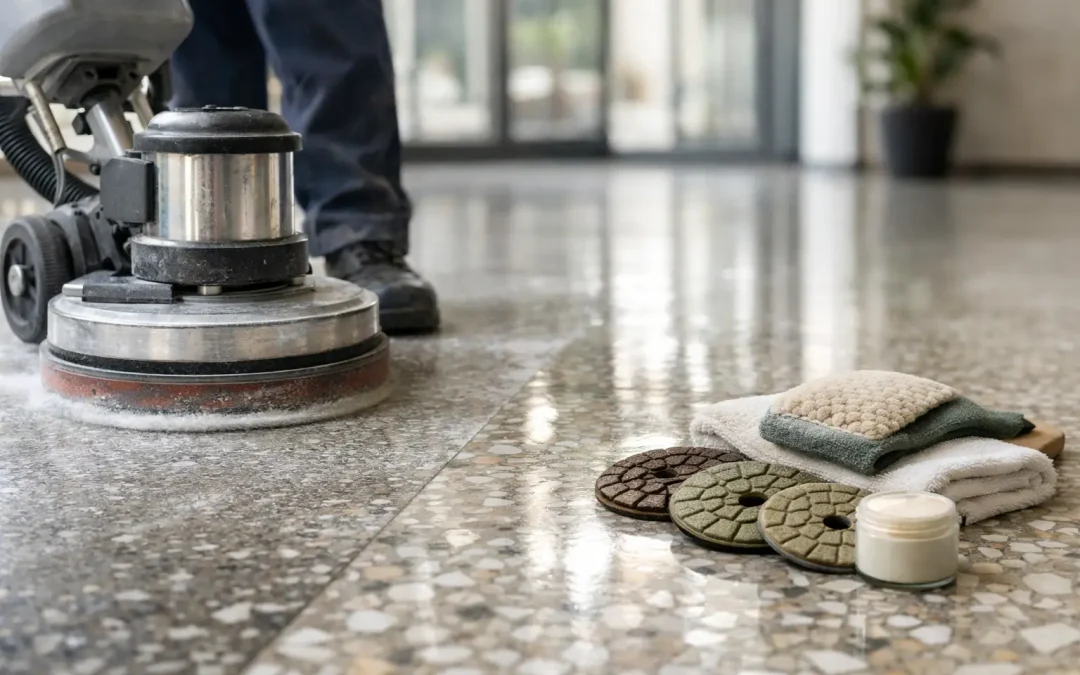
A terrazzo floor can make an entire home feel cleaner, brighter, and better cared for – until traffic patterns, stains, scratches, and old coatings start to take over. Terrazzo floor restoration is how homeowners bring that surface back without tearing it out and starting over. In many Gainesville-area homes, restoration is the smarter move because the material itself is still solid even when the finish looks tired.
Terrazzo is durable, but it is not indestructible. Over time, grit dulls the surface, spills leave stains, furniture creates scratches, and improper cleaners can leave a hazy film that never really comes off with routine mopping. What many homeowners see as an old floor is often a restorable floor. The key is knowing what the surface actually needs and using the right process to correct it.
What terrazzo floor restoration really involves
Restoration is not just making the floor shiny again. A proper process addresses the condition of the terrazzo itself, the level of wear, and the protection needed afterward. Depending on the floor, that may include deep cleaning, stripping away topical buildup, honing out damage, polishing for clarity and reflectivity, repairing small cracks or pits, and sealing the surface so it holds up better going forward.
That matters because terrazzo can fail cosmetically in different ways. One floor may look dull because of etched, worn stone. Another may look cloudy because of old wax or finish buildup. Another may have both problems at once. If the wrong method is used, the floor may look better for a week and then go right back to looking uneven.
For homeowners, the practical takeaway is simple: the right treatment depends on the cause of the problem, not just the appearance.
Signs your terrazzo needs restoration
Most homeowners do not call when the floor has minor wear. They call when regular cleaning stops making a difference. That is usually the point where restoration becomes worth considering.
A terrazzo floor often needs professional attention when it has lost its natural shine, developed darkened traffic lanes, shows scratches that catch the light, or has stains that remain after repeated cleaning. You may also notice a patchy appearance where some areas are glossy and others are flat. In older homes, floors are sometimes covered with coatings that yellow over time, making the surface look dirty even when it is clean.
Small chips, pinholes, or hairline cracks can also be part of the issue. Not every defect requires a full repair program, but visible damage should be evaluated before polishing begins. Otherwise, the floor may end up shinier but still look neglected.
Why replacement is often unnecessary
One of the biggest misconceptions about terrazzo is that once it looks worn, it has reached the end of its life. In many cases, that is simply not true. Terrazzo was built to last. If the floor is structurally sound, restoration can deliver a major visual improvement at a fraction of the disruption and cost of replacement.
That is especially relevant in established homes where terrazzo is part of the property’s original character. Replacing it can mean demolition, dust, disposal, transition issues with adjacent flooring, and the challenge of matching the look of the home. Restoration works with what is already there. It preserves the material, improves the finish, and extends the floor’s service life.
There are limits, of course. If a floor has severe structural cracking, widespread bond failure, or major areas of missing material, restoration may need to be paired with more extensive repair. But most worn terrazzo floors are not beyond saving. They are just overdue for the right service.
The terrazzo floor restoration process
A professional restoration starts with evaluation. The floor has to be inspected for wear patterns, contamination, previous coatings, repairs, and moisture-related concerns. That initial assessment shapes the process.
If the floor has topical buildup, that needs to be removed first. Old waxes and finishes can trap dirt and create an uneven appearance that no amount of mopping will fix. Once the surface is clean and exposed, honing can begin if needed. Honing uses progressively finer abrasives to remove light surface damage, flatten minor irregularities, and prepare the terrazzo for polishing.
Polishing refines the finish and brings back clarity. The end result can range from a soft satin look to a higher gloss, depending on the material, the condition of the floor, and the homeowner’s preference. After that, sealing helps protect against staining and everyday wear. A good sealer is not a substitute for restoration, but it is an important part of keeping the results in place.
This is where experience matters. Aggressive grinding on a floor that only needs cleaning and polishing can remove more material than necessary. On the other hand, trying to polish over damage that should have been honed first will leave the floor looking inconsistent. Good restoration is about correction without overprocessing.
Common problems that DIY methods do not fix
Homeowners are often told terrazzo just needs a stronger cleaner or a store-bought polish. Sometimes that advice makes the situation worse.
Acidic cleaners can damage the cementitious portion of terrazzo and leave the floor duller than before. Wax-based products can create temporary shine, but they also attract buildup, trap soil, and change the appearance over time. Even rental machines can be risky if the wrong pads or compounds are used.
The bigger issue is misdiagnosis. A floor that looks dirty may actually be scratched. A floor that looks dull may be coated with residue. A floor that seems permanently stained may have contamination sitting in old finish layers rather than in the terrazzo itself. Without identifying the source of the problem, DIY efforts tend to become a cycle of temporary fixes.
Polishing, sealing, and maintenance after restoration
Restoration gets the floor back. Maintenance is what keeps it there.
After professional service, terrazzo typically benefits from routine dust removal and cleaning with a pH-neutral product made for stone or terrazzo surfaces. That sounds basic, but it prevents grit from acting like sandpaper underfoot. Entry mats, felt protectors under furniture, and prompt cleanup of spills also make a real difference.
Sealing is part of that long-term protection plan. Sealers help reduce absorption and staining, but they do not make the floor maintenance-free. Homeowners still need the right cleaning methods and realistic expectations. A busy kitchen floor will age differently than a low-traffic guest room. Pets, sandy shoes, and frequent moving of furniture all affect how quickly wear shows back up.
That is why maintenance should match the home, not just the material. Some floors need only occasional touch-up polishing after restoration. Others, especially in active households, benefit from more regular professional care.
Choosing a local terrazzo restoration specialist
Terrazzo is not the surface to hand off to a general cleaning company that treats every floor the same way. The right specialist understands hard surface restoration, recognizes the difference between coating issues and substrate issues, and can explain what level of correction is realistic before work begins.
For homeowners in Gainesville and surrounding North Central Florida communities, local experience matters too. A company that regularly works in area homes is more likely to understand the types of older terrazzo floors found here, the wear patterns common in Florida households, and the expectations homeowners have for both appearance and durability.
Natural Surface Restoration serves homeowners who want to preserve the surfaces they already have instead of replacing them too soon. That approach makes sense with terrazzo. When restored correctly, it can look cleaner, brighter, and more refined while continuing to perform for years.
If your floor still feels solid but no longer looks the way it should, that is usually the right time to have it evaluated. A professional estimate can tell you whether the issue is buildup, wear, damage, or a combination of all three. Often, the floor you were considering replacing is the same floor that can be brought back with the right restoration work.
A well-restored terrazzo floor does more than shine. It gives the room a finished, cared-for look that makes the whole home feel better maintained.