
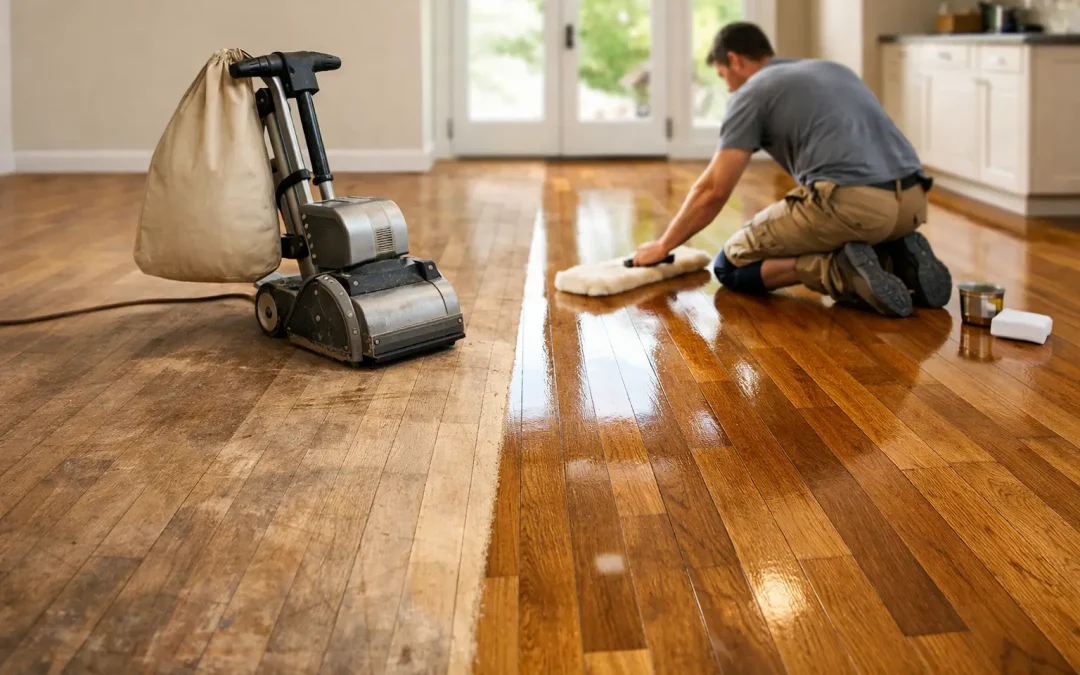
Scratches that catch the light, worn finish in traffic lanes, dull boards near entryways – these are usually the signs that send homeowners looking for wood floor refinishing results they can actually count on. The real question is not whether refinishing can improve a floor. It is how much improvement to expect, what changes are realistic, and what kind of finish will hold up best in a busy Gainesville-area home.
What good wood floor refinishing results look like
Strong wood floor refinishing results should be easy to see the moment you walk into the room. The floor should look cleaner, richer in color, more even in sheen, and smoother underfoot. Surface scratches are typically removed, dull areas regain clarity, and old finish buildup is replaced with a fresh protective layer that brings the wood back to life.
That said, refinishing is restoration, not magic. Deep gouges, black water stains, sun fading, board movement, and past repairs may still leave some visible character. In many homes, that is not a failure. It is the difference between a floor that still looks like real wood and one that looks overly processed. The best result is usually a floor that looks renewed, not artificially new.
The biggest changes homeowners usually notice
Color becomes more consistent
One of the most noticeable improvements is color balance. Years of wear can leave some areas faded and others darkened by dirt, old coatings, or past spot repairs. During refinishing, that uneven look is reduced as the old finish is removed and a new stain or clear coat is applied more uniformly.
If you are changing stain color, results depend on the wood species and the floor’s history. Oak often accepts stain well and offers more flexibility. Maple can be more challenging and may show variation more easily. Floors with patchwork repairs may also absorb stain differently from board to board.
The floor feels smoother
A properly refinished floor should not feel rough, sticky, or gritty. It should feel level and clean, with a finish that is consistent across the room. Small surface damage is usually corrected during sanding, and the final coating should cure into a smooth, durable surface.
If a homeowner expects every board to feel perfectly flat, that is where expectations need to stay realistic. Older wood floors often have natural movement, slight cupping, minor gaps, or age-related texture. Refinishing improves the surface significantly, but it does not erase every sign of the floor’s age.
Light reflects more evenly
When a finish wears down, floors start to reflect light unevenly. You may see cloudy patches, dull traffic paths, or shinier edges where rugs once sat. After refinishing, that blotchy reflection is replaced by a more consistent look. Whether the chosen finish is matte, satin, semi-gloss, or gloss, the sheen should appear intentional and even.
In Florida homes, natural light can be intense. That means sheen choice matters. A higher-gloss finish can look striking, but it can also show dust, footprints, and minor imperfections more easily. Satin and matte finishes are often more forgiving for daily living.
What refinishing can fix and what it cannot
A lot of confusion around wood floor refinishing results comes from not knowing where restoration ends and replacement begins. Refinishing is highly effective for finish wear, minor to moderate scratches, surface dullness, discoloration in the top coating, and general aging. It can also improve the appearance of many stains if they have not penetrated too deeply into the wood.
It may not fully correct severe pet stains, deep water damage, termite damage, major warping, or boards that have become structurally weak. Some floors also have limited sanding life left, especially if they have been refinished multiple times before. In those cases, partial board replacement or more targeted repair may be part of the best path forward.
This is why a professional evaluation matters. Homeowners often assume a floor needs full replacement when it can be restored, or assume it can be sanded back to perfect when some damage has gone too far. The right recommendation depends on the wood, the wear pattern, and the condition below the finish.
How long wood floor refinishing results last
In a typical home, wood floor refinishing results can last for years, but lifespan depends on traffic, maintenance, pets, moisture exposure, and finish type. A formal living room may hold its appearance far longer than a kitchen, hallway, or family room where daily foot traffic is constant.
The finish itself plays a major role. Some coatings prioritize natural appearance, while others are chosen for stronger wear resistance. A busy household with kids, dogs, and frequent guests usually benefits from a finish selected for durability first and appearance second. In lower-traffic spaces, homeowners may have more flexibility to prioritize a specific look.
Maintenance also makes a real difference. Grit tracked in from outside acts like sandpaper. Wet mopping, harsh cleaners, and neglected spills shorten the life of a finish. Simple care habits help preserve the investment and keep the restored surface looking better longer.
Why some results look better than others
Preparation matters as much as the final coat
The visible finish is only part of the job. Lasting results come from proper sanding technique, thorough dust removal, attention to edges, and choosing the right coating system for the space. If prep work is rushed, the final floor may show swirl marks, uneven stain absorption, debris in the finish, or premature wear.
Wood species and age affect the outcome
Not every floor responds the same way. Red oak, white oak, pine, maple, and engineered wood all have different grain patterns, hardness, and finishing behavior. Older floors may have hidden repairs, previous stain layers, or boards that react differently across the room. Good refinishing works with those conditions instead of pretending they do not exist.
Moisture conditions cannot be ignored
In North Central Florida, humidity matters. Wood naturally expands and contracts, and that movement can affect appearance over time. If a floor already has moisture-related issues, refinishing alone will not solve the root problem. Addressing indoor moisture patterns and protecting the floor afterward is part of getting better long-term results.
Setting realistic expectations before the job starts
The best refinishing projects begin with clear expectations. Homeowners should know whether the goal is restoring the original wood tone, changing the color, minimizing visible wear, or preparing the home for sale. Those goals influence product choice, sheen level, and how success should be measured.
For example, a family that wants a practical, durable finish for everyday use may be happiest with a low-luster coating that hides dust and minor scratches. A homeowner focused on visual impact may prefer a richer stain or higher sheen, even if that means more upkeep. Neither choice is wrong. The right result is the one that matches how the space is actually used.
Before-and-after photos are helpful because they show the kind of transformation that is realistic. They also help homeowners distinguish between dramatic improvement and impossible perfection.
When refinishing is worth it
Refinishing is often worth it when the wood itself is still in good condition but the surface has lost its protection and appearance. Compared with full replacement, restoration usually preserves more of the home’s original material, avoids unnecessary demolition, and can deliver a strong visual upgrade at a lower overall cost.
It is especially worthwhile in homes where solid hardwood floors are a real asset. Bringing them back can improve how the entire interior feels. Clean, renewed wood floors make furniture look better, brighten the room, and give the home a more cared-for appearance.
For homeowners in Gainesville and nearby communities, that value is not just cosmetic. Proper restoration and protection can extend the life of the floor and delay much more expensive work down the road.
Choosing a professional for better wood floor refinishing results
If you want reliable wood floor refinishing results, look for more than a low price. Ask whether the company evaluates damage honestly, explains what can and cannot be improved, and has clear before-and-after proof of similar work. You want a team that understands restoration, not one that treats every floor the same.
A dependable contractor should also explain finish options in plain language and recommend a system based on your home’s traffic, your maintenance expectations, and the condition of the floor. That practical guidance matters just as much as the sanding equipment.
Natural Surface Restoration works with homeowners who want to preserve valuable surfaces instead of replacing them too soon. When wood floors are refinished correctly, the result is not just a better-looking room. It is a floor that feels protected, cared for, and ready for daily life again.
If your floors are worn but still worth saving, the smartest next step is a professional assessment. A clear estimate and an honest opinion can tell you very quickly whether your floor needs replacement, repair, or the kind of refinishing that brings out its best years again.