
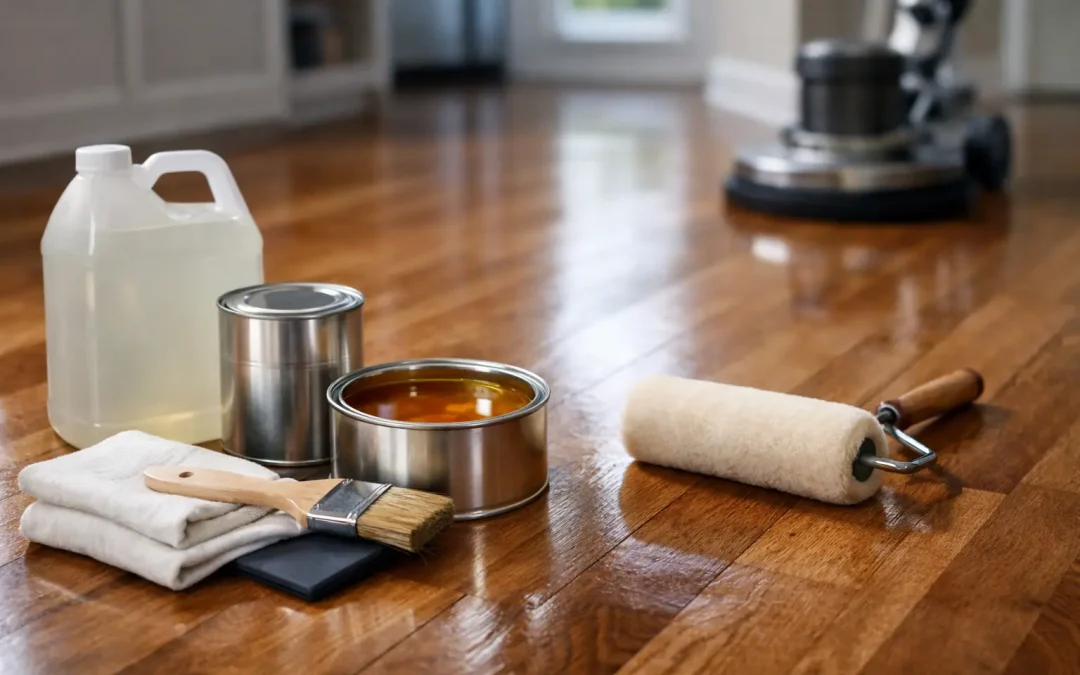
A hardwood floor can look completely different after refinishing, even when the stain color stays the same. The best finish for hardwood floors determines how the floor handles scratches, Florida humidity, sunlight, spills, and the daily traffic that comes with a busy home. It also affects whether the wood looks warm and traditional, light and natural, glossy, or softly matte.
For most Gainesville-area homes, a high-quality water-based polyurethane in a satin or matte sheen offers the strongest balance of durability, appearance, and practical maintenance. That does not make it the right answer for every floor. Wood species, existing finish, household activity, and the look you want all matter before a finish is selected.
The Best Finish for Hardwood Floors in Most Homes
Water-based polyurethane is often the best all-around choice for hardwood floors because it creates a durable protective film without adding much amber color to the wood. It works especially well on lighter woods, gray or natural stain colors, and homes where homeowners want the grain to stay clear and true to its original tone.
Modern water-based finishes have come a long way. Professional-grade products are far more durable than many homeowners remember from older water-based coatings. They resist ordinary scuffs, dry faster than oil-based products, and have a lower odor during application. Faster drying can also mean less disruption inside the home, although every floor still needs adequate cure time before rugs, furniture, and heavy use return.
A two-component water-based polyurethane is usually the strongest version of this option. A professional adds a hardener to the finish, improving its resistance to abrasion, household chemicals, and wear. It is a smart fit for active households, homes with pets, and high-traffic areas such as living rooms, hallways, and kitchens with hardwood flooring.
Why Satin Is Usually the Right Sheen
The sheen is not the same as the finish type. It describes how much light the floor reflects after the coating cures. Glossy floors reflect the most light, while matte floors reflect the least.
Satin is the most practical sheen for many homeowners because it gives hardwood a clean, finished appearance without showing every small scratch, footprint, or dust line. Semi-gloss can create a more formal look, but it often reveals surface wear sooner, particularly near exterior doors and in sunny rooms. Matte has become popular for its natural, low-reflection appearance and can hide minor imperfections well, although it may not fit every traditional interior.
The best choice depends partly on the floor’s condition. A floor with character marks, minor unevenness, or an older wood grain often looks more forgiving in satin or matte. A newly installed floor with a smooth, formal look may suit semi-gloss if the homeowner accepts the added upkeep.
Water-Based vs. Oil-Based Polyurethane
Oil-based polyurethane remains a dependable finish and is still a good choice in the right setting. It creates a warm amber tone that deepens as it ages. On red oak, white oak, pine, and many traditional hardwood floors, that warmth can be exactly what a homeowner wants.
Oil-based polyurethane generally takes longer to dry and cure, and it has a stronger odor during the refinishing process. It can also yellow noticeably over time, which is less appealing when the goal is a pale, modern, or natural wood color. In exchange, it offers a rich look and proven durability.
Water-based polyurethane stays much clearer. It is often preferred when preserving the lighter appearance of white oak, maple, or a custom stain is the priority. It also allows refinishing work to move more quickly between coats. Neither option is automatically better in every home. The decision comes down to the desired color, schedule, ventilation, and level of expected traffic.
When Oil-Based Polyurethane Makes Sense
Oil-based polyurethane can be a strong fit for a homeowner who wants a classic golden tone, has enough time for longer drying and curing, and is refinishing a floor with an established warm appearance. It may also be appropriate where matching the color of existing oil-finished wood is important.
A careful evaluation matters here. Changing from an oil-based look to a clear water-based look can make new work appear different from adjacent wood, trim, or areas that are not being refinished.
When Water-Based Polyurethane Is the Better Fit
Water-based polyurethane is usually the better fit for busy households, lighter stains, and projects where low odor and a shorter turnaround are priorities. It is also a practical option for homes where sunlight reaches the floors daily, since its clear appearance does not add the same amber cast as an oil-based product.
Sunlight can still alter the wood itself. No finish fully stops natural color change, especially on species that darken or lighten with age. Window treatments and rugs that are moved periodically can help prevent dramatic color differences across the floor.
What About Hardwax Oil Finishes?
Hardwax oil finishes have a distinct look and feel. Instead of building a thicker film on top of the wood, they penetrate the surface and leave a more natural, hand-rubbed appearance. They are popular in homes aiming for an understated European style, especially with wide-plank white oak floors.
One advantage is repairability. A small damaged area can sometimes be cleaned, lightly prepared, and touched up without refinishing the entire room. That can be appealing for homeowners who want a finish that is easier to maintain in sections.
The trade-off is that hardwax oil is not always the best choice for every high-use area. It requires the right maintenance products and prompt cleanup of spills. Standing water, neglected pet accidents, and frequent wet mopping can cause problems. A homeowner who wants the most forgiving finish for a kitchen entry, family room, or pet-heavy home may be better served by a professional-grade polyurethane system.
Finish Selection Should Start With the Floor Itself
The species and condition of the hardwood should guide the refinishing plan. Maple, for example, can be difficult to stain evenly. Oak has an open grain that accepts stain differently and often shows beautiful grain detail under either water- or oil-based polyurethane. Older floors may have previous repairs, stains, gaps, or wear patterns that affect what can realistically be achieved.
The existing coating matters just as much. A floor cannot simply receive a new finish because it looks dull. Wax residue, silicone-based cleaners, contamination, or an incompatible coating can prevent a new finish from bonding correctly. In some cases, a screen and recoat is enough to restore protection. In others, full sanding is necessary to remove worn finish, flatten damage, address discoloration, and build a new finish system properly.
This is why a small test area and professional assessment are worthwhile before work begins. The least expensive option is not always the one that protects the floor. Applying a new coating over a surface with poor adhesion can lead to peeling, flaking, and another refinishing project much sooner than expected.
Florida Humidity Changes the Conversation
In North Central Florida, humidity control is part of hardwood floor care. Wood expands and contracts with changes in moisture, and significant swings can contribute to gaps, cupping, or finish stress. A quality finish protects against everyday spills and surface moisture, but it cannot correct moisture entering from below the floor or repeated exposure to wet conditions.
Keep indoor humidity as stable as practical, use mats at exterior doors, and wipe up water promptly. Avoid soaking hardwood with a wet mop or steam cleaner. Even the best finish is a protective layer, not a license to treat wood like tile.
For homeowners in Gainesville and surrounding communities, Natural Surface Restoration can evaluate worn hardwood floors and recommend whether cleaning, recoating, restoration, or full refinishing is the right next step. The goal is not simply to make the floor look better for a few weeks. It is to restore protection that holds up to the way your home is actually used.
A well-chosen finish should make daily life easier: a floor that keeps its color, handles normal traffic, and still looks like real wood rather than a surface you are afraid to walk on.