
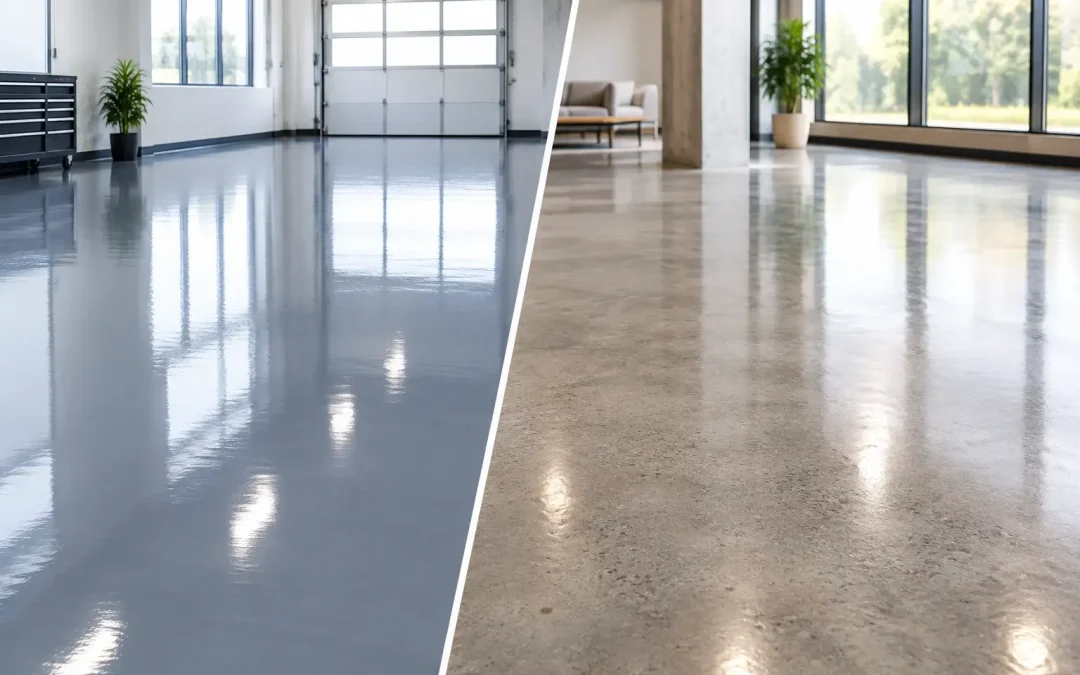
A garage floor that is peeling at the hot-tire marks needs a different solution than a living room slab with years of carpet adhesive and paint stains. That is why the epoxy versus polished concrete floors decision should start with how the space is used, the condition of the concrete, and what you expect from the finished surface.
Both options can make plain concrete look cleaner, brighter, and easier to maintain. They get there in very different ways. Epoxy creates a protective coating over the slab. Polished concrete refines the concrete itself through mechanical grinding, densifying, and polishing. For Gainesville-area homeowners, moisture conditions, indoor-outdoor traffic, and the age of the slab can make that distinction especially important.
Epoxy Versus Polished Concrete Floors: The Core Difference
Epoxy is a resin-based coating system applied to prepared concrete. Depending on the system, it may include a colored base coat, decorative flakes, metallic effects, and a clear protective topcoat. The final look can be highly uniform and customized, from a clean solid gray garage floor to a more decorative finish.
Polished concrete does not cover the concrete with a thick film. The surface is mechanically ground to remove imperfections, then treated with a densifier that helps harden the slab. Successive polishing steps create the desired sheen, from a low-sheen honed appearance to a reflective gloss. Existing aggregate, color variation, repairs, and the history of the slab may remain visible.
Neither approach is automatically better. Epoxy is often chosen when a homeowner wants a specific color or a fully covered appearance. Polished concrete is often the stronger fit when the goal is a long-lasting, natural-looking floor that works with the slab rather than hiding it.
Appearance: Uniform Color or Natural Character?
An epoxy floor is a finish choice first. It can deliver a consistent color across a garage, workshop, utility room, or converted interior space. Decorative flakes are particularly popular because they help camouflage dust and minor marks while adding visual depth. If your concrete has patching, discoloration, or an uneven appearance that you do not want to see, an opaque coating can conceal much of it.
Polished concrete has more natural variation. Grinding may expose small stones in the slab, old repair areas, subtle aggregate, or tonal differences from one section to another. This is part of its appeal in contemporary homes, open living areas, and spaces with a clean, architectural style. It is not the right choice if you want every square foot to look identical.
The key is to set realistic expectations before work begins. A concrete slab is not a manufactured tile. Even after careful restoration, it may show the story of how it was poured, used, repaired, and maintained over the years.
Durability and Daily Wear
A properly installed epoxy system can stand up well to vehicles, tools, storage cabinets, and everyday garage traffic. However, coatings depend on adhesion. If the concrete was not properly prepared, if moisture vapor moves up through the slab, or if the coating system is not suited to the environment, epoxy can blister, delaminate, or peel.
Polished concrete has no thick coating layer to peel away. Because the work strengthens and refines the existing surface, it performs well under foot traffic and is less vulnerable to tire pickup or scratched coating edges. It can still scratch, stain, or chip if abused, but wear tends to develop gradually rather than failing as a film layer can.
For rooms with frequent furniture movement, pets, or steady foot traffic, polished concrete offers a practical balance of durability and easy care. For a garage where a fully protected, color-controlled finish is the priority, epoxy may be worth considering after a close review of the slab and moisture conditions.
Florida moisture changes the conversation
Concrete is porous, and slabs can transmit moisture from below. In North Central Florida, humidity and ground moisture make moisture evaluation a practical part of any coating decision. A floor may look dry at the surface yet still release enough vapor to affect some epoxy systems over time.
Polished concrete is breathable compared with a continuous coating, although it still requires appropriate cleaning and protection. It is not immune to moisture-related staining or other slab issues, but it does not rely on a bonded film in the same way epoxy does. If there are signs of moisture, such as whitening deposits, dark damp-looking areas, previous coating failure, or musty odors, address that issue before choosing a finish.
Cleaning and Maintenance Expectations
Both floor types are easier to clean than raw, dusty concrete. The maintenance routine is different.
Epoxy floors need regular sweeping and occasional mopping with a cleaner that will not dull or damage the topcoat. Abrasive pads, harsh degreasers, and some chemical spills can affect the finish. Over time, high-use areas may need a new topcoat or repair, particularly if the floor receives direct sunlight, vehicle traffic, or impact from heavy equipment.
Polished concrete benefits from dust mopping and damp mopping with a neutral cleaner. Avoid acidic cleaners, aggressive degreasers, and soap-heavy products that leave a dulling film. A polished floor may eventually need professional maintenance polishing or resealing in heavy-use areas, but its care routine is generally straightforward.
Neither finish is maintenance-free. The best choice is the one you can maintain consistently without using products that shorten its life.
Slip Resistance and Comfort Underfoot
A glossy floor can look slippery, but appearance alone does not determine traction. Epoxy systems can be adjusted with texture or aggregate additives for improved grip. That is especially valuable in garages, pool-adjacent entries, workshops, and spaces where wet shoes are common. The trade-off is that more texture can make mopping slightly more involved.
Polished concrete can also be specified at different sheen levels. A lower-sheen finish is often a sensible choice where practical traction matters more than a mirror-like reflection. Any hard floor can become slippery when water, oil, or cleaning residue is present, so a realistic discussion of the room’s use matters more than choosing the shiniest finish.
Both epoxy and polished concrete are hard surfaces. Area rugs, anti-fatigue mats near workbenches, and furniture pads can improve comfort and protect the floor in the places that receive the most use.
Cost Factors That Matter More Than Square Footage
It is tempting to compare only the advertised cost per square foot, but concrete preparation often determines the real scope of work. Old adhesives, failed paint, coatings, cracks, spalling, oil contamination, uneven patches, and moisture concerns can all change the process.
Epoxy costs vary based on the coating system, decorative effects, needed repairs, and the level of concrete profiling required for adhesion. A low-cost coating applied over poorly prepared concrete may look good at first and become expensive when it fails early.
Polished concrete costs depend on the condition and hardness of the slab, the level of aggregate exposure, repair requirements, and the desired sheen. A heavily damaged slab may require extensive grinding and patching. A sound slab with a realistic desired finish can become an attractive long-term surface without the need to cover it.
A professional assessment should look beyond surface appearance. The right question is not simply, “Which floor costs less?” It is, “What will this slab need to perform well in this room?”
Which Option Fits Each Space?
Epoxy commonly fits garages, workshops, utility areas, and hobby spaces where color consistency, chemical resistance, and a clearly defined coating system are priorities. It can be an appealing answer for concrete that needs a more decorative, covered appearance.
Polished concrete is often well suited to living areas, hallways, kitchens, enclosed patios, and other rooms where homeowners want a clean, durable surface with a natural finish. It also makes sense for homeowners who prefer the look of real concrete and want to avoid a coating layer that may need more frequent renewal.
For either choice, do not make the decision from a photo alone. The same finish can behave differently on a new garage slab, a decades-old interior floor, or concrete that has been exposed to moisture and previous coatings.
Natural Surface Restoration helps homeowners evaluate concrete condition and determine whether professional polishing is the right path for restoring and protecting their floors. A careful inspection can reveal what the slab can become, helping you choose a finish that will look right and hold up in the way your home is actually used.