
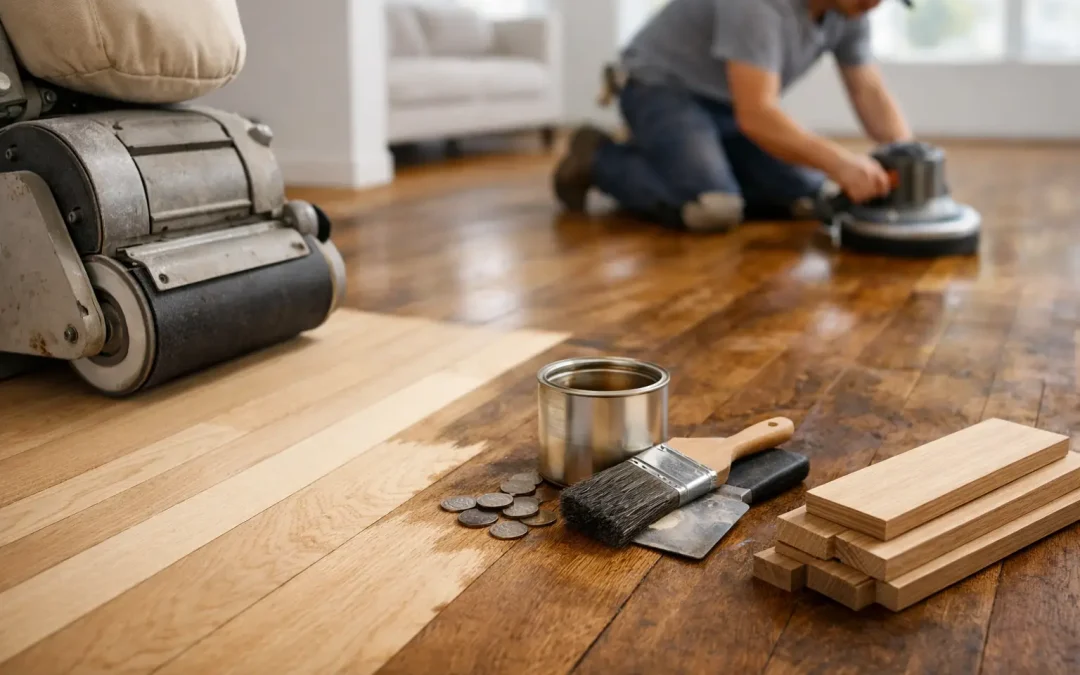
A hardwood floor can make an entire room feel clean, warm, and well cared for – until wear starts to show. Scratches near doorways, dull traffic paths, water marks around sinks, or uneven finish can quickly raise the same question for homeowners: what is the real hardwood floor restoration cost, and is it worth it compared to replacement?
For most homes, restoration is the more practical investment. It protects the material you already have, improves appearance, and extends the life of the floor without the disruption and expense of tearing everything out. The exact price depends on the condition of the wood, how much repair work is needed, the type of finish being applied, and whether the floor has been restored before.
What affects hardwood floor restoration cost?
The biggest pricing factor is the condition of the floor when the work begins. A floor with light surface wear and a faded finish is a very different project from one with deep gouges, water damage, pet stains, cupping, or loose boards. In simple terms, the more correction required before the finish can be restored, the more labor goes into the job.
Square footage matters too, but not always in the way homeowners expect. Larger areas usually lower the cost per square foot because setup, edging, masking, and cleanup are spread across more space. Smaller jobs can carry a higher per-foot rate because many of the same preparation steps still have to happen.
Wood species also plays a role. Some floors sand and finish more predictably than others. Older hardwood can be beautiful to restore, but it may also need more careful handling if boards are thin, uneven, or previously sanded down too far. Engineered wood adds another layer of caution because the wear layer may limit how aggressively the surface can be restored.
Then there is the finish itself. A basic sand-and-refinish process will cost less than a restoration that includes stain changes, custom color matching, sheen adjustments, board replacement, or repair of isolated damaged areas. If homeowners want a natural low-sheen look, the pricing may differ from a darker stained finish that requires more steps to achieve an even result.
Typical hardwood floor restoration cost ranges
In most cases, homeowners can expect hardwood floor restoration cost to be priced by the square foot, with adjustments for repair complexity and finish selection. Light restoration or screening and recoating is usually less expensive than full sanding and refinishing because it removes less material and involves fewer corrective steps.
A simpler refresh may make sense when the finish is worn but the boards themselves are still in good shape. That type of service can improve appearance and add protection, but it will not remove deeper scratches, discoloration, or damage embedded in the wood.
A full restoration is more involved. It typically includes sanding the floor down, correcting surface wear, addressing minor imperfections, and applying new finish coats. If repairs are needed before finishing, the cost rises because those repairs have to be completed carefully so the restored area blends with the existing floor.
For homeowners comparing restoration against replacement, this is where the value becomes clearer. New hardwood installation often includes demolition, disposal, new material costs, subfloor prep, installation labor, and finishing. Restoration skips much of that and preserves the character of the original floor.
When the price goes up
Some floor conditions move a project out of the standard pricing range. Water damage is one of the most common reasons. Dark staining, warped boards, and moisture-related movement often require more than sanding alone. In some cases, damaged sections need to be removed and replaced before the floor can be restored properly.
Pet damage can have a similar effect. Surface scratches are one thing, but urine staining that has penetrated the wood can be much harder to correct. Depending on how deep the discoloration goes, some boards may need replacement to achieve a clean and consistent result.
Furniture removal, trim work, stair restoration, and tight room layouts can also affect cost. Open spaces are usually more efficient to restore than rooms broken up by many corners, closets, transitions, or built-ins. Stairs almost always require more hand work, which makes them more labor-intensive than flat floor areas.
Older floors may bring another variable: previous restoration history. If a floor has already been sanded multiple times over the years, there may be less wood available to work with. A professional assessment matters here because not every worn floor should be treated with the same process.
Why estimates vary from one company to another
Homeowners sometimes receive estimates that are surprisingly far apart for what seems like the same service. Usually, that gap comes down to scope. One estimate may cover basic refinishing only, while another includes surface prep, minor repairs, finish coats, cleanup, and protection recommendations after the work is complete.
Equipment, dust control practices, finish quality, and experience also matter. A lower estimate may leave out steps that help produce a more even, longer-lasting result. On the other hand, the highest estimate is not automatically the best value if it includes services the floor does not actually need.
That is why a site visit is so important. Hardwood restoration is not a product sitting on a shelf with one fixed price. It is a condition-based service. A reliable estimate should reflect the actual floor, the actual damage, and the finish goals for that home.
Restoration vs. replacement
If the floor is structurally sound, restoration is usually the better path. It costs less than replacement in many cases, creates less disruption, and keeps original hardwood in place. For homeowners who care about preserving the look and value of their home, that can be a smart long-term decision.
Replacement makes more sense when the floor has severe structural damage, widespread moisture failure, or material that cannot be restored effectively. Even then, it is worth getting a professional opinion before assuming replacement is the only option. Many floors that look beyond help can still be brought back with the right process.
This is especially true in established homes where original wood flooring adds character that newer material may not match. Restoring what you already have often produces a better visual result than piecing in a completely different product.
How Gainesville homeowners should think about cost
In Florida homes, traffic patterns, humidity, entryway wear, and occasional moisture exposure all influence floor condition. A hardwood floor in a formal dining room may need very different work than a floor near a patio door or kitchen transition. That is why local evaluation matters more than broad online averages.
For homeowners in Gainesville and surrounding areas, the best way to judge hardwood floor restoration cost is to look beyond the number alone. Ask what level of repair is included, what finish system is being used, and whether the recommendation fits the actual wear on the floor. A good restoration plan should solve the problem you have now while helping protect the surface for the years ahead.
Natural Surface Restoration works with homeowners who want to preserve quality surfaces instead of replacing them too soon. That same mindset applies to wood floors. When restoration is done correctly, the result is not just a cleaner look. It is a floor that feels renewed, better protected, and more in line with the rest of the home.
Getting the best value from a restoration project
The best value rarely comes from chasing the lowest price. It comes from matching the right restoration method to the floor’s condition. If the finish is only lightly worn, a less invasive service may be enough. If the damage runs deeper, cutting corners can leave you paying for another fix sooner than expected.
It also helps to act before wear gets severe. Homeowners often wait until scratches, staining, and dull areas become impossible to ignore. By that point, the floor may need more correction than it would have if the finish had been addressed earlier. Preventive care and timely restoration usually cost less than waiting for visible damage to spread.
If you are looking at worn hardwood and wondering whether it can be saved, the most useful next step is a professional estimate based on the actual condition of your floor. A clear assessment gives you a realistic price, a realistic scope of work, and the confidence to decide whether restoration is the right move for your home.