
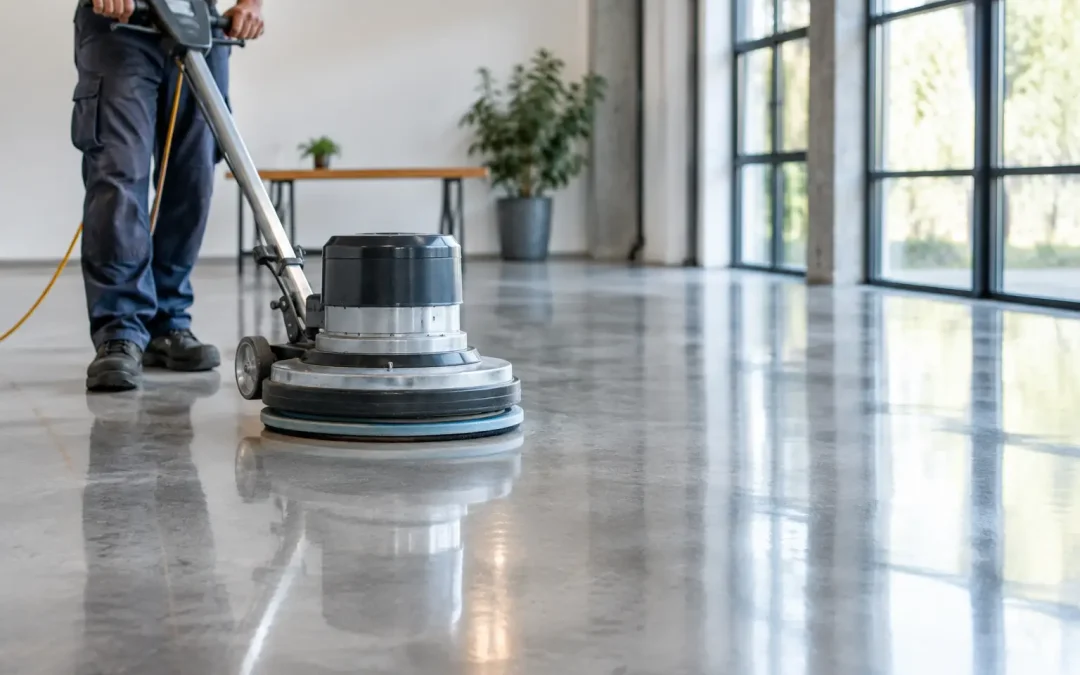
A concrete slab can be one of the strongest design features in a home, but only when its condition supports the look you want. Indoor concrete floor polishing can transform a dusty, blotchy, or unfinished-looking floor into a clean, reflective surface that is easier to maintain. It is not a cover-up, though. Polishing reveals the concrete beneath it, including its character, variation, and any limitations.
For homeowners in Gainesville and across North Central Florida, polished concrete is often a practical choice for living areas, kitchens, hallways, converted garages, and modern additions. The key is understanding what polishing can improve, what it will leave visible, and how the floor should be prepared before the first polishing pass begins.
What Indoor Concrete Floor Polishing Actually Does
Concrete polishing is a mechanical process. The floor is refined with professional diamond abrasives in a series of passes, moving from more aggressive grinding to finer polishing. A densifier is typically applied during the process to harden the surface and help create a tighter, more durable finish.
The result is not paint, epoxy, or a surface coating sitting on top of the slab. It is the concrete itself, honed and polished to the selected level of sheen. That distinction matters because a polished floor will not peel the way a failed coating can. It also means existing features in the slab may remain part of the finished appearance.
A low-sheen polish can give a home a natural, refined look with less visible reflection. A higher-gloss finish produces more light reflection and a more contemporary appearance, but it can show tracked-in dirt, pet hair, and moisture more readily. The best finish depends on the room, the available natural light, and how much daily activity the floor receives.
Is a Polished Concrete Floor a Good Fit for Your Home?
Polished concrete works especially well when the existing slab is structurally sound and relatively level. It is a strong option for homeowners who want a long-lasting floor without grout lines, carpet fibers, or a coating that may need frequent replacement. Once properly finished, the surface is dense, easy to sweep, and well suited to busy households.
It can also be a smart restoration choice when an older floor has been covered with worn carpet, dated vinyl, or failing tile. Removing those materials sometimes reveals concrete with enough potential to become the finished floor rather than another surface that needs to be installed over it.
Still, polished concrete is not the right answer for every slab. Deep cracks, major spalling, moisture-related damage, uneven patchwork, and old adhesive can affect the final appearance. Repairs can improve those areas, but they rarely disappear completely. Homeowners who want a perfectly uniform, solid-color floor may be happier with another flooring system or a decorative concrete treatment designed to create more visual consistency.
The Details That Shape the Final Result
No two concrete slabs polish exactly the same way. Even rooms poured at the same time can vary in color, hardness, aggregate exposure, and surface condition. A professional assessment before work begins helps set realistic expectations and determines the right restoration approach.
Aggregate Exposure
As concrete is ground, it may reveal sand, small stone, or larger aggregate within the slab. Light polishing may keep most of the surface cream intact, creating a softer, more uniform appearance. Deeper grinding can expose more aggregate for a terrazzo-like look.
Neither option is automatically better. Keeping the surface cream may preserve a warmer, more subtle floor, while aggregate exposure adds movement and visual texture. The condition of the slab often determines how much grinding is needed before polishing can begin.
Cracks, Patches, and Previous Flooring
Concrete repairs are part of many indoor restoration projects. Cracks can be filled and stabilized, and holes or damaged sections can be repaired. However, repair materials usually differ in color and texture from the surrounding concrete. This is normal and should be viewed as part of the floor’s character rather than a flaw in the polishing work.
Old carpet glue, thinset from tile, paint overspray, and mastic may also require extra removal. Some residues come off cleanly, while others have penetrated the slab and may leave slight discoloration. A floor should be evaluated after existing coverings are removed whenever possible, since that is when its true condition becomes clear.
Desired Sheen and Room Use
A polished floor does not have to look glossy. Sheen levels range from matte or satin to a highly reflective finish. A satin finish is often a practical choice for family rooms, kitchens, and high-traffic areas because it delivers a clean, finished appearance without emphasizing every smudge.
Higher sheen can be an excellent fit for a formal entry, showroom-style space, or a home with abundant light. It requires the same basic cleaning habits, but its reflectivity makes surface dust more noticeable between cleanings. Choosing the right sheen is about balancing appearance with the way your household actually uses the room.
What the Polishing Process Looks Like
A quality concrete polishing project begins with preparation, not shine. The floor is inspected for damage, coatings, contaminants, and areas that need repair. Any existing material that could interfere with the process must be removed, and the surface is cleaned before grinding starts.
The restoration team then uses diamond tooling to open the surface, level minor imperfections where appropriate, and refine the concrete. The number of passes depends on the slab’s condition and the finish selected. A densifier is applied once the concrete is ready, helping strengthen the surface and support a clearer polish.
From there, progressively finer abrasives develop the desired sheen. Edges and tight areas receive detailed attention so the floor has a consistent appearance from the center of the room to the perimeter. Final cleaning and protective treatment help prepare the surface for regular use.
The process can create dust, but professional equipment should use effective dust-control measures. Homeowners should also expect some disruption, especially when flooring removal, repairs, or extensive adhesive removal is involved. Moving furniture out of the work area and planning access around the project helps the work proceed efficiently.
Caring for a Polished Concrete Floor
Polished concrete is low maintenance, not no maintenance. Dry dust mopping or vacuuming with a hard-floor setting removes grit that can dull any finished surface over time. For routine damp cleaning, use clean water or a pH-neutral cleaner recommended for polished concrete. Harsh acidic cleaners, bleach-heavy products, and abrasive powders can leave residue or affect the floor’s appearance.
Wipe spills promptly, particularly oils, wine, pet accidents, and strongly colored liquids. Although densified concrete is more resistant to staining than unfinished concrete, it is still porous to some degree. Entry mats and protective pads under furniture legs also reduce wear in high-traffic areas.
If a floor begins to lose clarity after years of use, it may not need replacement. Professional cleaning, reconditioning, or repolishing can often restore its appearance and extend its service life.
When Polishing May Not Be the Best Choice
Concrete polishing is best for homeowners who appreciate an authentic material with natural variation. If visible patching, hairline cracks, or color differences would be frustrating, a different finish may be a better fit. Similarly, slabs with ongoing moisture issues should be diagnosed before any restoration decision is made.
Comfort is another consideration. Concrete is hard underfoot and can feel cool, especially in bedrooms or spaces where people stand for long periods. Area rugs, runners, and thoughtfully placed mats can add comfort without hiding the floor’s visual impact.
The most successful projects begin with an honest evaluation of the slab and a clear plan for the finished look. Natural Surface Restoration helps homeowners assess whether their concrete can be polished, what level of restoration it needs, and what results are realistic before work begins. A well-prepared floor does more than look finished – it gives the home a durable surface built for everyday life.