
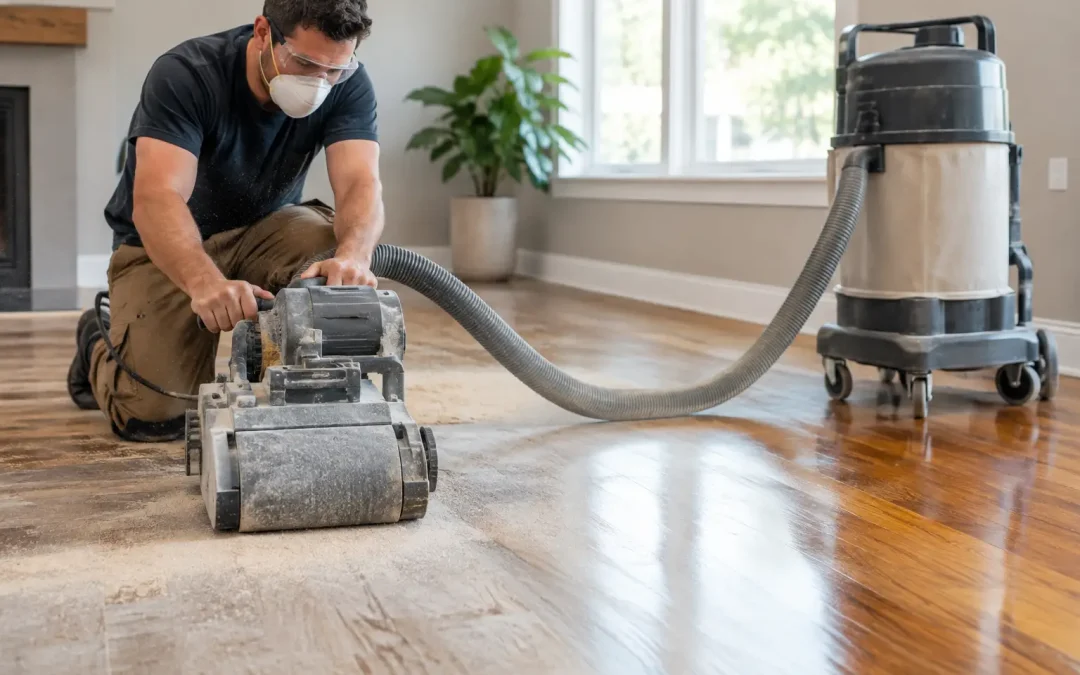
A worn wood floor can make an otherwise well-kept room feel tired. The good news is that refinishing can bring back the color, smoothness, and protective finish without replacing the floor. But homeowners often ask, does wood refinishing create dust? Yes, sanding wood floors creates fine dust. The bigger question is how much dust reaches the rest of your home and whether the contractor has the equipment and process to control it.
Modern dust-containment methods can make a major difference. Refinishing is not completely dust-free, but it should not leave your Gainesville home coated in a layer of wood powder, either. A careful process protects the work area, reduces airborne particles, and leaves the floor ready for a durable new finish.
Does Wood Refinishing Create Dust? What Actually Happens
Most refinishing projects involve sanding away the old finish and a very thin layer of damaged or discolored wood. This removes scratches, dull traffic paths, light stains, surface wear, and uneven finish buildup. Sanding is the part of the process that creates dust.
The amount depends on the floor’s condition, the type of wood, the existing coating, and the level of restoration needed. A floor with a heavy polyurethane finish, wax residue, pet scratches, or uneven boards may need more passes with sanding equipment than a floor that simply needs a light refresh.
Fine wood dust is different from ordinary household dust. It can settle on nearby furniture, work its way into small gaps, and become a nuisance for anyone with allergies or respiratory sensitivities. That is why professional containment matters. The goal is not to pretend sanding produces nothing. The goal is to capture dust as it is created and keep the project isolated from the rest of the home.
Why Older Refinishing Jobs Had a Dusty Reputation
Many homeowners remember floor sanding as a messy process because, years ago, it often was. Older belt sanders and edge sanders frequently released dust directly into the room. Open windows and box fans might have moved some particles outside, but they could also spread fine dust into hallways, adjoining rooms, or HVAC returns.
Today, professional sanding equipment can be connected to high-powered vacuum systems that collect dust at the source. This does not eliminate every particle, especially around edges, corners, vents, transitions, and detailed trim work. Still, it dramatically reduces the mess compared with traditional open sanding.
A responsible refinishing crew also treats dust control as more than a machine feature. It includes preparing the room correctly, sealing off adjacent spaces when needed, protecting immovable items, checking airflow, and cleaning carefully between stages. Equipment helps, but the crew’s habits determine how well the home is protected.
What Dust Containment Should Look Like
Before refinishing begins, the room should be cleared as much as possible. Furniture, rugs, curtains close to the floor, decorative items, and personal belongings should be removed. This is not only about protecting those items from dust. An empty room gives the technician clear access to the entire floor, including edges and traffic areas that are commonly missed in partial setups.
Doorways and openings may be covered with plastic containment barriers, particularly when the room connects to bedrooms, kitchens, or other lived-in areas. HVAC vents in the work zone should be addressed so the system does not pull airborne dust through the house. The exact approach depends on the layout of the home, the location of returns and supplies, and whether the project involves one room or a connected floor plan.
During sanding, vacuum-assisted equipment captures the majority of material directly from the floor. Edge work and hand work can create some additional dust because these areas require smaller tools. After sanding, the floor and surrounding work area should be thoroughly vacuumed before stain or finish is applied.
If a contractor says the work will be completely dust-free, ask what that means in practical terms. No sanding project is literally free of dust. A better answer explains the containment system, the equipment being used, what will be sealed off, and what level of cleanup you can expect when the work is complete.
The Finish Stage Can Affect Indoor Air Too
Dust is only one part of planning a refinishing project. Once sanding is complete, the floor needs stain, sealer, or a protective topcoat. Some finishes have stronger odors and longer curing times than others. Water-based finishes generally dry faster and may have lower odor than many oil-based systems, but the right finish depends on the desired appearance, the wood species, the existing floor, and the level of durability needed.
For example, a homeowner may prefer the warmth and depth associated with a particular finish system, while another may prioritize a quicker return to normal use. High-traffic homes with children, pets, or frequent entertaining may need a finish selected for wear resistance and easier maintenance. There is no one-size-fits-all answer.
A professional should explain when you can walk on the floor, when furniture can be returned, and when rugs should go back down. Dry to the touch is not the same as fully cured. Moving furniture too early or covering a new finish with rugs can leave marks or interfere with proper curing.
How Homeowners Can Prepare for Less Cleanup
You do not need to manage the refinishing process yourself, but a little preparation helps keep the project orderly. Remove small items from the work area and nearby surfaces. Take down wall art or fragile decorations if they are close to the work zone. Clear closets when the flooring continues inside them, and plan a route through the home if the project affects a main hallway or living space.
If anyone in the household has asthma, severe allergies, or other respiratory concerns, mention that before the work is scheduled. This allows the contractor to discuss containment, ventilation, and whether it makes sense to stay elsewhere during the sanding and coating stages.
Pets should be kept away from the work area. Sanding equipment is loud, open doors can create escape risks, and fresh finishes are not a place for paws. It is also wise to cover or relocate sensitive electronics in adjacent spaces if they cannot be moved farther away.
After the project, wait until the contractor confirms that it is safe to return furniture and normal household activity to the room. Avoid sweeping aggressively with a dry broom during the first days after refinishing. A soft dust mop or vacuum approved for wood floors is usually the better choice once the finish has cured as directed.
When Refinishing May Not Be the Right Answer
Not every worn floor needs a full sand-and-refinish process. Some floors can be professionally cleaned and recoated if the protective finish is worn but the wood itself is still in good condition. This option can involve less disruption because it does not require sanding down to bare wood.
On the other hand, deep scratches, exposed bare wood, uneven color, water marks, cupping, loose boards, or previous coating failures may call for more extensive work. Engineered wood also requires special care because its top wear layer can be limited. Sanding it too aggressively can cause permanent damage.
That is why an in-person evaluation matters. A surface that looks dull may have finish buildup rather than damage. A dark area may be a stain that can be improved, or it may have penetrated deeply into the wood. The proper recommendation should be based on the floor in front of you, not a generic promise.
Choosing a Refinishing Team You Can Trust
When comparing estimates, ask direct questions about dust collection and jobsite protection. Find out whether vacuum-assisted sanding is used, how adjacent rooms are protected, what cleanup is included, and which finish system is recommended for your home. You should also ask about the expected schedule, curing time, and how the crew handles unexpected issues such as loose boards, old adhesive, wax contamination, or hidden damage.
Natural Surface Restoration helps homeowners across North Central Florida restore worn wood floors with a process focused on careful preparation, controlled sanding, and long-term surface protection. A clear assessment gives you a realistic picture of what your floor needs before work begins.
A beautiful refinished floor should not come with unnecessary chaos in the rest of your home. Ask for an estimate, discuss your household’s needs upfront, and choose a restoration plan that protects both your wood floors and the spaces around them.