
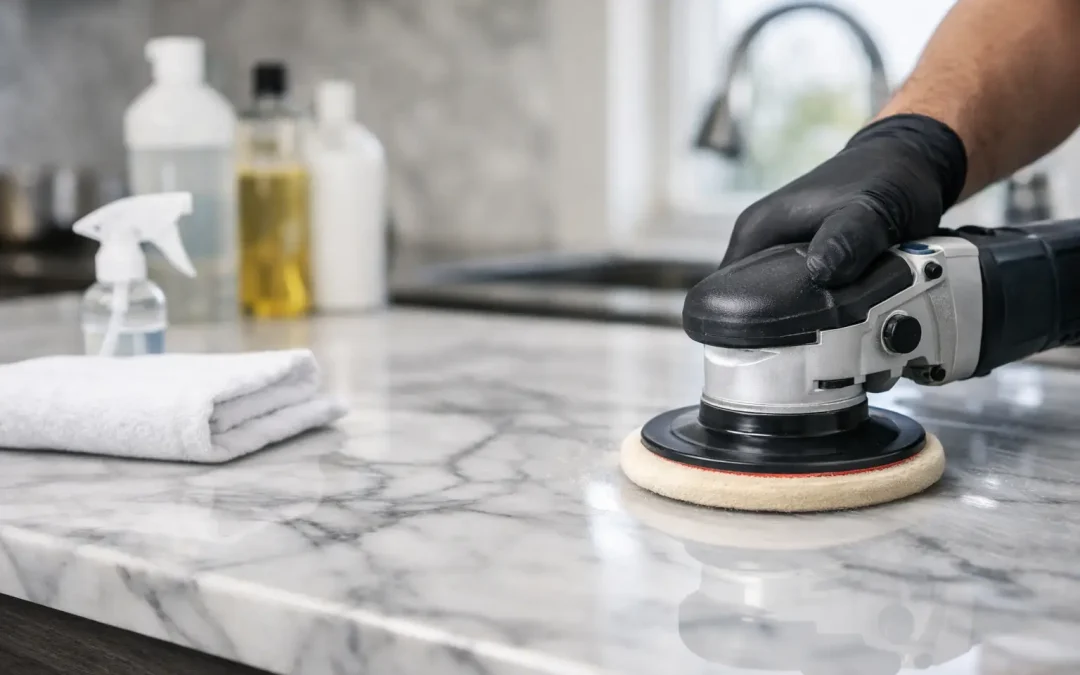
A marble kitchen or bathroom top can go from elegant to tired faster than most homeowners expect. One splash of lemon juice, a few years of daily use, or the wrong cleaner can leave the surface dull, etched, stained, or uneven. Marble countertop restoration is the right next step when the stone still has good life in it but no longer looks the way it should.
When marble stops looking clean even after you wipe it
This is where many homeowners get frustrated. They clean the countertop, but it still looks cloudy. They dry it, but the ring marks are still there. They polish it with an off-the-shelf product, and it may look better for a day or two, then the damage shows right back up.
That usually means the issue is not surface dirt. It is damage in the stone finish itself. Marble is softer and more reactive than granite, which is why acidic foods, harsh cleaners, and normal wear can change the surface over time. What looks like a stain may actually be etching. What looks like permanent dullness may be worn finish. Getting the fix right depends on identifying the problem correctly.
What marble countertop restoration actually fixes
Professional marble countertop restoration is designed to correct both appearance issues and surface wear. In many homes, the biggest problems are etch marks, light scratches, water rings, cloudy patches near sinks, and a general loss of shine. In kitchens, acidic spills from citrus, vinegar, wine, and tomato sauce are common causes. In bathrooms, personal care products, soap residue, and moisture can all affect the finish.
Restoration can also address minor lippage at seams, residue buildup, and some staining, although stains are a separate issue from etching. A dark spot caused by oil or a rust mark from metal contact may need a different treatment than a dull white ring caused by an acidic spill. That distinction matters because using the wrong product often makes the surface look worse, not better.
In most cases, the goal is not to make marble look artificially glossy. The goal is to return the stone to a clean, even, natural finish that fits the material and the room. Some homeowners prefer a high polish. Others want a softer honed look that hides future etching a little better. Both can be good choices. It depends on how the countertop is used and what level of maintenance the homeowner wants.
Why DIY marble repair often falls short
Marble is one of those materials that looks simple until it is not. A homeowner may try a cleaner, a polishing powder, or a rented machine and expect quick improvement. Sometimes that works on very light wear. More often, it creates a patchy finish where one area looks shinier, another area stays dull, and the whole top reflects light unevenly.
The challenge is control. Marble restoration is not just about making the stone shiny. It is about removing damage evenly, matching the existing finish, and protecting the surface without overworking it. Too much abrasion can leave swirl marks. The wrong chemical can deepen etching. A sealer applied to a damaged surface will not hide the damage underneath.
That is why homeowners usually get better long-term results from a specialist who works with natural stone every day. The right process is based on the marble type, the finish, the severity of damage, and where the countertop is installed.
The marble countertop restoration process
Every surface starts with an evaluation. The first step is figuring out whether the countertop is dealing with etching, staining, scratches, residue, failed sealer, or a mix of problems. Marble can have more than one issue at the same time, especially in busy kitchens.
After that, the surface is cleaned properly to remove buildup that could interfere with the restoration work. Once the stone is clean, the damaged finish is refined using professional abrasives and polishing methods matched to the stone. If the top is supposed to have a polished finish, the process is geared toward restoring clarity and reflection. If it is a honed surface, the work is focused on creating a smooth, even, low-sheen appearance.
In some cases, small chips or pits can also be improved. If there are deeper cracks, major edge damage, or severe staining, the restoration plan may need to be more specialized. That is where a clear estimate helps. Homeowners need to know what can be fully corrected, what can be improved, and what level of finish is realistic for their specific stone.
Once the restoration is complete, sealing may be recommended to help reduce future staining. Sealing is useful, but it is often misunderstood. A sealer can help buy time against staining from spills, but it does not stop etching from acidic substances. Marble still needs the right day-to-day care after restoration.
Polished or honed – which finish makes more sense?
This is one of the most common questions with marble countertop restoration, and there is no one-size-fits-all answer. A polished finish brings out depth, color, and reflection. It gives the stone a more formal appearance and can make the countertop feel brighter and more dramatic. The trade-off is that etching and wear usually show more clearly on a polished surface.
A honed finish has a softer, matte look. Many homeowners like it because it feels more understated and tends to hide light etching better. In active kitchens, that can be a practical choice. The trade-off is that honed marble may show oils or darkening differently depending on the stone color and pattern.
The best finish is the one that fits how you live. If appearance is the top priority and the countertop gets lighter use, polished can be a great option. If the goal is lower-visibility wear in a busy home, honed often makes more sense.
How to tell if your countertop needs restoration or replacement
Most marble countertops do not need replacement just because they look worn. If the slab is structurally sound and the main issues are dullness, etching, surface scratches, or staining, restoration is often the smarter move. It preserves the original material, costs less than full replacement, and avoids the disruption of removing plumbing fixtures, backsplashes, or surrounding finishes.
Replacement usually enters the conversation when the stone has major cracks, significant structural failure, or damage that goes far beyond the finish layer. Even then, it is worth getting an expert opinion first. Homeowners are often surprised by how much improvement is possible with professional restoration.
For Gainesville-area homes, restoration also makes practical sense when you want to protect the value of premium interior finishes without turning a surface problem into a remodeling project. That is especially true in kitchens and bathrooms where the marble is still fundamentally solid.
Aftercare matters as much as the restoration itself
Once a marble top has been restored, the next priority is keeping it that way. Use a pH-neutral cleaner made for natural stone, and avoid acidic or abrasive products. That means no vinegar, no bleach-heavy experimentation, and no powdered scrubbers. Wipe spills quickly, especially juice, wine, coffee, and oils.
It also helps to reset expectations. Marble is a natural stone, not a maintenance-free surface. It will develop wear over time, particularly in active households. That does not mean you made a bad choice. It means the stone needs proper care and occasional professional attention to stay at its best.
For many homeowners, the right rhythm is simple: daily care that protects the finish, and professional service when wear becomes visible again. That approach extends the life of the countertop and keeps small issues from turning into bigger ones.
Choosing the right company for marble countertop restoration
Not every cleaning company is equipped to restore marble correctly. This is specialized work, and homeowners should look for a company that understands natural stone behavior, finish matching, stain identification, and surface protection. Before-and-after proof matters. Clear communication matters too. You want to know what the process involves, what results are realistic, and how to care for the stone afterward.
A local company also brings an advantage. It understands the homes, materials, and expectations common in Gainesville and surrounding communities. Natural Surface Restoration works with homeowners who want to revive worn surfaces instead of replacing them prematurely, and that mindset is exactly what marble restoration is about.
If your marble countertop still feels solid but looks dull, etched, or stained, do not assume it is past saving. The right restoration work can bring back the finish, improve the look of the entire room, and help you enjoy the stone the way you did when it was new. A good countertop does not always need to be replaced – sometimes it just needs the right hands on it.